Few ancient ideas still sound as direct as this one. “We are what we repeatedly do. Excellence, then, is not an act, but a habit” keeps showing up in classrooms, offices, gyms, and social media feeds because it says something most people recognize from daily life. One lucky moment does not make a character, a pattern does.
There is a twist, though. The famous sentence is best understood as a modern paraphrase of Aristotle’s ethics, not a line he wrote word for word. Still, it captures the heart of his argument in the Nicomachean Ethics, where moral virtue grows through habit, practice, and repeated action.
A famous line with a twist
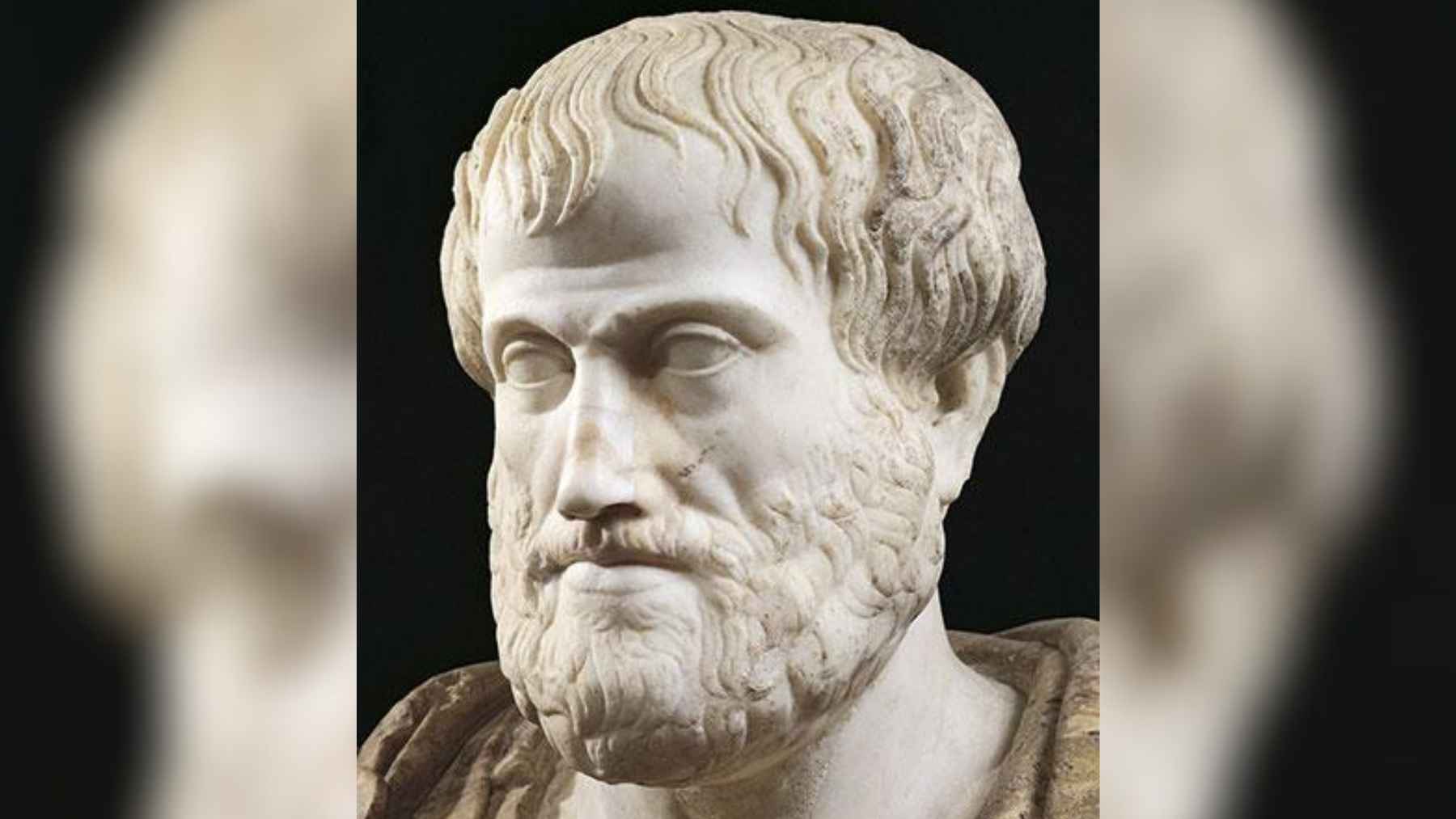
Aristotle, who lived from 384 to 322 B.C., spent much of his work asking a question that still feels close to home: what does it mean to live well?
That question was not about chasing applause or winning one dramatic victory. For the Greek thinker, the deeper issue was how a person becomes just, brave, generous, or self-controlled when no one is watching.
The popular quote became attached to him because it sounds exactly like the kind of thing his philosophy teaches. The words themselves, however, are commonly traced to writer Will Durant, who summarized Aristotle’s view in The Story of Philosophy.
How character is trained
In Book II of the Nicomachean Ethics, Aristotle argues that moral virtue does not simply arrive at birth. People have the capacity to become good, but that capacity has to be trained through action.
His examples are simple. Builders become builders by building, and musicians become musicians by playing. In the same way, people become just by doing just acts, and brave by doing brave acts.
That is why the quote still works. It turns character into something practical, almost physical. Not easy, of course, but practical enough to understand while studying for a test, keeping a promise, or choosing not to snap back during an argument.
What a good life meant
For Aristotle, happiness was not just feeling good for a weekend. The Greek word eudaimonia is usually explained as flourishing, or living a life that is going well in a deep and lasting sense.
That kind of life was tied to reason and virtue. In other words, a person becomes fulfilled not by collecting pleasures one after another, but by learning to act well across time.
It sounds demanding, and it is, but it is also oddly encouraging. If excellence is built, then a person is not trapped by one bad day, one failure, or one awkward mistake.
The middle path
Another key part of Aristotle’s ethics is often called the doctrine of the mean. Put simply, a virtue usually sits between two harmful extremes.
Courage is the classic example. Too little courage becomes cowardice, while too much can become recklessness. Generosity also needs balance, since a person can be stingy on one side or wasteful on the other.
This is not a formula you can tape to the fridge and follow forever–real life is messier than that. The point is to build judgment, the kind that helps someone pause and ask, “What is the right amount, at the right time, in this situation?”
Why the idea still lands
Part of the reason this old lesson survives is that it feels visible in ordinary routines. The alarm clock, the study desk, the workplace, the kitchen table, even the drive through traffic can become training grounds for character.
Modern habit research echoes part of that idea, though it should not be treated as proof that Aristotle was doing psychology. A University College London study led by Phillippa Lally reported that new habits took an average of 66 days to become automatic, with wide variation from person to person.
That number is useful because it pushes back against quick-fix thinking. Change often takes longer than a burst of motivation. The trouble is, motivation fades, while repeated action can slowly make a behavior feel normal.
Small choices, lasting character
Aristotle’s point was not that people should become perfect machines. He was warning that the small things are not really small when they are repeated day after day.
A single kind act matters, but it does not prove generosity by itself. A single brave moment matters, too, but courage becomes part of a person only when brave choices are practiced again and again.
At the end of the day, the lesson is less glamorous than many people expect. Excellence is not a trophy placed on a shelf, it is the shape a life starts to take when repeated choices slowly become character.
The main work referenced here is Aristotle’s Nicomachean Ethics, available through the Perseus Digital Library.