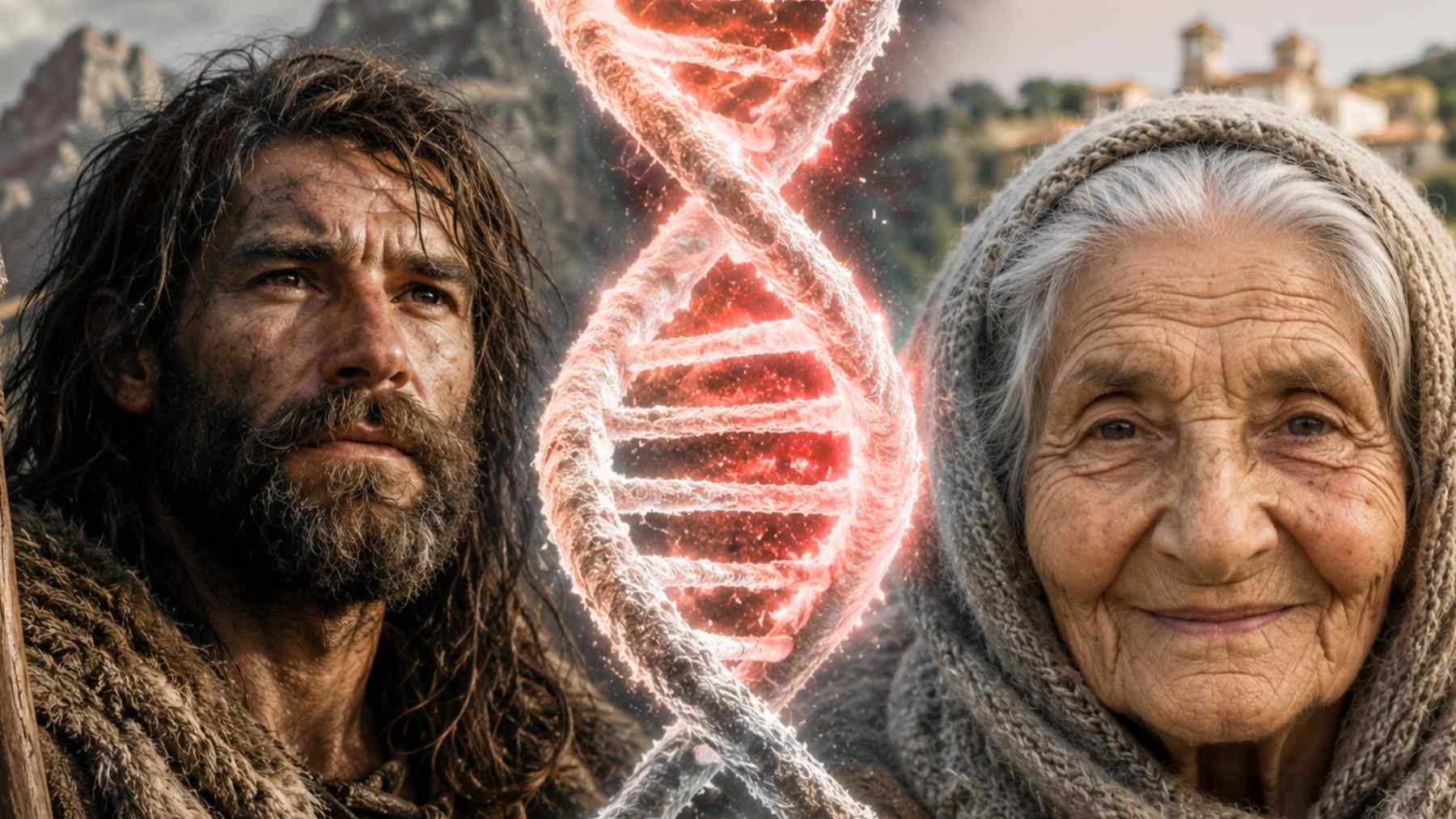
What if part of the answer to extreme longevity was written into human DNA long before modern medicine, fitness trackers, or even farming? A new genetic study of Italian centenarians suggests that some people who reach 100 may carry a stronger trace of ancient Western Hunter-Gatherer ancestry, a pre-farming lineage linked to Ice Age Europe.
The finding does not mean there is a single “centenarian gene,” or that ancestry can predict how long someone will live. But it does add a fascinating new layer to the science of aging. Researchers analyzed genome-wide data from 333 Italian centenarians and 690 geographically matched healthy controls, then compared them with 103 ancient genomes representing major ancestral groups that shaped Europe.
Why Italy matters
Italy is already one of the most closely watched countries in longevity research. As of January 1, 2025, Istat reported 23,548 residents age 100 or older, with women making up 82.6 percent of that group.
That gives scientists a rare living archive of extreme aging. Italy also sits at a historical crossroads, where migrations from hunter-gatherers, early farmers, steppe herders, and other ancient groups left genetic footprints still visible today.
In practical terms, that means researchers can ask a sharper question. Do people who reach 100 carry a different blend of ancient ancestry than people from the same regions who do not?
The hunter-gatherer signal
The study focused on Western Hunter-Gatherers, often shortened to WHG, a genetic ancestry connected with Mesolithic Europeans who lived before farming became widespread. This lineage is associated with the roughly 14,000-year-old Villabruna individual from northern Italy.
When the team compared centenarians with controls, one pattern stood out. Italian centenarians showed greater affinity with WHG-related ancestry, while other ancestry components did not show the same signal.
The numbers were modest, but meaningful. A one-standard-deviation increase in WHG ancestry was associated with a 38 percent increase in the odds of being a centenarian, after the researchers adjusted for Italy’s north-to-south genetic structure.
More than family history
This is not the same as saying hunter-gatherer DNA guarantees a longer life. Human longevity is shaped by many things, including diet, infection history, income, medical care, movement, stress, and sheer luck. Anyone who has watched a grandparent thrive on simple routines knows the story is rarely just one thing.
Still, genes matter. Small inherited differences can influence how the body handles inflammation, energy use, cell repair, and immune stress across a lifetime.
The authors put it carefully. “In the present study, we demonstrate the contribution of ancient genetic components to the longevity phenotype,” they wrote.
What it may mean for aging
One possible clue involves inflammation. Aging is often accompanied by low-grade immune activation, sometimes called inflammaging, which can wear down tissues over time and raise the risk of chronic disease.
The study notes that some genetic shifts after the Neolithic period may have helped people survive infectious environments, but may also be tied to inflammation and age-related disease in modern industrialized life. That is a big idea, but still an early one.
So, could ancient WHG-related variants help keep immune responses better balanced later in life? Maybe. The researchers say more work is needed to identify the biological pathways behind the signal.
Women stood out
The pattern was especially strong in women. That is notable because women already make up the large majority of Italy’s centenarians, and the new analysis found a stronger WHG association in the female subset.
But this is also where caution matters. The male centenarian sample was smaller, so the researchers could not read the same signal with equal confidence. Better datasets with more long-lived men will be needed.
In other words, the study opens a door. It does not close the case.
What not to take from this
There is no lifestyle shortcut hidden in this research. You cannot change your ancient ancestry, and no DNA result should be treated as a personal forecast for reaching 100.
The useful takeaway is broader. Longevity is a long conversation between biology and environment, from genes inherited thousands of years ago to the daily choices that still matter today, like staying active, eating well, keeping social ties, and managing chronic disease.
At the end of the day, the study gives scientists a new map to follow. Not a magic answer. A map.
Ancient DNA and future health
The most exciting part may be what comes next. If researchers can identify which WHG-related variants are involved, they may learn more about immune balance, metabolism, and the repair systems that help some bodies age more slowly.
That could eventually help scientists understand healthy aging for everyone, not just people with Italian roots. For now, the message is simple enough. The path to 100 may begin far deeper in human history than we once imagined.
The full study was published in the journal GeroScience on Springer Nature.