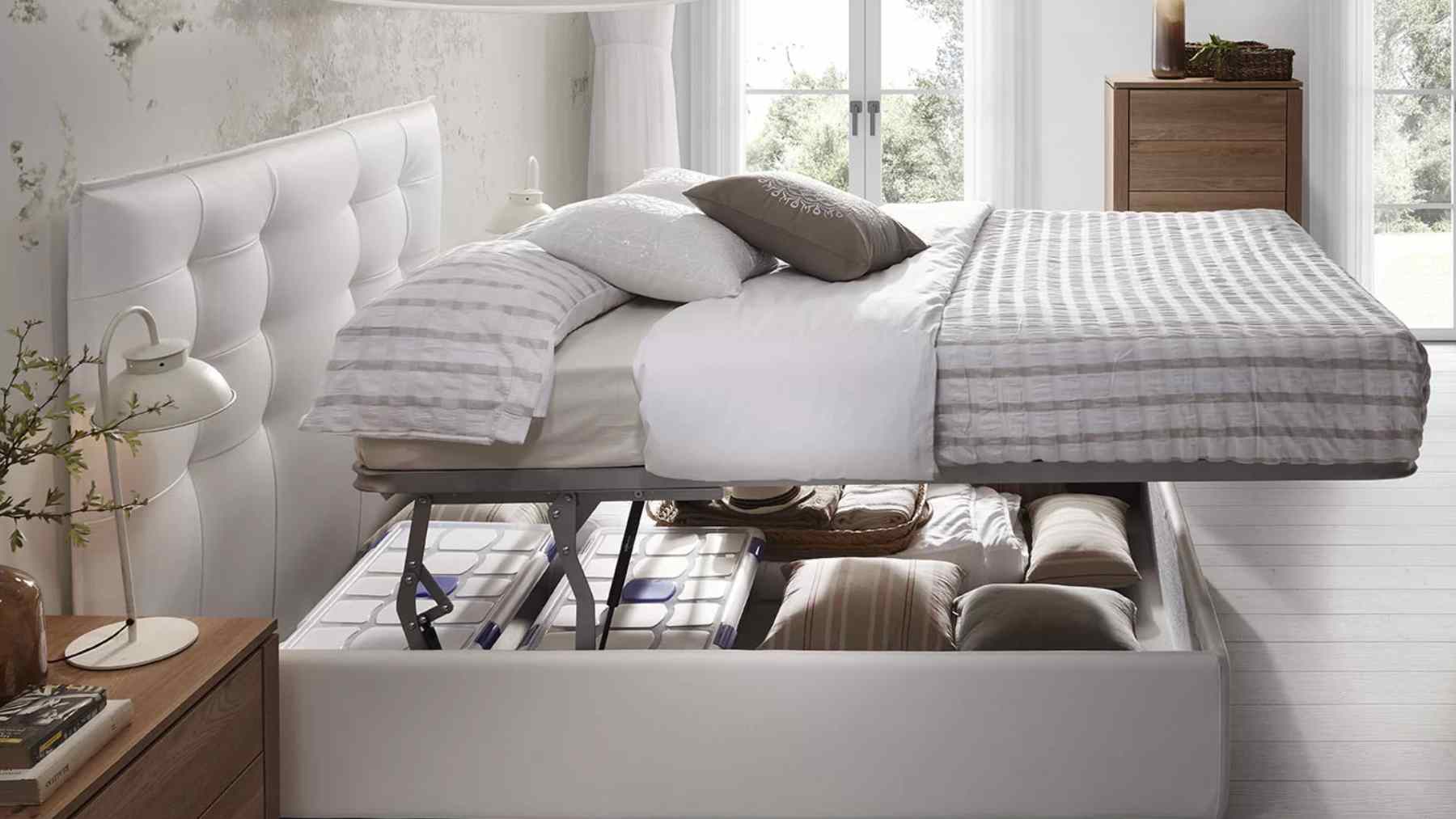
For years, lift-up storage beds have been the quiet heroes of small bedrooms. They hide suitcases, comforters, winter clothes, and all the things we don’t want staring back at us before bed. But a new bedroom trend is starting to push them aside, favoring lighter upholstered or wood beds with visible bases, side drawers, and integrated storage that feels easier to use day after day.
This is not just a design story. It is also a sleep story. The CDC says adults need at least 7 hours of sleep, yet new U.S. data shows 30.5% of adults slept less than that in 2024. A calmer bedroom will not solve every sleep problem, but it can remove some of the visual noise that keeps the mind buzzing at night.
Why storage beds are changing
Traditional lift-up storage beds make sense on paper. That hidden area under the mattress can be a lifesaver in apartments, shared homes, and bedrooms without enough closets.
The problem is the daily use. To reach what is underneath, you usually have to lift the mattress base, move bedding around, and sometimes wrestle with a space that becomes a “junk drawer” in bed form. The newer alternative keeps storage, but makes access simpler with drawers, pull-out modules, and compartments that open from the side.
The new bed formula
The beds now gaining attention tend to be upholstered or made with visible wood frames. They sit slightly off the floor, which gives the room a lighter look and can make a tight bedroom feel more open.
That matters more than it sounds. After a long day, no one wants a bedroom that feels like another task waiting to be handled. In practical terms, these beds try to offer the same order as a lift-up base without the heavy, closed-off feeling.
Why the bedroom affects sleep
Sleep quality is not only about how many hours you spend in bed. The CDC describes quality sleep as uninterrupted and refreshing, and it recommends keeping the bedroom quiet, relaxing, and cool.
That advice lines up with the reason this trend is catching on. A room that feels crowded, visually heavy, or hard to move around in can make bedtime feel less restful. The CDC’s NIOSH guidance also says a very dark, quiet, cool, and comfortable sleep environment can improve sleep.
Clutter is not just visual noise
There is also research suggesting that the way people experience their home can affect stress. In a study published in “Personality and Social Psychology Bulletin,” researchers analyzed home tours from 60 dual-income spouses and found that women with higher “stressful home” scores had flatter daily cortisol patterns, while more restorative home descriptions were linked with healthier patterns.
That does not mean a bed frame can magically lower stress. Still, it shows why clutter can feel bigger than a messy surface. A pile of clothes, an overflowing nightstand, or storage that is hard to reach can quietly remind the brain of everything left undone.
What to check before buying
The biggest practical issue with side-drawer beds is space. If the bedroom is very narrow, drawers may bump into walls, nightstands, radiators, or baskets sitting beside the bed.
So, measuring comes first. A lift-up model may still be the better option in a tiny room where there is no clearance on either side. But when there is room to open drawers comfortably, divided storage can make it easier to keep bedding, clothes, and seasonal items organized.
A calmer look for 2026
The wider bedroom trend for 2026 points toward lighter, more functional spaces. Think natural materials, soft lighting, neutral colors, and furniture that works hard without looking bulky.
That is why wood, cotton, linen, and woven textures are showing up so often in bedroom design. They are not medical treatments, of course. But they can help create the kind of warm, simple setting that makes it easier to wind down.
Better rest starts small
Before replacing a bed, the easier step is to clear what you already see from the pillow. A nightstand packed with receipts, chargers, skincare bottles, and half-read books can make the room feel busier than it needs to be.
The CDC also recommends regular bedtimes, turning off electronic devices at least 30 minutes before bed, avoiding caffeine later in the day, and keeping the room relaxing. Furniture is only the backdrop. The routine still matters.
Storage and health
Poor sleep is linked with more than morning grogginess. The CDC notes that getting enough sleep can help reduce stress, improve mood, support heart health and metabolism, and lower the risk of chronic conditions such as type 2 diabetes, heart disease, high blood pressure, and stroke.
Adults who sleep fewer than 7 hours are also more likely to report health problems including heart attack, asthma, and depression, according to the CDC. That is why a more restful bedroom is not a superficial goal. At the end of the day, the room should help the body understand one simple message.
It is time to rest.
The official data brief was published on CDC.