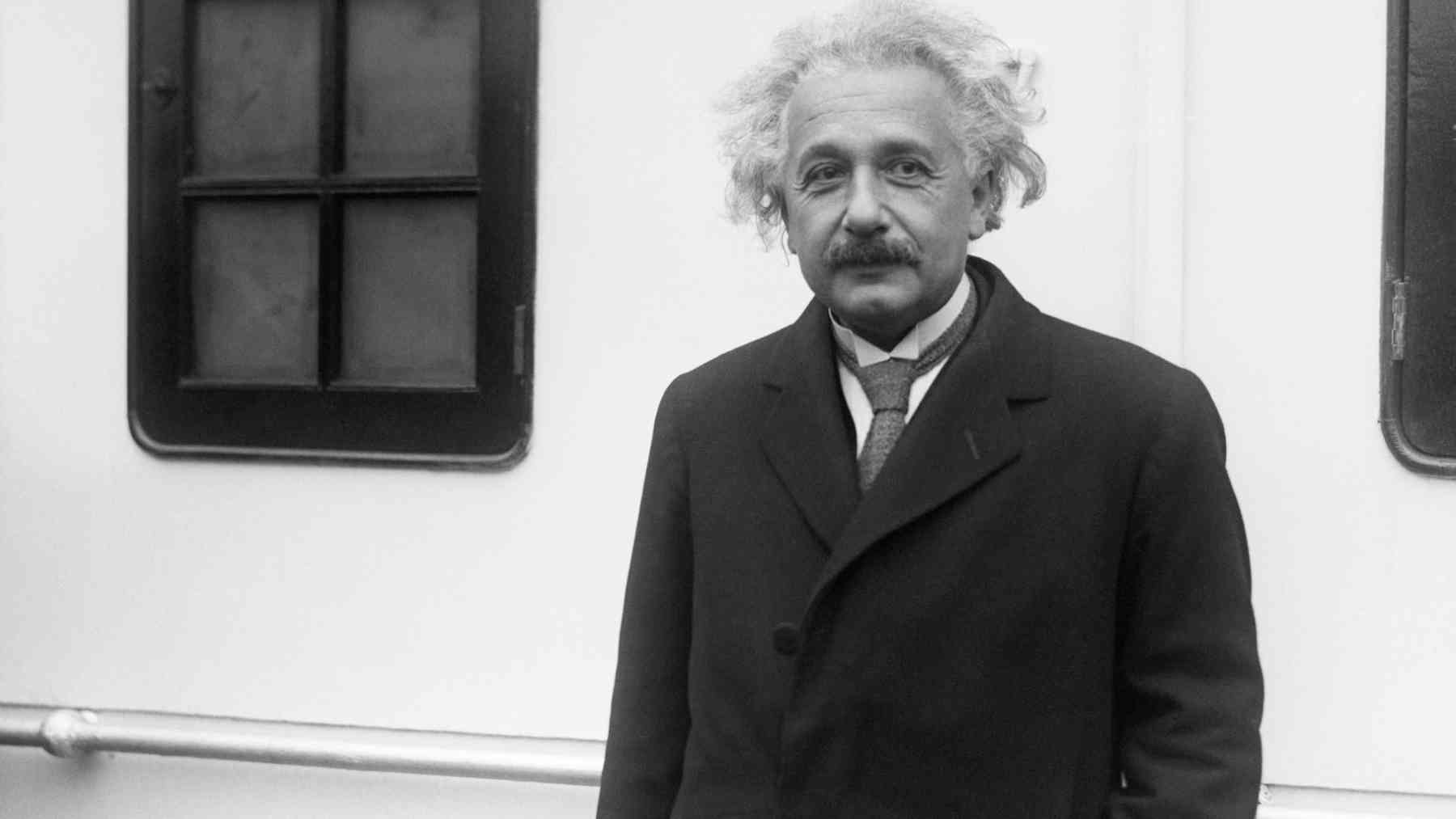
Every student has heard it at least once, usually when the exam is already too close for comfort. Don’t leave everything until the night before. It sounds like ordinary classroom advice, but an old line linked to Albert Einstein gives it a sharper edge.
“Education is that which remains, if one has forgotten everything he learned in school,” Einstein wrote in his 1936 essay “On Education,” while attributing the idea to an unnamed “wit.” The quote is often shortened and repeated as an attack on memorization, but its real value today may be simpler. Learning that lasts is less about stuffing the mind with facts and more about training it to think, recall, connect, and stay calm under pressure.
Einstein’s real point
Einstein was not arguing that facts do not matter. Physics, after all, is not built on vibes. What he pushed back against was the idea that education should train students to obey and repeat instead of question and understand.
That view fits with another famous Einstein line, “Imagination is more important than knowledge.” Quotation researchers trace that statement to a 1929 interview, where Einstein framed imagination as a real force in scientific thinking, not just daydreaming.
In practical terms, that means a student who can explain an idea, test it, and use it in a new situation may be better prepared than one who can repeat a paragraph perfectly at midnight and forget it by breakfast.
Why cramming feels productive
Cramming has one big advantage. It feels like progress. Pages get highlighted, notes get reread, and for a few hours the brain recognizes familiar words so quickly that it can seem like the material has been mastered.
The trouble is, recognition is not the same as recall. A student may feel confident while looking at a page, then freeze when the same idea appears as a blank question on a test. Who has not felt that tiny panic?
A major review published in Psychological Science in the Public Interest found that two techniques earned the strongest rating for usefulness across learners and materials. Those were practice testing and distributed practice, which means studying across time instead of in one long push.
The brain likes retrieval
A 2025 classroom study gives this idea a very down-to-earth example. Researchers worked with 33 children ages 10 to 11 in Italian fifth-grade history lessons, using real school material rather than artificial word lists.
Some students reread the material, while others used fill-in-the-gap testing with feedback. In the first phases, the testing group scored 67.0 percent on later open-question tests, compared with 48.6 percent for the rereading group. In another phase, testing reached 67.7 percent, while rereading reached 41.3 percent.
That is not a magic trick. It is the brain being asked to do the very thing it will need to do later. Pull the information out, check it, fix the mistake, and try again.
This is health too
Study habits may sound like an education topic, but they are also a wellness issue. Last-minute studying often steals sleep, raises stress, and turns learning into a race against the clock. That is hard on the mind.
The CDC says students need enough sleep to stay focused, improve concentration, and support academic performance. It also reports that about 7 in 10 high school students in a national sample did not get enough sleep on school nights.
That matters because tired brains do not simply feel worse. They also pay a price in attention, mood, and memory. The night before a test, one more hour of panicked rereading may not be as useful as sleep and a short review the next morning.
What works better
So what should students do instead? Start small. A few questions after class, a quick self-test two days later, and another review before the exam can do more than a long, tense session with a highlighter.
Flashcards can help, but only when they are used actively. Looking at the answer too soon turns the exercise into rereading. Covering the answer, trying to retrieve it, then checking it is closer to real learning.
Parents and adults can use the same method, too. Learning a new language, preparing for a certification, remembering health instructions, or practicing a work presentation all depend on the same basic pattern. Short, repeated effort usually beats one exhausting sprint.
Curiosity matters
Einstein’s educational message also points to something that does not fit neatly on a test sheet. Curiosity keeps the mind awake. It asks why, not just what.
That matters in health and daily life. A person who memorizes a list of “healthy foods” may still struggle to build meals, shop on a budget, or understand why fiber, protein, and sleep all affect energy. A person trained to think can adapt when real life gets messy.
At the end of the day, that may be what lasting education really means. Not remembering every sentence from school, but keeping the habits that help you reason through the next problem.
The lesson for everyday learning
Einstein’s old classroom warning still lands because it speaks to a familiar frustration. We spend years learning things, then watch much of it fade. But that does not mean school is useless, and it does not mean memory is hopeless.
The better lesson is that the brain needs better routines. Retrieval, spacing, sleep, and curiosity are not glamorous, but they work together like a quiet training plan for the mind.
So yes, facts matter. But the real win is knowing what to do with them once the worksheet is gone, the test is over, and life asks a harder question.
The study was published on Frontiers in Psychology.