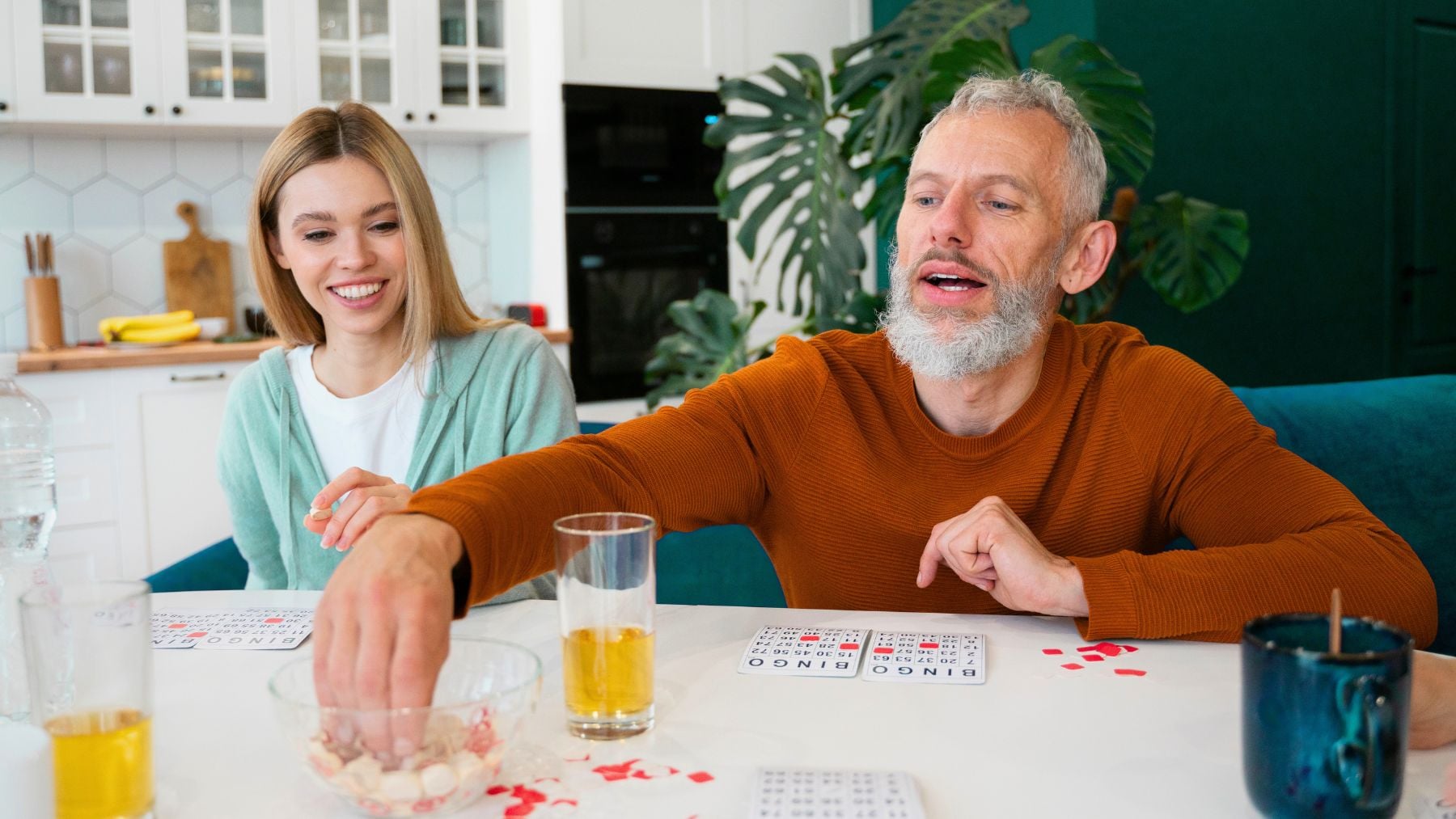
Crossword or word search puzzles remain a well-known method for seniors to maintain mental acuity. However, if you desire a game that simultaneously ignites multiple cognitive domains and fosters social interaction, consider Bridge, an engaging pastime that unites collaborative strategy, critical thinking, and communication.
Bridge continuously ranks among the top recommendations for cognitive enrichment in older adults. Here, we’ll explore the reasons behind its effectiveness, examine the mechanics, and discuss other outstanding games that contribute to mental agility in retirees.
Bridge: a great ally for retirees to boost mental agility
Bridge is a timeless card game typically played by four individuals arranged in two partnerships. It integrates strategic planning, memory retention, communication (within prescribed rules), and problem-solving into a socially engaging experience.
The game unfolds in two distinct phases: bidding and playing. During the bidding phase, partners convey the strength and distribution of their cards through a coded system that establishes the contract, essentially representing the number of tricks they aim to win. In the playing phase, each participant contributes one card per round and adheres to the prevailing suit whenever possible.
The game requires continuous recall of played cards—a vital element to its strategy—and demands precise planning during both bidding and play to secure a win or outmaneuver opponents. Besides, the partnership aspect enriches it by compelling players to interpret subtle signals and anticipate each other’s moves, nurturing teamwork and refined communication skills.
This unique combination of strategic challenges, memory exercises, and social interplay stimulates diverse cognitive functions simultaneously, making it far more engaging than traditional word or number puzzles and ensuring that your mind remains agile and alert.
Other mental fitness games for retirees
You can also explore this selection of engaging pastimes to challenge your mind and stimulate diverse cognitive skills.
- Chess: The ultimate strategy game. It requires deep analysis, planning several moves, and the ability to adapt to your opponent’s evolving strategy. It sharpens problem-solving skills and enhances critical thinking.
- Rummikub: This tile game involves forming groups and sequences. It provides an excellent exercise in pattern recognition, numerical skills, and flexible cognition as you continually rearrange tiles on the table to form valid sets.
- Sudoku: A pure logic puzzle that demands concentration and disciplined reasoning. Completing the grid correctly involves systematic analysis and a process of elimination, making it a superb tool for structured thinking and focus.
- Mahjong: Beyond simply matching tiles, this classic game incorporates complex strategies and a robust reliance on memory to build winning hands. It requires keen attention, effective pattern recognition, and tactical decision-making.
- Scrabble: Constructing words on the board challenges your vocabulary, spelling accuracy, and spatial planning skills. It encourages creative thinking and mental agility through inventive combinations of letters and engaging linguistic strategies.
These games all offer valuable cognitive exercise for those over 60. They improve memory, concentration, logical reasoning, and strategic planning in diverse ways. Regular participation in any of these activities can help you enrich your mental fitness. Give Bridge or any of these alternatives a try, and let your brain experience their stimulating power.