Massachusetts is learning that winter road safety may not always come from the same white crystals poured out of public works trucks. After heavy snow, rain and ice hit western Massachusetts and much of New England, WBUR reported that stores ran short of rock salt and some municipalities also began feeling the squeeze.
In Chicopee, a delay involving 40 tons of salt-based de-icer even forced city trucks to go to Albany, New York, to pick up common rock salt.
That shortage has turned a strange-sounding idea into a serious public conversation. Could pickle brine, molasses and brewery byproducts help keep roads safer while reducing damage to rivers, lakes and drinking water? It sounds like something from a kitchen shelf, but the real story is about supply chains, water pollution and the hidden cost of keeping winter traffic moving.
A shortage exposed the problem
Road salt is familiar, fast, and for the most part, affordable. That is why public works departments lean on it when roads glaze over before the morning commute or the school drop-off line.
MassDOT told WBUR that its statewide snow and ice program allows the agency to move materials between depots as needed to keep roadways safe. That flexibility matters during a storm, but it also shows how dependent the system has become on one basic product.
The scale is enormous. The EPA has noted that nearly half a million tons of rock salt are used annually in Massachusetts alone for winter road maintenance, and that the base price does not include possible damage to property, infrastructure or the environment.
Why pickle brine works
Here is the basic science: pure water freezes at 32°F, but when salt dissolves into water, it lowers the freezing point and makes it harder for ice to form. Massachusetts State Geologist Brian Yellen explained it this way to WBUR. “Whereas fresh water freezes at 32°F, a solution of salt and water is going to only freeze at a lower temperature,” he said.
That same principle explains the interest in pickle brine, molasses and brewing byproducts. Pickle brine already contains salt and vinegar, molasses brings sugars and minerals, and brewery waste can contain fermented sugars and other compounds. No, it is not magic soup for highways, it is a way to make de-icing mixtures stick better and stretch limited salt supplies.
The water bill comes later
The trouble is, salt does not stay on the pavement. NEIWPCC says sodium chloride from road treatment moves into surface water and groundwater through stormwater runoff, and once it gets into the environment, it is difficult to remove.
That matters because many of these rivers, lakes, reservoirs and aquifers are not just scenery. They are part of the drinking water system people depend on every day, whether they are filling a coffee pot or giving water to a child after soccer practice.
NEIWPCC also warns that chloride is highly mobile and has no natural process that breaks it down. High levels can harm aquatic life, affect plants along roadsides, contaminate wells and reservoirs, and corrode bridges, roads, pipes and vehicles.
A wetland shows the risk
A recent PLOS ONE study in western Massachusetts puts numbers behind the concern. Researchers studied the Kampoosa Bog drainage basin in Stockbridge and Lee, an area bordered by Interstate 90 and U.S. Route 7, and found that heavier salt use in 2018 and 2019 led to higher chloride accumulation and rising groundwater chloride concentrations.
The study reported that mean annual chloride application in the major watershed rose from about 800,000 lbs. a year in 2012 through 2017 to about 1.1 million lbs. a year during 2018 and 2019. It also estimated more than 220,000 lbs. of chloride accumulation per year in the full watershed during those later years.
That is not a tiny lab result tucked away from daily life. It is real salt moving through real soil and water, near roads that people use without thinking twice.
Other states are already testing it
Massachusetts is not alone in looking beyond plain rock salt. Across colder states, agencies have experimented with beet juice, molasses, pickle brine, beer waste and cheese brine to reduce salt use or improve how well mixtures cling to pavement.
Wisconsin offers one of the clearest examples. In Green County, officials told Wisconsin Public Radio that nearly 100,000 gallons of cheese brine were spread on roads in one year, turning a dairy byproduct into a winter maintenance tool.
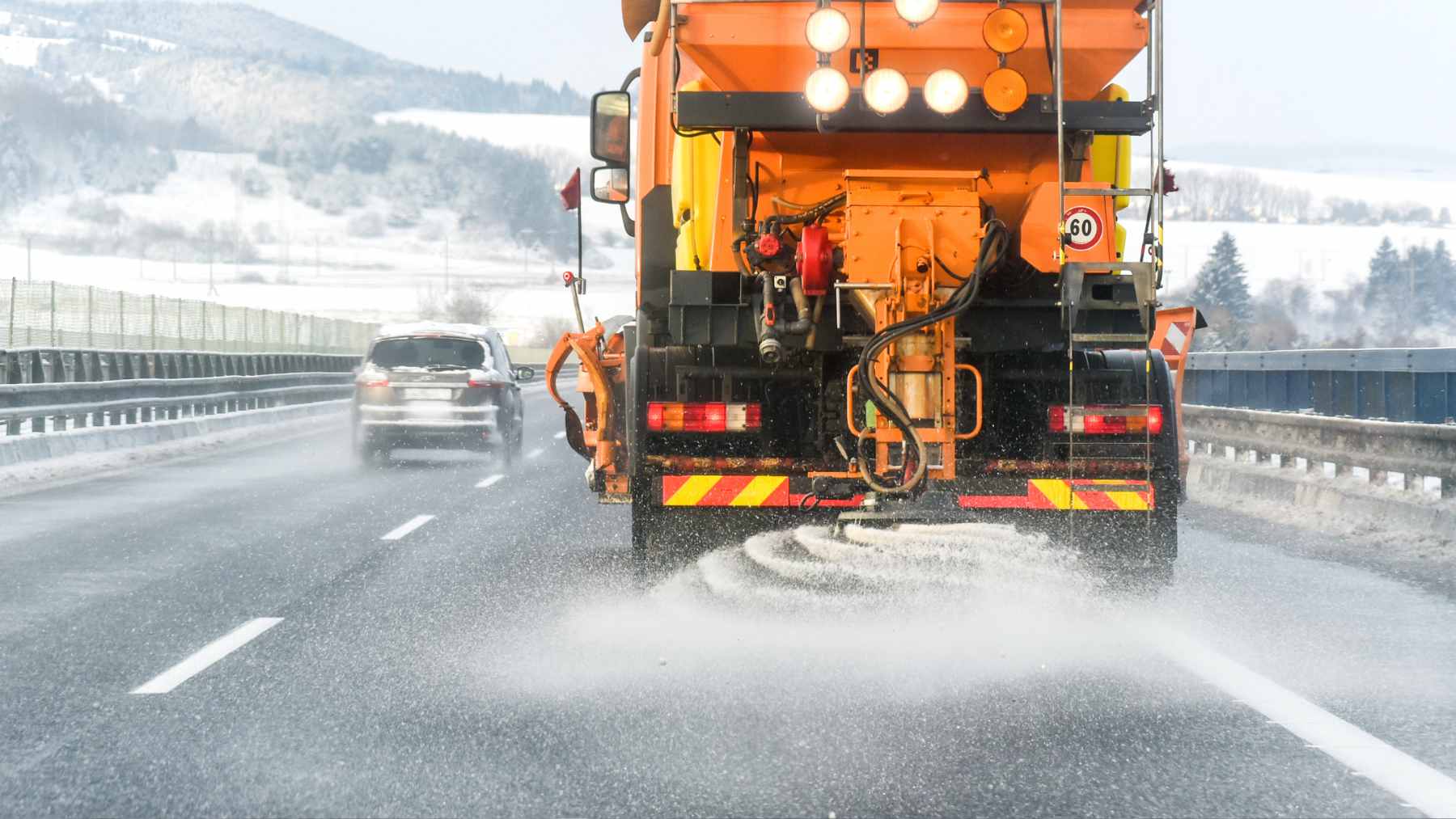
For the most part, these materials do not replace salt entirely. They are mixed with salt or used before storms so plows can clear snow more efficiently and crews can apply less solid salt later, meaning fewer crystals bouncing off the road and into gutters.
The business hurdle is not chemistry
The biggest obstacle may not be whether the science works. It is whether towns can buy, store, transport and spray these materials at scale while a storm is already moving in.
The Pioneer Valley Planning Commission has warned that salt alternatives can involve safety, cost, availability and equipment challenges. Towns may need to identify sensitive drinking water areas, adjust application policies and recognize that low-salt or no-salt treatments are not always practical.
That is where the business angle gets interesting. A brewery, pickle producer or dairy plant might have useful waste, but a highway department needs reliable contracts, storage tanks, calibrated sprayers and deliveries that arrive before the ice does. A clever idea still has to survive a Tuesday morning storm.
What drivers should know
This debate is not about leaving roads dangerous. Yellen told WBUR that officials need to “balance the safety of drivers with the protection of the environment,” and that is the heart of the issue.
Better plowing, targeted brining, calibrated equipment and reduced salt use near drinking water areas can all help. So can common sense at home, like shoveling early, using only the salt needed and remembering that rock salt becomes much less useful once pavement temperatures fall near 15°F.
So yes, pickle juice and beer waste sound funny at first, but behind the odd ingredients is a very practical question for Massachusetts and the rest of New England. What happens when the salt runs short, and the water keeps getting saltier?
The original report was published on WBUR.