Seven wind turbines that had stood above dairy country in Madison County, New York, for a quarter century, a deliberate demolition of a symbol of clean energy, came down in a controlled sequence on Sept. 17, 2025. The spectacle lasted roughly half a minute, turning a familiar part of the rural skyline into twisted steel almost before roadside spectators could take it in.
It looked like an ending. What comes after matters more. Madison Wind Farm was a planned retirement of aging, prototype-era equipment, and its closure shows how the wind business is shifting from simply building turbines to managing their entire life cycle, including maintenance, recycling, land restoration, and wildlife safeguards.
A pioneer reaches its planned end
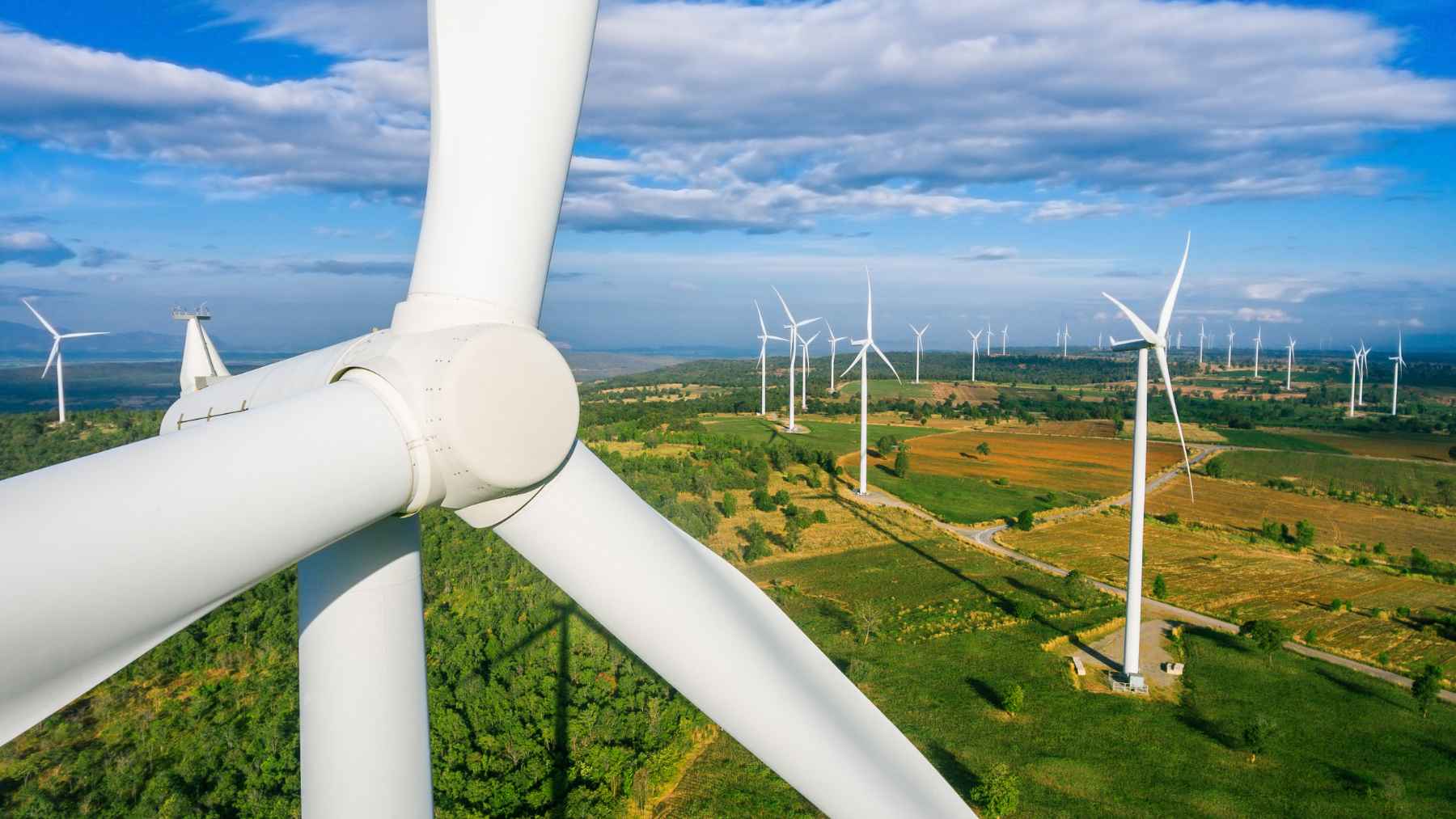
Madison began commercial operation in October 2000 with seven Vestas V66 turbines, each rated at 1.65 megawatts, for a total capacity of 11.55 megawatts. EDP describes it as New York’s first commercial wind farm, while a NYSERDA-sponsored final report shows the state contributed $2 million to encourage large-scale wind development.
The machines were expected to operate for 20 to 25 years, so their 2025 retirement was not an early collapse. EDP said the turbine models were no longer in production, making repairs and replacement parts increasingly difficult and expensive until the project was no longer economically viable.
Output had also weakened. New York grid data cited by local reporting show the farm generated 21,700 megawatt-hours in 2011 but only about one-third as much in 2024, while project manager Rachel Smith said it was “really hard to find the parts to refurbish them.”
Demolition was only the first step
EDP hired a specialized contractor to break the towers at their bases and direct each fall into a prepared landing zone. The felling itself took one day, but preparation, cleanup, component removal, and site restoration were expected to take six to eight weeks.
Steel and other metals were designated for recycling, while fluids were to be reused or repurposed where possible. Fiberglass and concrete required separate off-site handling, and local reporting said the blades would go to a waste-to-energy facility while some remaining material might still reach a landfill.
That distinction matters. The U.S. Department of Energy estimates that about 90% of a wind turbine’s mass can be recycled, but blades, composite materials, power electronics, and some permanent magnets remain harder to recover at scale.
Bigger machines change the equation
Each Madison turbine could generate 1.65 megawatts. By comparison, the average capacity of newly installed U.S. turbines reached 3.4 megawatts in 2023, about 375% higher than the average during the late 1990s.
The offshore extreme makes the technological shift even clearer, although it is not a direct comparison with an upstate New York project. China installed a 26-megawatt offshore prototype in August 2025, meaning one machine had more than twice the nameplate capacity of Madison’s entire seven-turbine farm.
Closer to home, EDP is proposing the Rolling Upland Wind Farm beside the former Madison project. Current official documents place it at roughly 76 to 80 megawatts, more than six times Madison’s capacity, with over $160 million in projected capital investment and an estimated $70 million in payments to participating landowners over the project’s life.
The farmland can stay farmland
Once the debris was cleared, the former turbine parcels were returned to agricultural or natural use. EDP says wind infrastructure leaves about 98% of leased project land available for farming, ranching, recreation, or wildlife habitat, although that developer figure measures the physical footprint rather than every possible ecological effect.
Wind power is renewable, but it is not impact-free. The U.S. Geological Survey warns that turbines can affect birds and bats through collisions, noise, habitat loss, and changes in survival or reproduction, while federal wildlife guidelines call for careful siting, monitoring, and mitigation throughout a project’s life.
Replacing older equipment with fewer, more powerful turbines can reduce the number of foundations, service areas, and access roads needed for the same output. But every proposal must still explain how it will address migration routes, raptors, bats, drainage, construction disturbance, and eventual land restoration.
What Madison tells us
New York’s wind system is now far larger than the pioneering Madison farm. NYSERDA reported that statewide onshore and offshore wind facilities reached a record output of 2,389 megawatts on Oct. 31, 2025, while wind accounted for about 3.49 million megawatt-hours of New York’s 2024 electricity system mix.
Madison’s retirement does not prove that wind power failed, and it does not guarantee that every proposed replacement will succeed. It shows that a mature clean-energy system must plan for aging equipment, obsolete parts, recycling, permitting, wildlife protection, community payments, and land restoration from the first day of operation.
The cleanest project is not the one that never ages. It is the one with a credible plan for what happens when it does. The official decommissioning statement appears on EDP Global.