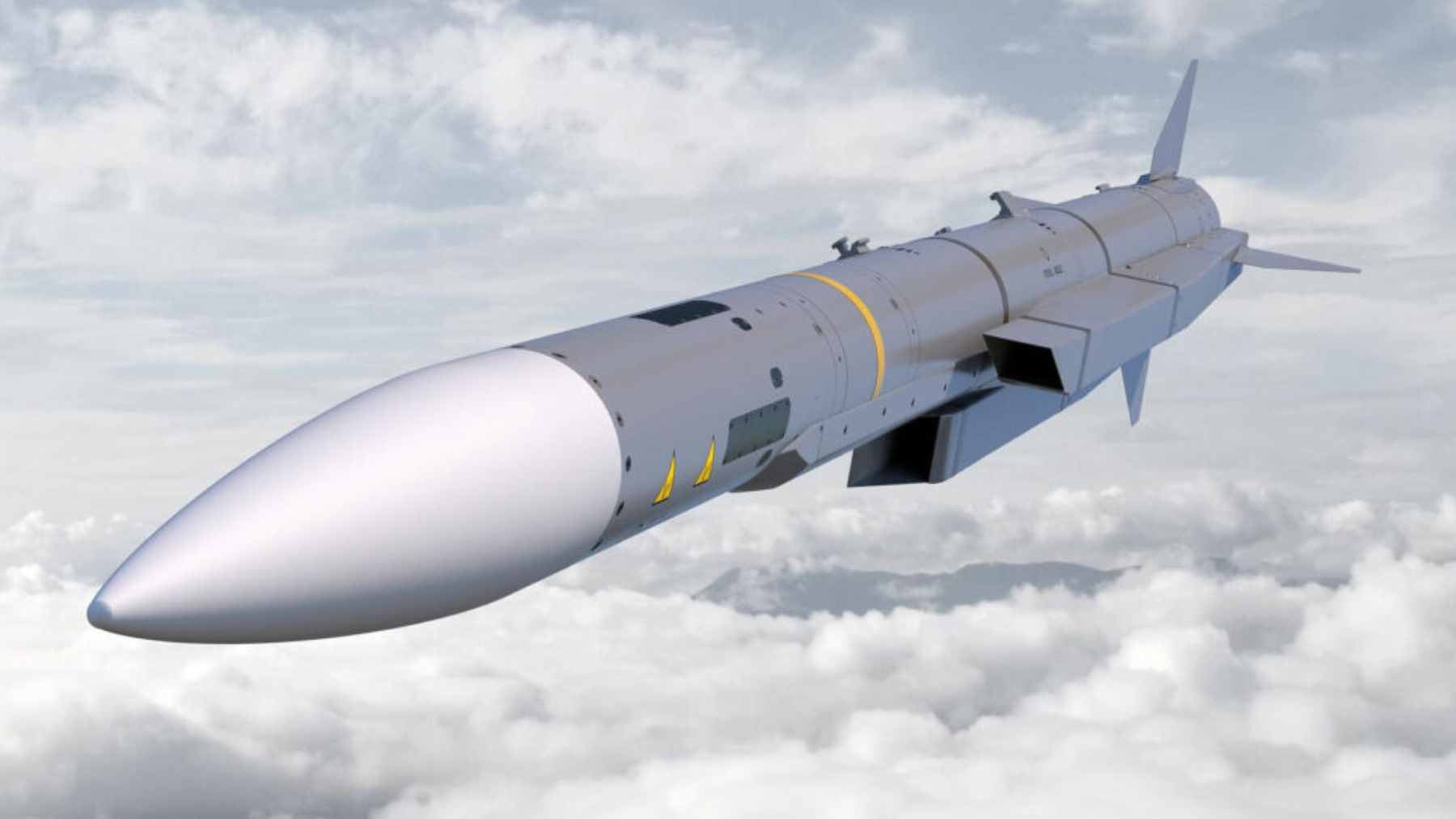
Britain is abandoning the planned mid-life upgrade of its Meteor air-to-air missile and redirecting investment toward Future Air Superiority Effectors, better known as FASE. The decision is not an immediate retirement notice for Meteor.
It is a calculated bet that moving straight to a successor family will prepare the Royal Air Force for future fights involving crewed and uncrewed aircraft and more complex air threats.
That bet has an obvious attraction and an equally obvious risk. Meteor is already considered a benchmark European weapon, while FASE was still in its pre-concept phase in September 2025 and a UK-France study on the successor began only in April 2026. Britain has decided to press the accelerator before the final destination is fully mapped.
Meteor is not disappearing
RAF Typhoons have carried Meteor on Quick Reaction Alert missions since December 2018. Meteor is also planned for integration on the F-35B under the Block 4 upgrade, so the canceled mid-life work changes its future development path rather than removing it from frontline service tomorrow.
What makes Meteor different? Most rocket-powered air-to-air missiles burn hard and then coast, gradually losing energy. Meteor’s variable-flow ducted rocket keeps producing thrust deep into the engagement, and MBDA says that gives it the largest “no-escape zone” of any air-to-air missile system.
That phrase does not mean a target literally has zero chance. It describes the area in which even an alerted aircraft has a sharply reduced ability to evade, because the missile still has speed and maneuvering energy near the end of flight. For a pilot, those final seconds matter more than a headline maximum range.
Why FASE changes the equation
FASE is broader than a one-for-one Meteor replacement. Janes reported that it is intended to produce a family of complementary weapons, with a future beyond-visual-range air-to-air missile as one element, while UK reporting says the effectors are expected to operate from both crewed and uncrewed aircraft.
Luke Pollard, the minister for defense readiness and industry, put the policy plainly. “We’re not continuing with the midlife upgrade of the Meteor,” he said, adding that the department wants to invest in the next generation more quickly than it did in the last one. Why spend scarce money twice?
The government’s apparent logic is to avoid funding a substantial refresh and then paying again for a replacement soon afterward. In practical terms, that shifts technical ambition and schedule pressure onto FASE.
The UK and France have signed a memorandum for a 12-month study that will examine future threats, possible concepts and candidate technologies, then set out a development roadmap through a new joint Complex Weapons Portfolio Office.
A race against the calendar
The biggest unanswered question is timing. Parliament was told in September 2025 that FASE remained in pre-concept work, while the April 2026 agreement is a study rather than a full acquisition contract. The reviewed official documents do not set out an in-service date, a final design or a dedicated program budget.
A mid-life upgrade would normally offer a lower-risk bridge by refreshing selected technology while preserving much of the existing missile and its aircraft interfaces. A new weapon family may deliver a larger leap, but it also brings design, flight testing, software integration, production qualification and multinational decision-making.
Can that work be completed before today’s advantage begins to fade? That is now the central issue. Skipping the bridge can save money, but only when the new road opens on time.
Part of a wider weapons reset
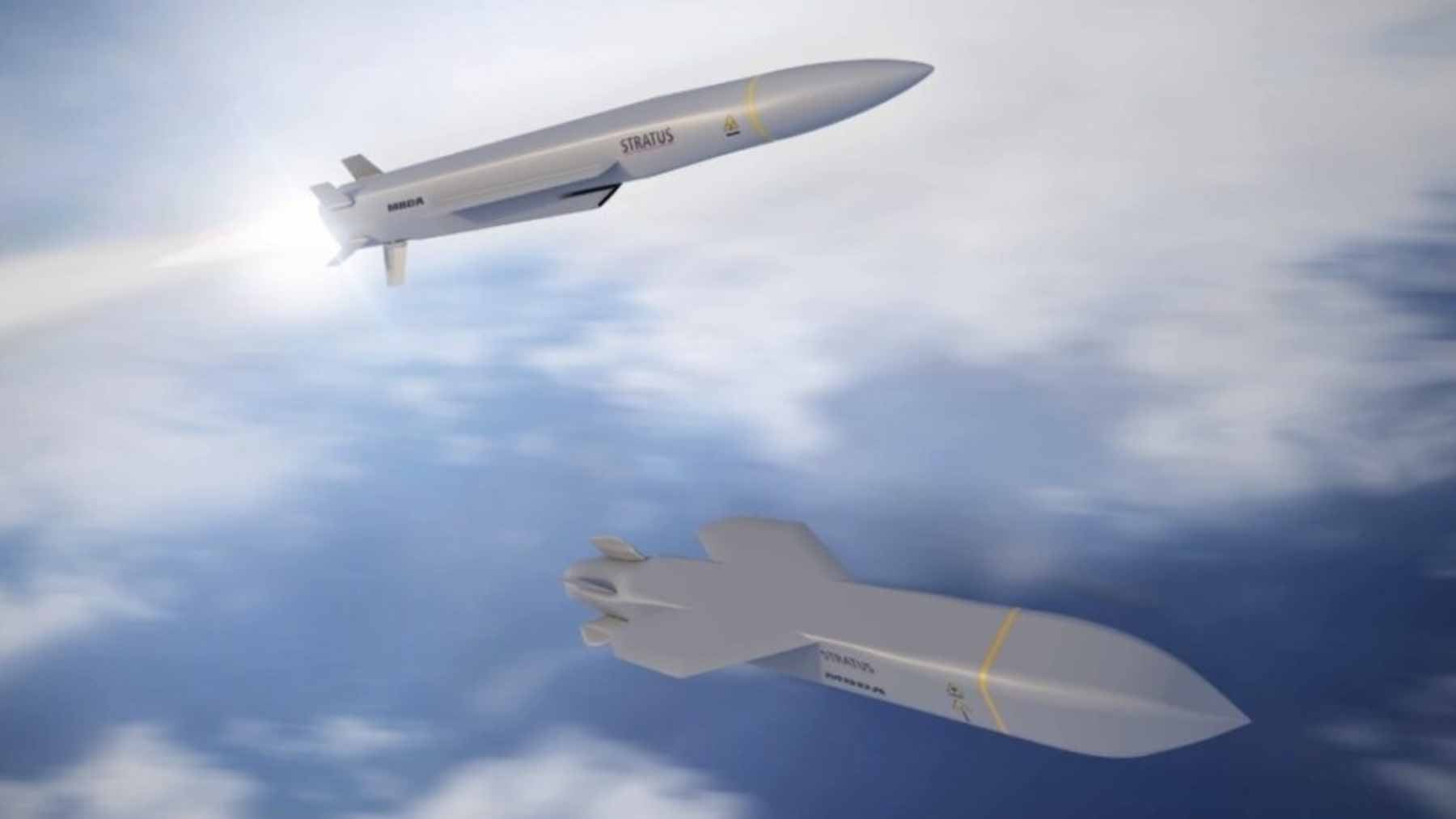
Meteor is not an isolated decision. Britain’s 2026 Defence Investment Plan allocates about $1.88 billion over four years to Stratus, the planned long-range cruise and anti-ship missile family being pursued with France and Italy, while ministers move away from restarting production of the existing Storm Shadow design.
The dollar figure converts the original £1.4 billion using the July 17, 2026 exchange rate of roughly $1.345 per British pound.
The same plan calls for a better “high-low” mix of weapons. In plain English, Britain wants enough advanced missiles for the hardest targets, but also larger numbers of cheaper drones and cruise weapons that factories can turn out faster. It also backs domestic production of CAMM, ASRAAM, Stingray torpedoes and critical energetic materials.
That pattern reaches beyond missiles. The government is retiring the Shadow R1 surveillance aircraft early, dropping the Skynet 6 Narrowband satellite system and phasing out Wildcat battlefield reconnaissance helicopters from 2027 as newer or uncrewed systems take over parts of their missions.
This is less a spring cleaning than a redesign of how the force expects to sense, decide and strike.
What Britain is betting on
For MBDA and its supplier network, FASE could preserve high-end European skills in propulsion, seekers, datalinks, software and advanced manufacturing. But a successor will need firm requirements, committed partners and production planning early enough to avoid becoming an impressive design that arrives late or in small numbers.
The military test is even simpler. Meteor must remain credible on Typhoon and complete its planned F-35B integration while FASE matures, and the successor must arrive with enough performance and inventory to justify skipping the upgrade. Otherwise, a decision meant to accelerate modernization could create the very capability gap it was designed to prevent.
At the end of the day, Britain is choosing a bigger technological jump over a safer incremental step. It could be the right call, but the clock is now part of the weapon system.
The official policy paper behind the wider weapons reset was published on GOV.UK.