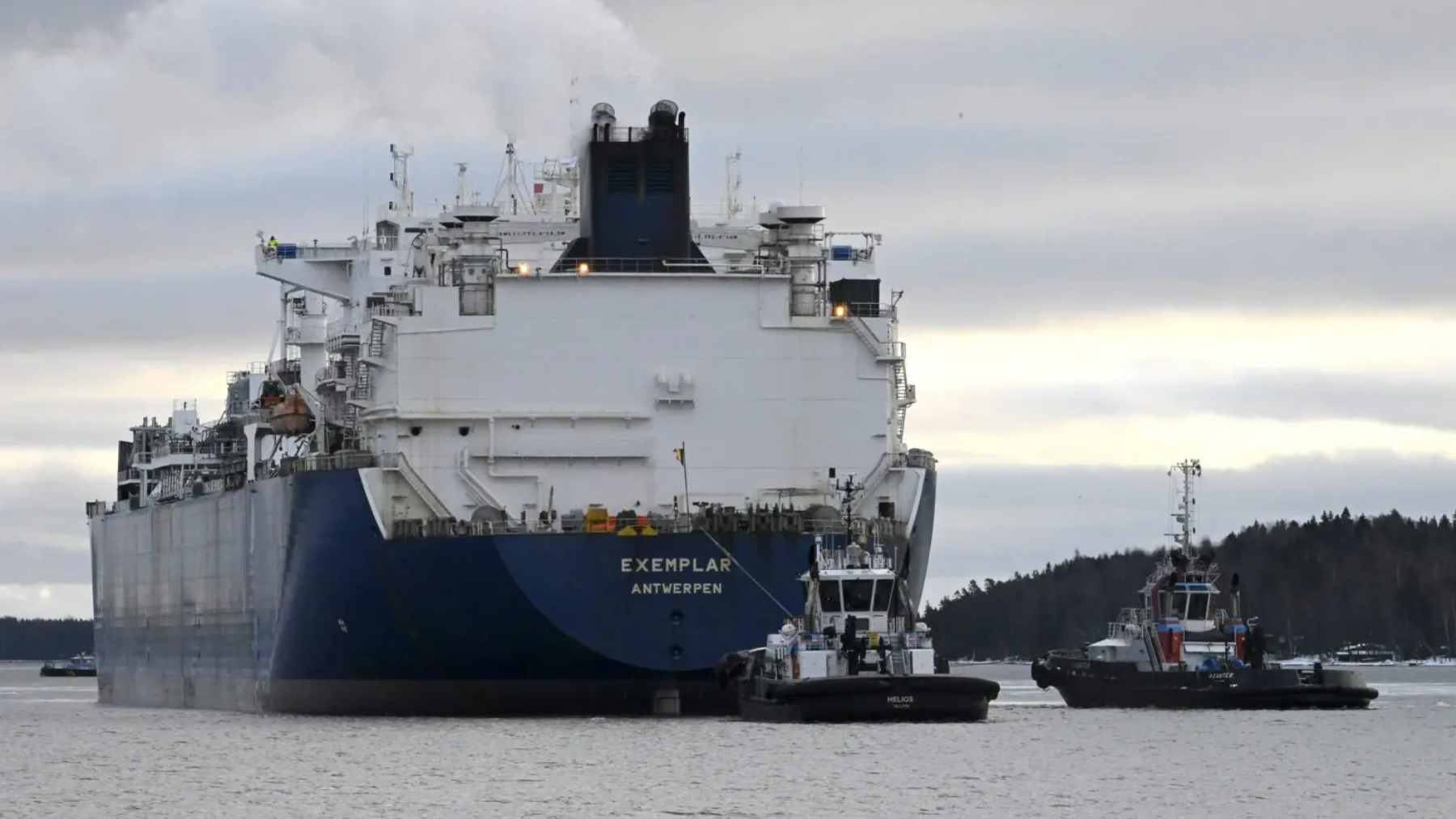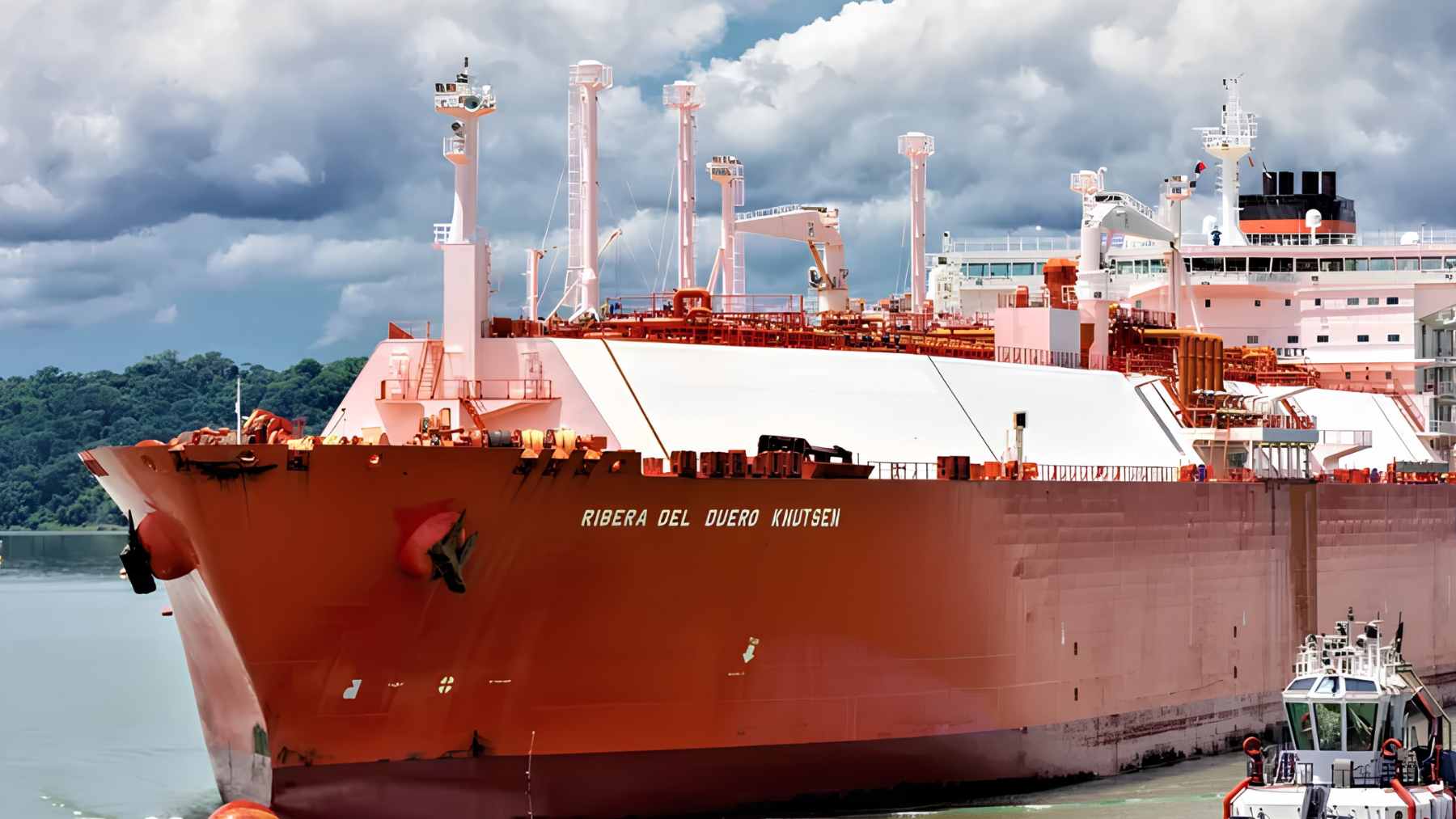
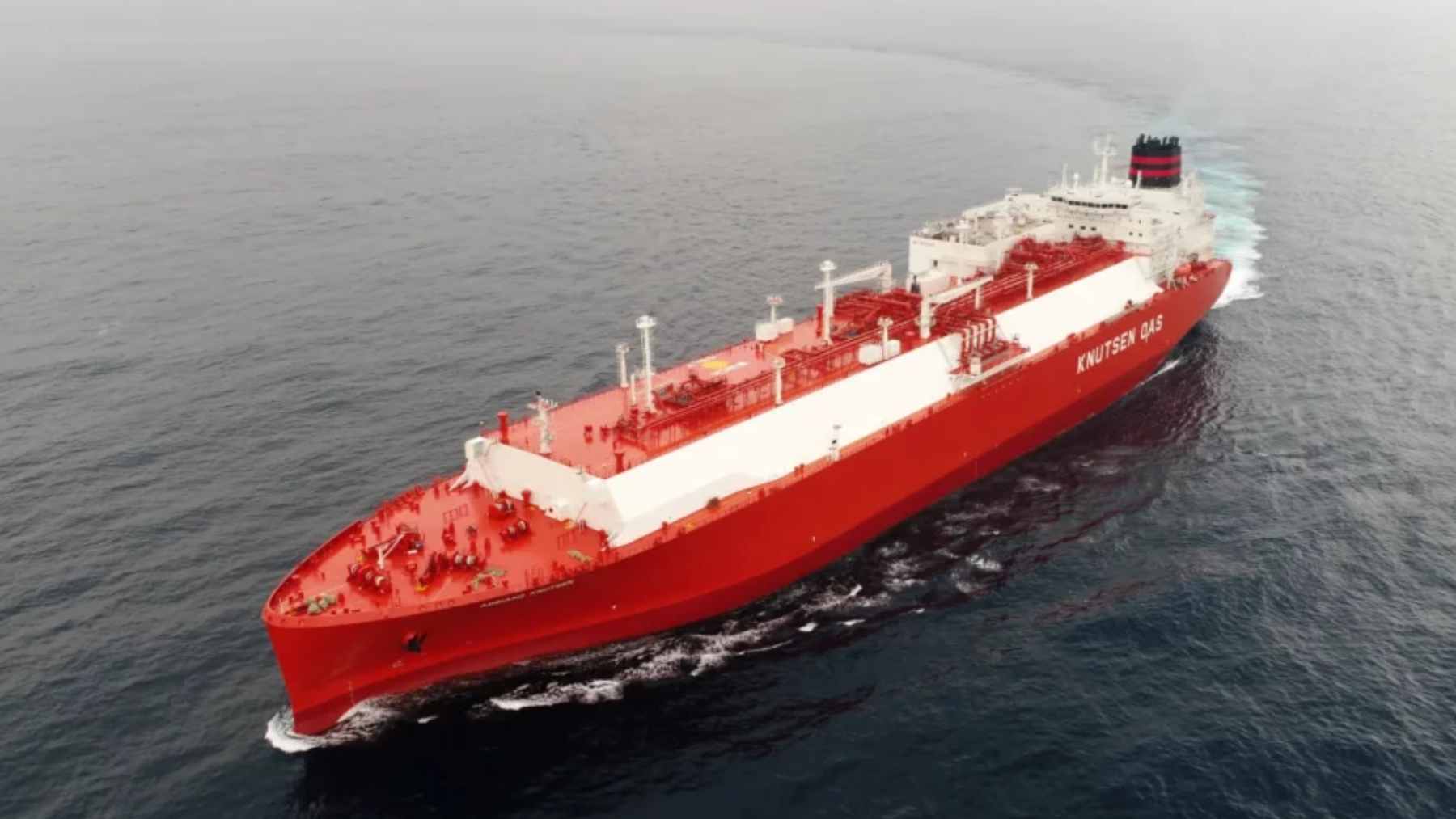
What does a ship built for frozen northern routes have to do with Poland’s everyday energy supply? In April 2026, the Ribera del Duero Knutsen carried U.S. liquefied natural gas (LNG) into Świnoujście, becoming the first ICE-1A LNG carrier known to call at the Polish terminal.
The unusual arrival is more than a piece of maritime trivia. It shows how specialized ships can be redeployed as Europe rebuilds its gas supply network, but it also brings the climate cost of liquefaction, long-distance shipping, and methane leakage back into focus.
A rare ship in Świnoujście
Built in 2010, the Ribera del Duero Knutsen is 951 ft. long and 150 ft. wide. Its tanks can hold roughly 6.1 million ft.³ of LNG, while its listed service speed is about 22 mph.
Those dimensions are normal for a large Atlantic LNG carrier. What sets the vessel apart is its DNV ICE-1A rating, winterization package, reinforced construction, and specialized cargo-containment design for harsh northern conditions.
The ship was once prepared for a possible Northern Sea Route voyage carrying Norwegian LNG from the Snøhvit project to Japan. That plan still required help from Russian icebreakers, which is an important distinction because the tanker was never designed to behave like a stand-alone polar icebreaker.
What ICE-1A means
Ice-class labels can sound more dramatic than they are. Finnish and Swedish authorities developed the rules so merchant ships can navigate safely and efficiently in Northern Baltic winter conditions, with eligibility for icebreaker assistance tied partly to the vessel’s class.
In practical terms, ICE-1A calls for extra strength and enough propulsion capability for demanding first-year ice conditions. It is an insurance policy built into steel, machinery, and operating procedures, not a promise that the ship can smash through any frozen sea on its own.
That added capability is also a business decision. Industry estimates put the construction premium at roughly 10% to 30% over a conventional carrier with similar cargo capacity, although the final gap depends heavily on the shipyard and technical specification.
Poland’s LNG gateway grows
GAZ-SYSTEM marked the terminal’s 10th commercial anniversary on June 17, 2026, with 445 deliveries, nearly 2.8 billion ft.³ of LNG received in liquid form, and operational availability above 99%. The operator also said Świnoujście had handled a record 81 cargoes in 2025.
The count kept moving. By the end of the first half of 2026, the terminal had received 40 cargoes for the year and reached its 450th delivery overall, showing how quickly a milestone can become outdated at a busy energy port. Local cargo data also indicated that 19 of the 20 second-quarter deliveries came from the United States.
GAZ-SYSTEM has added a third storage tank, a second berth, and more regasification capacity. It has also expanded truck loading, ship-to-ship transfers, and LNG bunkering, turning the site into more than a place where large carriers simply unload and leave.
Energy security at sea
The terminal’s core value is flexibility. GAZ-SYSTEM described it as “a key pillar of Poland’s energy security,” because seaborne cargoes can come from different exporters instead of leaving the country tied to one pipeline and one supplier.
The Ribera del Duero Knutsen makes that flexibility visible. A ship engineered for a northern route can later collect gas in the United States and deliver it to the Baltic, following commercial demand rather than the purpose imagined when its hull was designed.
Flexibility does not eliminate risk, however. More reliance on ocean cargoes also means greater exposure to export-terminal outages, storms, congested shipping lanes, and geopolitical disruptions far from the Polish coast.
The climate question
Natural gas produces less carbon dioxide and fewer common air pollutants than coal when burned for the same amount of energy. Still, LNG is fossil gas, and the process of producing it, cooling it into liquid, carrying it across an ocean, and turning it back into gas adds emissions before a customer switches on a furnace or factory burner.
The International Energy Agency estimated that LNG consumed in 2024 produced about 25% fewer lifecycle greenhouse gas emissions than coal on average. The agency also warned that coal is a very low environmental benchmark and that performance differs sharply from one supply route to another.
Methane is the pressure point. The International Energy Agency (IEA) estimated that unburned methane made up about 30% of global LNG supply-chain emissions, while existing technologies could cut total supply emissions by more than 60% and reduce the methane share substantially.
What Poland should watch
For Poland, the practical test is not whether LNG is simply “clean” or “dirty.” The more useful questions are whether imported gas replaces higher-emitting coal, how much methane escapes before delivery, how efficiently the cargo is liquefied and shipped, and whether new infrastructure supports a transition or extends fossil-fuel dependence.
That is why this rare tanker matters. Its reinforced hull represents resilience and technical flexibility, while its U.S. cargo represents Poland’s new supply map. The climate result, on the other hand, will be decided by measurements and operating standards that most people never see.
A single unusual ship is a curiosity. A terminal approaching five hundred deliveries is a long-term energy system, and the environmental rules around that system will matter just as much as the steel at the dock.
The official statement was published on GAZ-SYSTEM.