China has started operating an underwater data center off Shanghai’s eastern coast, using the ocean itself to cool servers at a time when artificial intelligence is pushing electricity demand higher around the world. The idea sounds futuristic, but it is already becoming part of a real business and environmental strategy.
The bigger question is not just whether China can make it work. It is whether coastal cities in hot regions, including Cartagena, Barranquilla, and Santa Marta in Colombia, should start thinking of the sea as part of their digital infrastructure, not only as a port, a beach, or a tourism asset.
AI has a power problem
Data centers are the quiet engines behind daily life. Every bank transfer, video call, online purchase, cloud backup, and AI chatbot depends on buildings packed with servers that must stay cool all day and all night.
That cooling is expensive. The International Energy Agency says electricity use by data centers is expected to roughly double from 485 terawatt-hours in 2025 to 950 terawatt-hours in 2030, while power use from AI-focused data centers is set to triple in the same period.
That’s why China’s experiment matters. It does not solve the whole energy challenge, but it attacks one of the most stubborn parts of it: the heat.
What China built
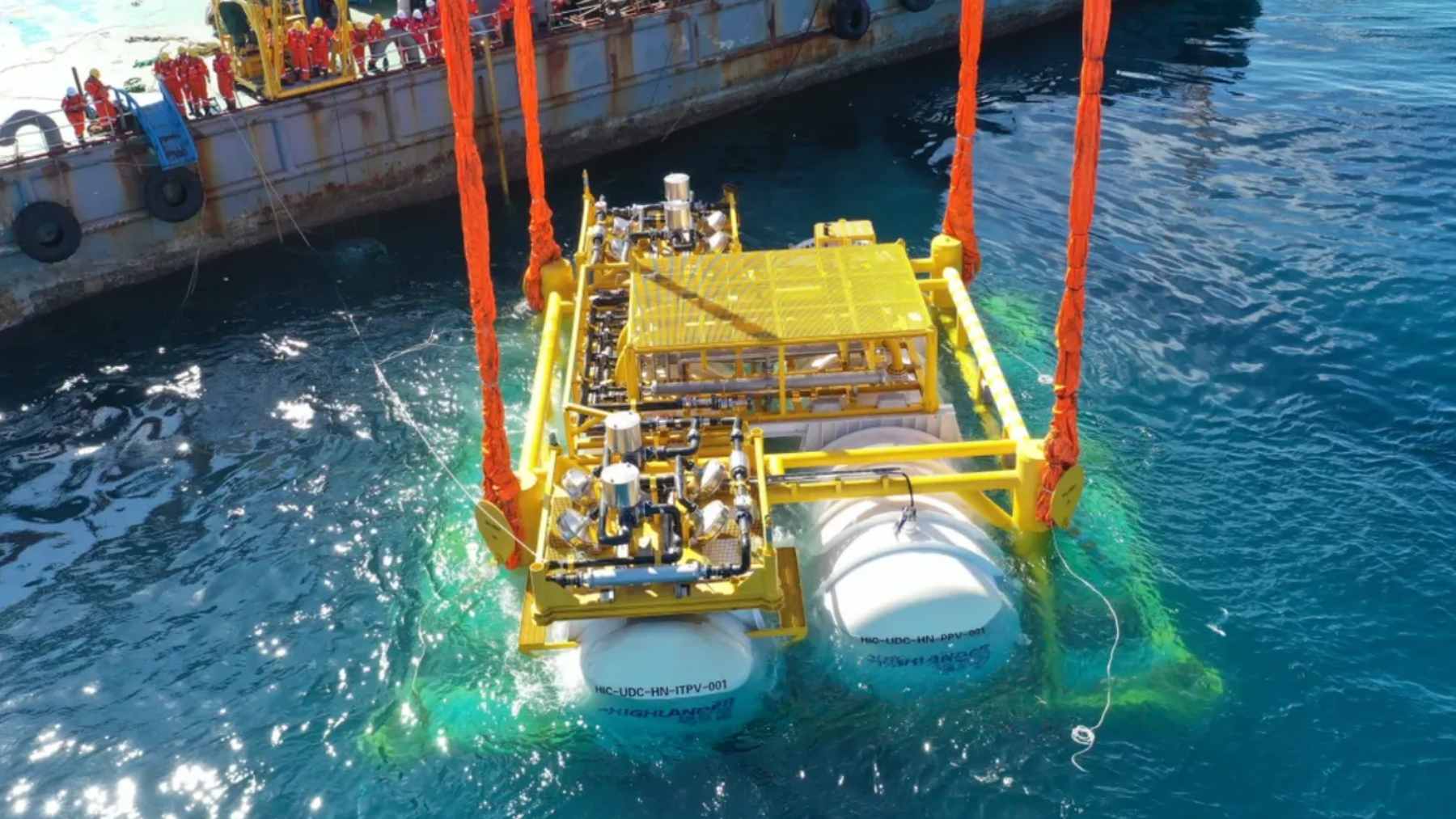
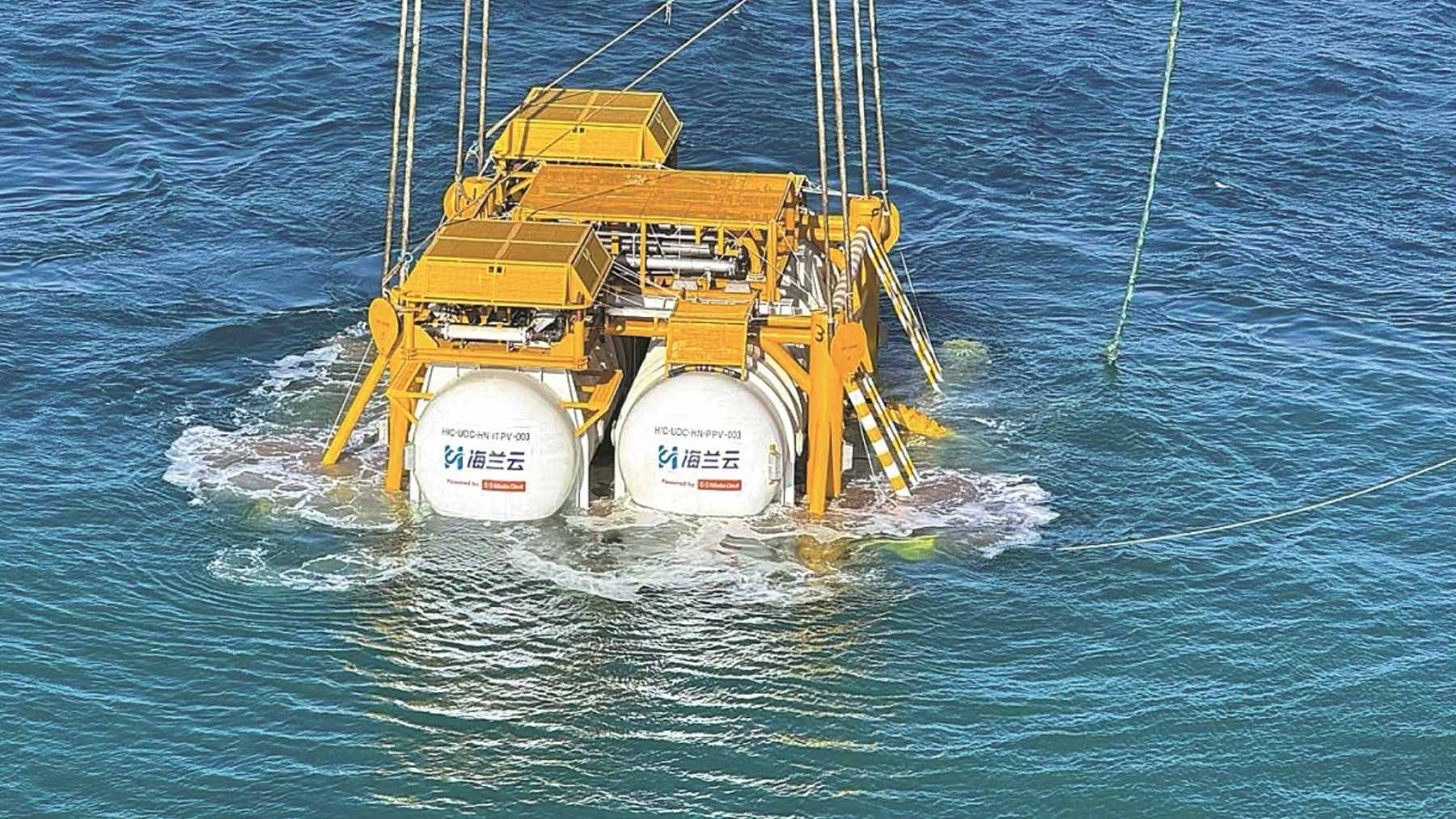
The Shanghai Lingang undersea data center has a planned capacity of 24 megawatts and received an investment of about $228 million, according to Lin-gang’s official English-language site. The modules sit near offshore wind turbines and use seawater for natural cooling, while electricity is supplied directly by the wind farm.
Essentially, that means fewer chillers, less land, and no freshwater cooling demand. Lin-gang says the system cuts electricity use by 22.8%, eliminates water use, reduces land use by more than 90%, and keeps power usage effectiveness around 1.15, which is considered highly efficient for the industry.
China Daily reported that the facility is located 6.2 miles offshore and uses subsea photoelectric composite cables to connect offshore wind power directly to submerged data modules. That direct link is key, because the server farm is not only under the water, it is tied to renewable energy at sea.
The ocean becomes a cooling system
Traditional data centers often spend a large share of their electricity just keeping machines from overheating. Tsinghua University professor Li Zhen told China Daily that conventional data centers typically use about one-third of their electricity for cooling systems.
“For an undersea data center of the same scale, the electricity used for cooling would only account for about one-tenth of total power consumption,” Li said. He also estimated that China’s data centers consume around 250 billion kilowatt-hours of electricity each year, with roughly 80 billion kilowatt-hours used for cooling.
If similar sites operated underwater, Li estimated cooling demand could fall to about 30 billion kilowatt-hours, saving roughly 50 billion kilowatt-hours annually. By his calculation, that would avoid burning about 16.5 million tons of standard coal every year.
Why Colombia should watch closely
Colombia is not starting from zero. ProColombia’s Invest in Colombia platform says the country already has more than 20 data processing centers and highlights its telecommunications infrastructure, including 10 operating submarine fiber-optic cables and two more under construction.
The U.S. International Trade Administration also describes Colombia as a growing digital economy, with the country promoting AI, secure data infrastructure, cloud computing, cybersecurity, and digital services. In other words, the demand side is already moving.
That is where Caribbean cities come in. Cartagena, Barranquilla, and Santa Marta have access to the sea, industrial zones, ports, and hot weather that makes cooling a constant challenge for large technical facilities. Could the Caribbean become a testing ground for cleaner digital infrastructure one day? Maybe, but only with careful engineering and environmental review.
Not a simple copy and paste
Underwater data centers are not magic boxes. Saltwater corrosion, pressure sealing, subsea cable durability, and the difficulty of repairing failed equipment remain serious problems, especially when every maintenance operation is more complicated than opening a door on land.
There is also the marine environment to consider. Experts have warned that submerged data centers can disturb seabed sediment or warm nearby seawater, even if those effects may be limited and manageable with monitoring.
So the lesson for Colombia is not “drop servers into the Caribbean tomorrow,” it is more practical than that. Any future project would need studies on currents, water temperature, marine life, hurricane exposure, cable routes, permitting, grid links, and whether offshore wind or another clean power source could make the numbers work.
A new map for digital infrastructure
Microsoft tested underwater data centers years ago through Project Natick, showing that the concept could be feasible and that coastal deployment could reduce distance to users. Microsoft noted that more than half the world’s population lives within 120 miles of a coast, which makes the idea attractive for fast digital services near major cities.
China’s version takes the idea further by pairing underwater cooling with offshore wind and AI-focused computing. That combination is what makes the Shanghai project more than a curious engineering stunt.
At the end of the day, AI infrastructure will need power, water, land, and public trust. Coastal cities that can reduce pressure on all four may have a real advantage.
The official statement was published on Lin-gang Special Area.