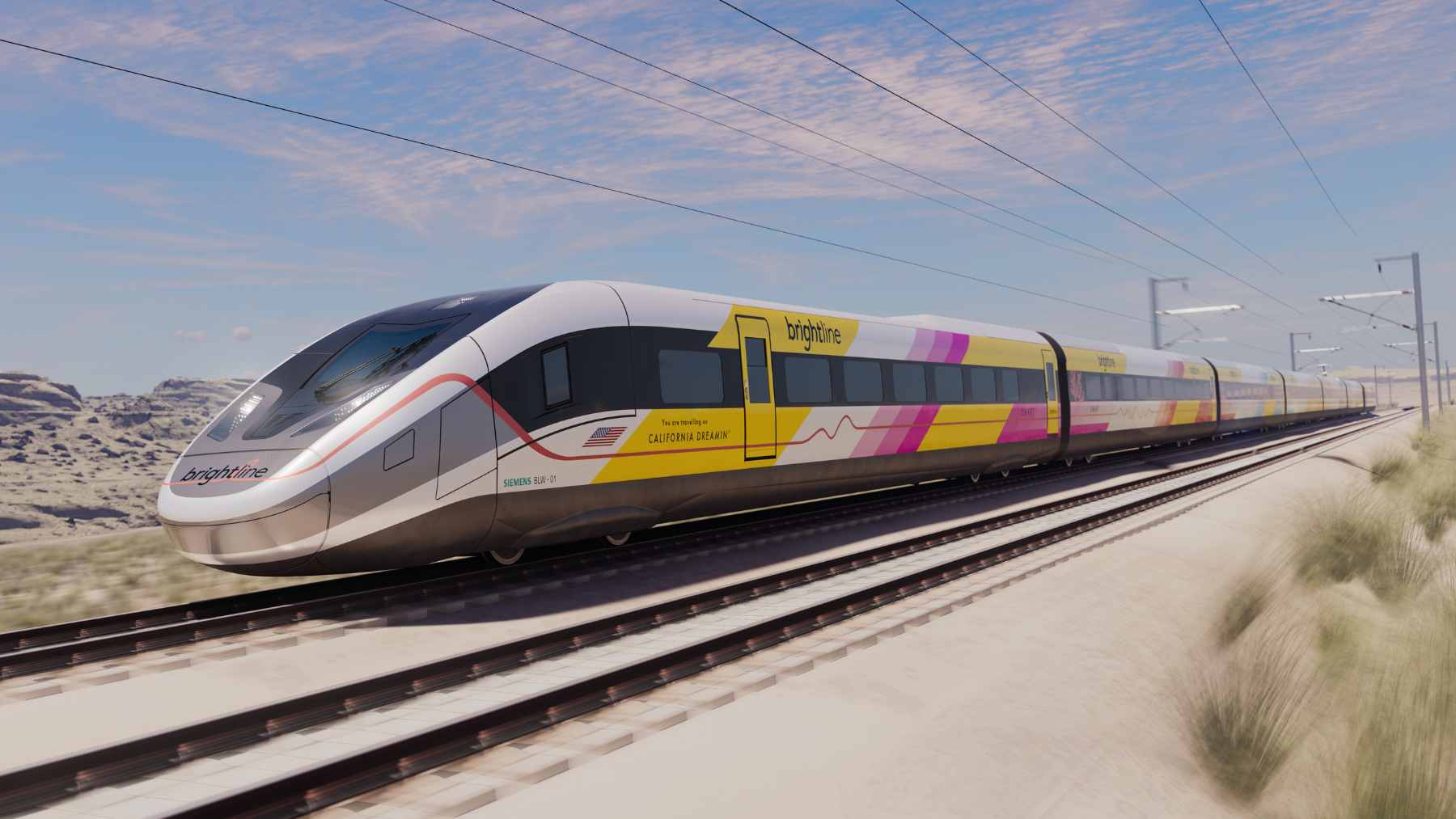
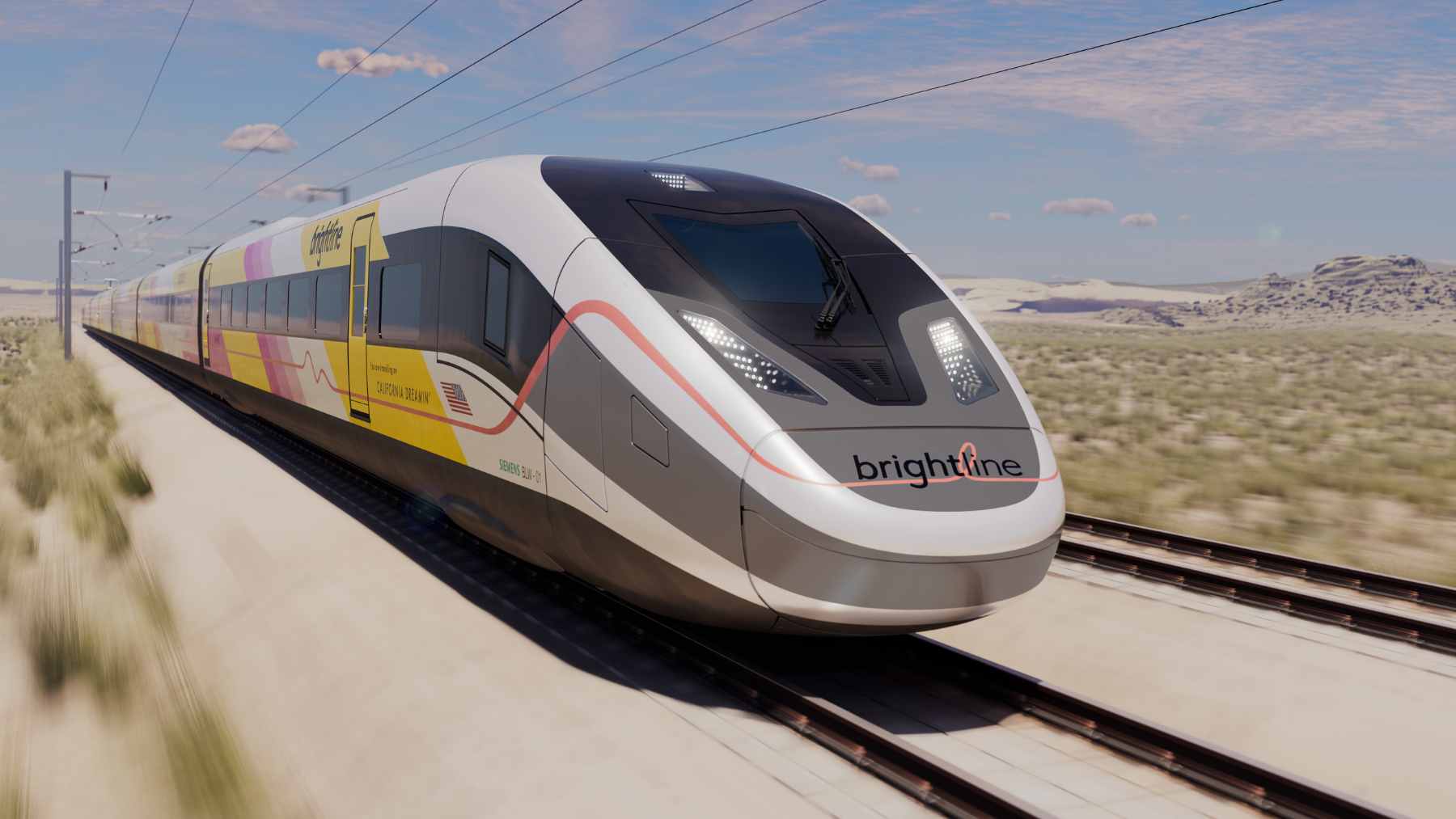
America’s most ambitious passenger rail project is taking shape in the desert, and it could change one of the West Coast’s most familiar travel headaches. Brightline West is designed to connect Las Vegas with Southern California on a 218-mile, all-electric high-speed rail line, with trains capable of reaching 200 mph.
For travelers, the promise is simple. A trip that can turn into a five or six-hour crawl on Interstate 15 could become a roughly two-hour ride between Las Vegas and Rancho Cucamonga, with a Metrolink connection into the Los Angeles area. But the bigger story is not just speed.
It is whether the United States can finally build a cleaner, faster alternative to short flights and long car trips at scale.
A desert train with a big promise
Brightline West is not meant to be a scenic novelty. It is being planned as the nation’s first true high-speed passenger rail system, running mostly in the median of Interstate 15 between Las Vegas and Rancho Cucamonga, California.
That route matters because I-15 is one of the country’s great weekend bottlenecks. Brightline says nearly 50 million annual trips happen between Los Angeles and Las Vegas, and more than 85 percent of them are made by car.
Anyone who has sat in that traffic after a long weekend knows the problem. The train is being sold as a way to take pressure off the highway, cut wasted hours, and make the trip feel less like a gamble before the vacation even starts.
The speed is the hook
The headline number is 200 mph, which puts Brightline West in the same conversation as high-speed rail systems that Americans usually associate with Europe or Asia. The Nevada Department of Transportation says the trains are expected to run at more than 186 mph and make the Las Vegas to Southern California trip in about 2 hours and 10 minutes.
Brightline’s own FAQ says travel from its Southern California station to Las Vegas will take approximately two hours. Including the Metrolink connection from downtown Los Angeles to Rancho Cucamonga, the total trip to Las Vegas is expected to be about three hours.
That detail is important. This is not a train straight into downtown Los Angeles, at least not in its first version. Still, for many travelers, changing from regional rail to a high-speed train may beat sitting behind brake lights in the desert.
Why this is an environmental story
The project’s environmental pitch is built around electrification. Brightline West says the line will use all-new tracks and overhead wires to power zero-emission electric trains along the entire right-of-way.
In practical terms, that means the train could replace some car and short-haul air travel with a mode that produces far fewer direct emissions during operation. Brightline’s 2024 groundbreaking statement also said the project would help reduce congestion and cut more than 400,000 tons of carbon pollution each year.
Of course, no major infrastructure project is impact-free. Tracks, stations, bridges, power systems, and construction work all have footprints. The real test will be how much travel the line actually shifts away from cars and planes once service begins.
Wildlife cannot be an afterthought
The rail line will cross sensitive desert landscapes, so the environmental debate is not only about tailpipe pollution. It is also about habitat, migration routes, and whether big infrastructure can be built without carving nature into smaller pieces.
That is why the project’s wildlife crossings stand out. The Associated Press reported that Brightline West, Caltrans, and California wildlife officials agreed to build three wildlife overcrossings along the route, with special attention to animals such as bighorn sheep.
The agreement also calls for maintaining or improving existing crossings under I-15 and restoring or installing fencing to help keep desert tortoises off the roadway. It is a reminder that a cleaner train still has to fit into the living landscape around it.
The business bet is getting bigger
Early coverage often described Brightline West as a project above $12 billion, but the latest official Brightline statement from January 2026 describes it as a $21 billion project. That jump puts the rail line in a different category of private infrastructure risk and ambition.
The project has already received a $3 billion federal grant, according to the Nevada Department of Transportation, and Brightline’s 2024 groundbreaking statement said it also had a $3.5 billion allocation in private activity bonds from the U.S. Department of Transportation.
That public-private mix is part of what makes the project so closely watched. If it works, it could become a model for other city pairs that are too far to drive comfortably and too close to justify flying every time.
American-made trains
There is also a tech and manufacturing angle. Siemens Mobility was selected to build the American Pioneer 220 trainsets for Brightline West, and Brightline announced that a new high-speed rail production facility in Horseheads, New York, will produce the trains.
The facility is expected to begin production in 2026, with Siemens investing about $60 million in a nearly 300,000-square-foot site that is expected to create around 300 local jobs.
That matters beyond this one corridor. A domestic supply chain for high-speed rail equipment could make future U.S. projects less dependent on importing every major piece of technology from abroad.
What travelers should keep in mind
Brightline West is not open yet. Brightline’s latest public materials say the project is under preliminary construction, while the company’s FAQ says construction is expected to take about four years and service will begin once that work is complete.
Stations are planned for Las Vegas, Apple Valley, Hesperia, and Rancho Cucamonga. The Rancho Cucamonga stop is the key link for Los Angeles-area riders because it connects to Metrolink’s San Bernardino Line.
So, is this the train that finally makes high-speed rail feel real in America? Maybe. At the very least, Brightline West is now one of the clearest tests of whether faster, cleaner intercity travel can compete with the car culture that built the modern Southwest.
The official statement was published on Brightline West.