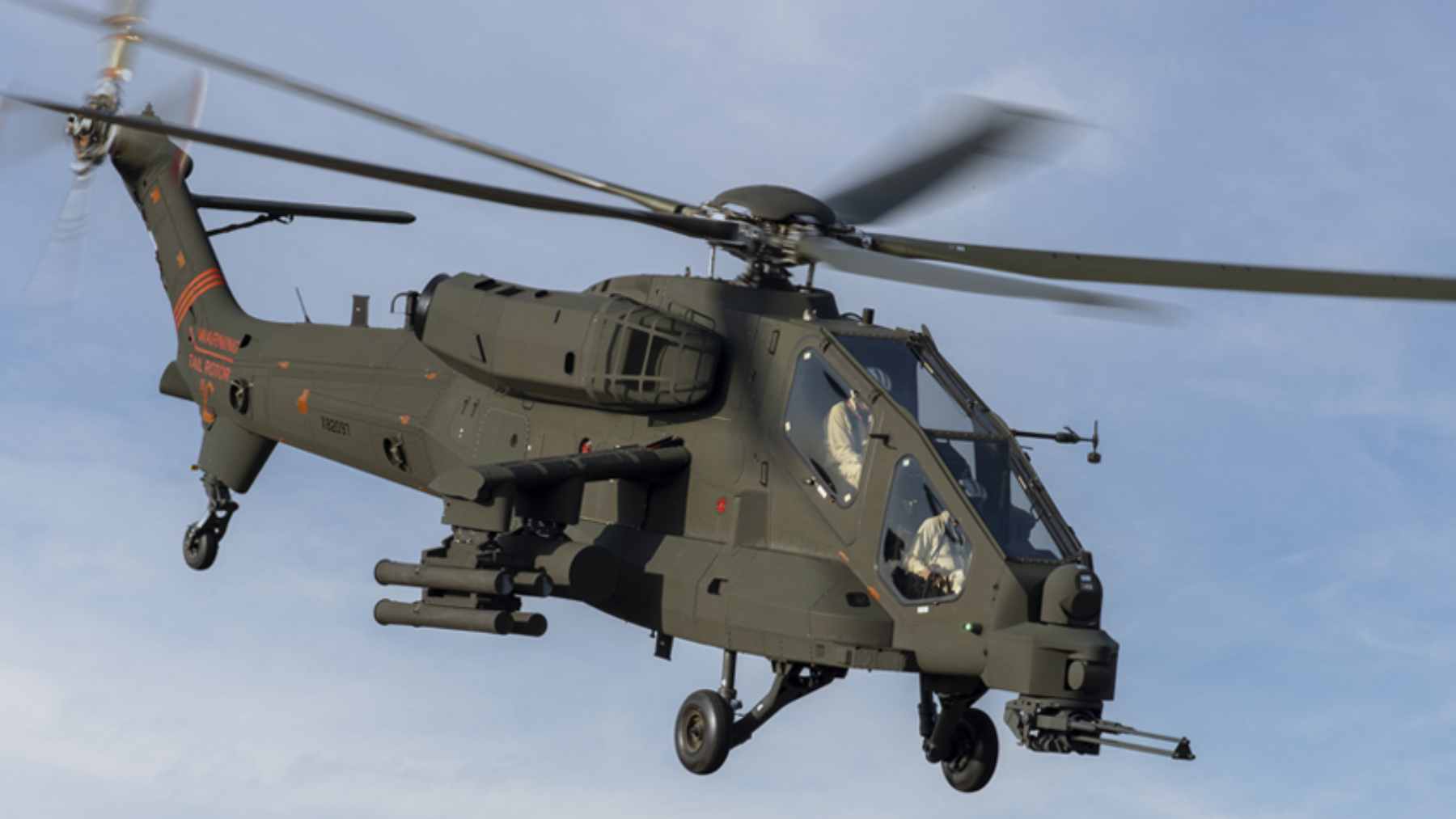
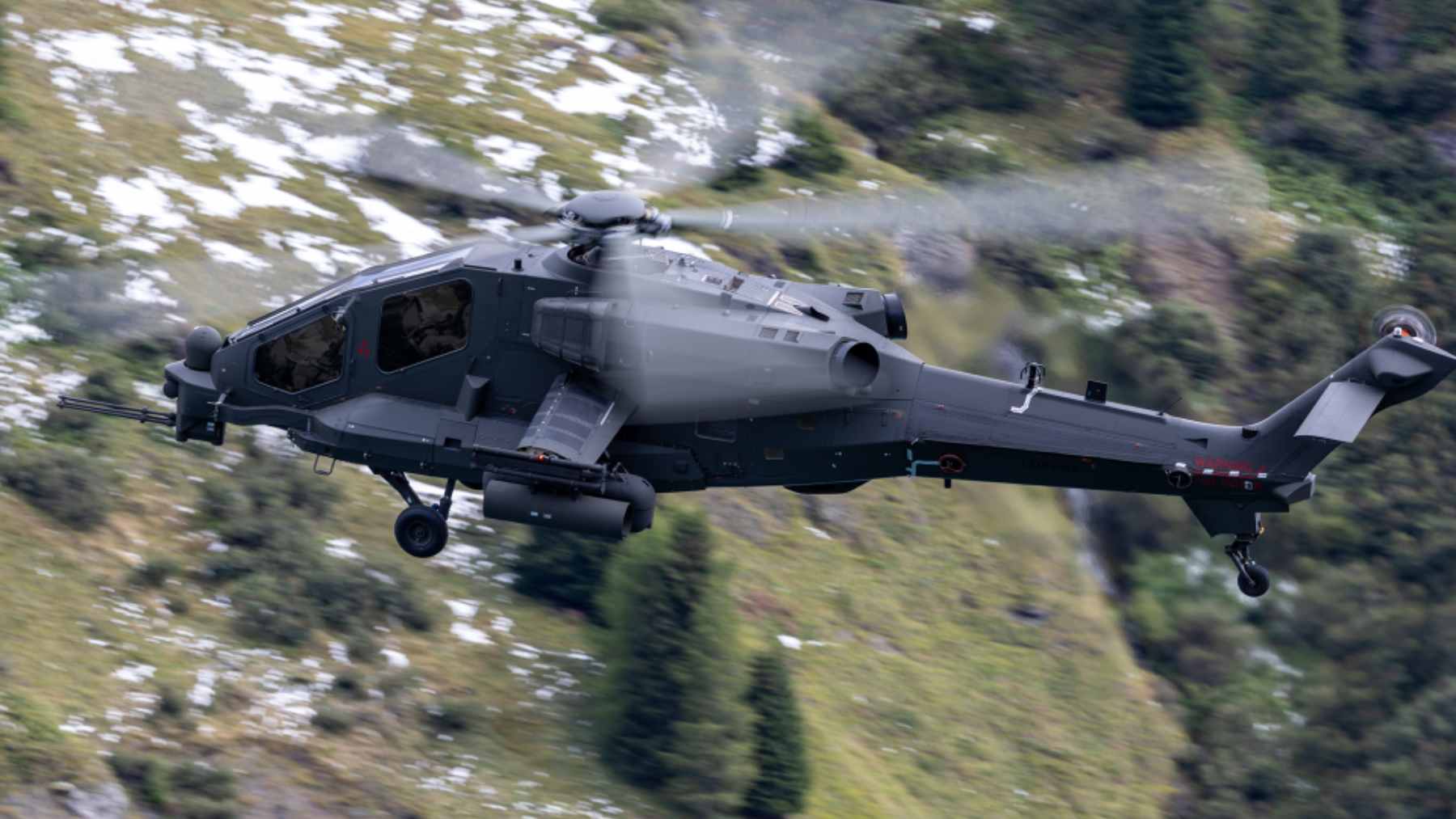
Leonardo’s AW249 has made its first public flying-display debut at ILA Berlin, giving Europe a clearer look at Italy’s new-generation combat helicopter.
Developed with the Italian Ministry of Defense for the Italian Army, the aircraft is known as “Fenice” and is being positioned as both a successor to the AW129 Mangusta and a possible export rival to platforms such as Boeing’s AH-64 Apache and Airbus’ Tiger.
The big idea is simple, at least on paper. This is not just a helicopter with more power and newer weapons, but a flying data hub designed for a battlefield filled with drones, air defenses, cyber threats, and fast-moving ground units.
That is why Leonardo is presenting the AW249 as a machine built for the next 30 years, not just the next defense trade show.
A debut with a bigger goal
At ILA Berlin, Leonardo used the AW249’s first flying-display public premiere to show more than maneuverability. The company also announced an international promotional strategy, backed by Italy’s National Armaments Directorate and the Italian Army, aimed at partners and allies looking for modern deterrence, interoperability, and industrial cooperation.
These days, attack helicopters now have to prove they can survive in airspace where drones, sensors, missiles, and electronic warfare are everywhere. The AW249 is being pitched as Europe’s chance to field a fresh platform instead of relying only on older designs upgraded over time.
From Mangusta to Fenice
The AW249 is being developed to replace Italy’s AW129 fleet, which is nearing the end of its service life. Leonardo says the new helicopter brings better speed, range, payload, power margin, and “hot and high” performance, meaning it is designed to work in difficult heat and altitude conditions.
Its design will enable pilots to fly low, use terrain as cover, and react quickly when threats appear. Leonardo describes the aircraft as capable of nap-of-the-earth flight, the kind of low-level flying where trees, ridgelines, and buildings can become part of the aircraft’s survival plan.
A cockpit built around data
Inside the AW249, the real change is not only the hardware. The aircraft has a large-area display, multi-touch controls, modern pilot helmets, and a Leonardo-developed Battle Management System meant to bring flight, navigation, and mission data into one clearer picture.
That may sound like a lot of screens, but the point is workload. In a bad-weather landing, a dust cloud, or a low-visibility mission, pilots need information fast and in a form they can actually use. Leonardo says automation and artificial intelligence are used across the aircraft to help the crew make decisions during all phases of a mission.
Drones enter the cockpit
One of the most important features is crewed-uncrewed teaming. In plain English, the AW249 is being prepared to work with drones and air-launched effects, extending what the crew can see and potentially what it can strike without putting the helicopter closer to danger.
That is where modern combat aviation is heading. A helicopter is no longer just a weapons platform hovering near the front line. It can become a command-and-control node that collects, processes, fuses, and shares information in real time, according to Leonardo Helicopters chief Gian Piero Cutillo.
The environmental angle is logistics
No one should confuse the AW249 with a green aircraft announcement. It is a combat helicopter, and Leonardo has not published a full emissions comparison showing that it is cleaner than the Mangusta.
Still, there is an environmental and business angle hidden in the maintenance story. Leonardo says the AW249 is being developed with digital simulation, data gathering, analysis, virtual reality training, and prescriptive maintenance, tools that could reduce downtime and the logistical footprint of repairs if they work as intended.
Built for hostile airspace
The AW249 is designed for complex, crowded battlespaces where threats are kinetic, cyber, and informational. Leonardo says it has an open architecture, which should make it easier to add new systems as threats evolve.
Survivability is also central to the design. The aircraft includes an Integrated Defensive Aids Suite, armored seats, ballistic-tolerant fuel tanks, crashworthiness features, low detectability, sensor fusion, and cyber protection. That mix tells you a lot about the world this helicopter is being built for.
The numbers behind the helicopter
The AW249 has a maximum takeoff weight of about 18,300 lbs., which makes it a much larger and more capable aircraft than the older Mangusta. Leonardo lists its overall length at 57’10”, its height at 14’, and its rotor diameter at 47’11”.
Power comes from two GE CT7-8E6 engines producing more than 2,500 shaft horsepower each. Its maximum cruise speed is listed at 155 knots (178 mph) and its weapons package can include guided and unguided 2.75-inch rockets, air-to-air missiles, air-to-ground missiles, and a 20-mm gun.
What comes next
Leonardo says 19 AW249 units have been procured so far, with talks ongoing for 14 more, out of an overall Italian requirement of 48 helicopters. The company also says series production has already started and that deliveries to the Italian Army, with initial entry into service, are expected to begin in 2028.
That last date matters, because earlier reporting pointed to 2027. For now, the latest official Leonardo statement places the first deliveries and initial service entry in 2028, which gives the program more time to complete environmental trials, weapons integration, battle management testing, and human-machine interface configuration.
To sum it all up, the AW249’s Berlin debut is not only about Italy replacing an aging helicopter. It is about whether Europe can build and export a modern combat rotorcraft that fits a battlefield increasingly shaped by drones, networks, and contested airspace.
The official press release was published on Leonardo.