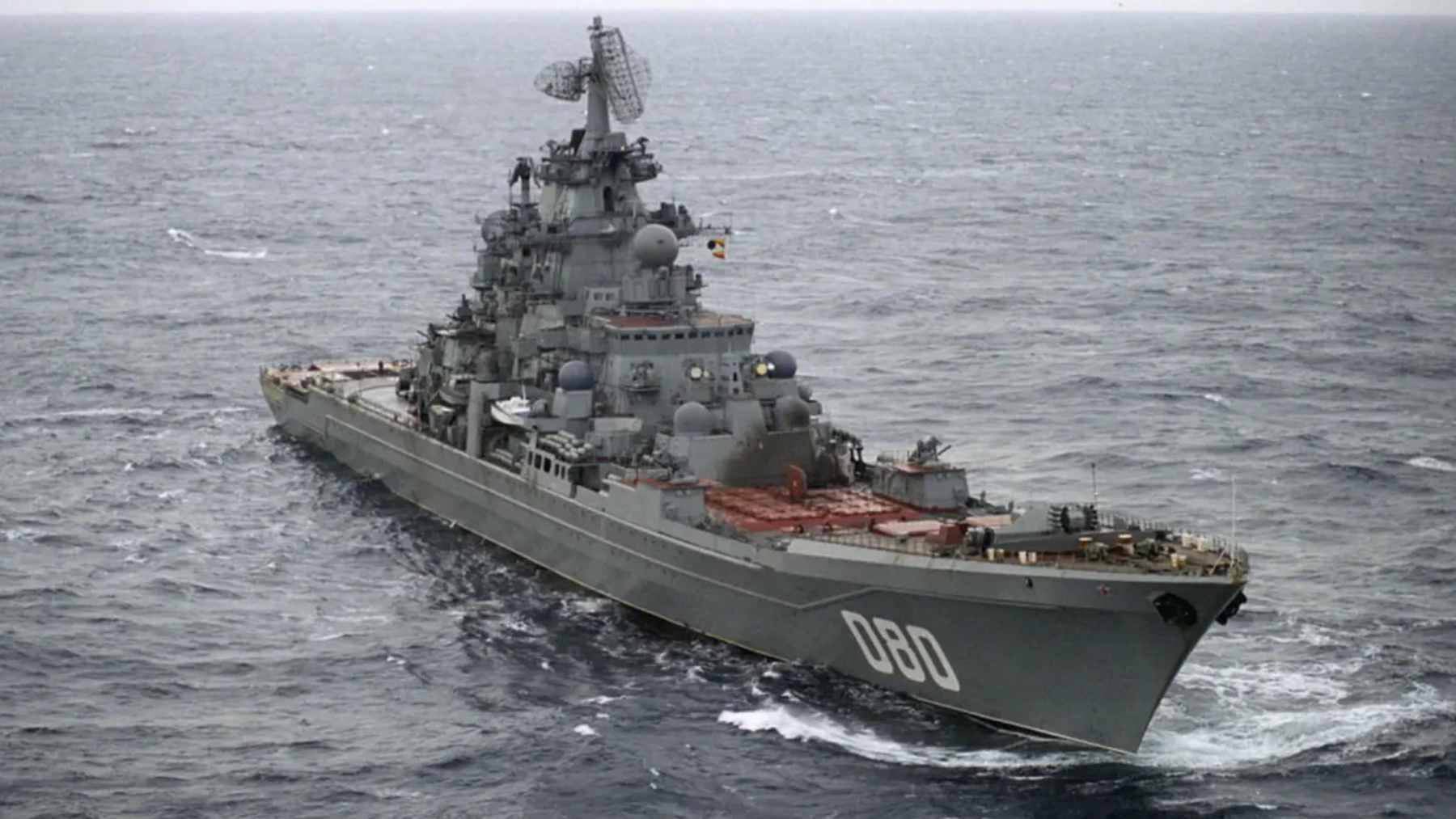
Russia’s heavy nuclear-powered missile cruiser Admiral Nakhimov has entered the final stage of testing after years of repair and deep modernization, according to a recent official notice. For Moscow, the return of this massive Kirov-class warship is meant to show that one of the most ambitious pieces of Soviet naval engineering can still be turned into a modern combat platform.
This is not just a military story, though. The Admiral Nakhimov is moving back toward service at a time when the Arctic is warming fast, shipping routes are changing, and nuclear-powered vessels are drawing closer scrutiny from coastal governments and environmental watchdogs.
In March 2025, Arctic winter sea ice reached the lowest annual maximum in the 47-year satellite record, the National Oceanic and Atmospheric Administration (NOAA) reported. That makes every major new deployment in the High North feel bigger than it once did.
A Cold War giant reappears
The Admiral Nakhimov was originally commissioned in 1988 under the Soviet name Kalinin, then renamed after the collapse of the Soviet Union. It last sailed with Russia’s Northern Fleet in the late 1990s before spending decades tied to the Sevmash shipyard in Severodvinsk.
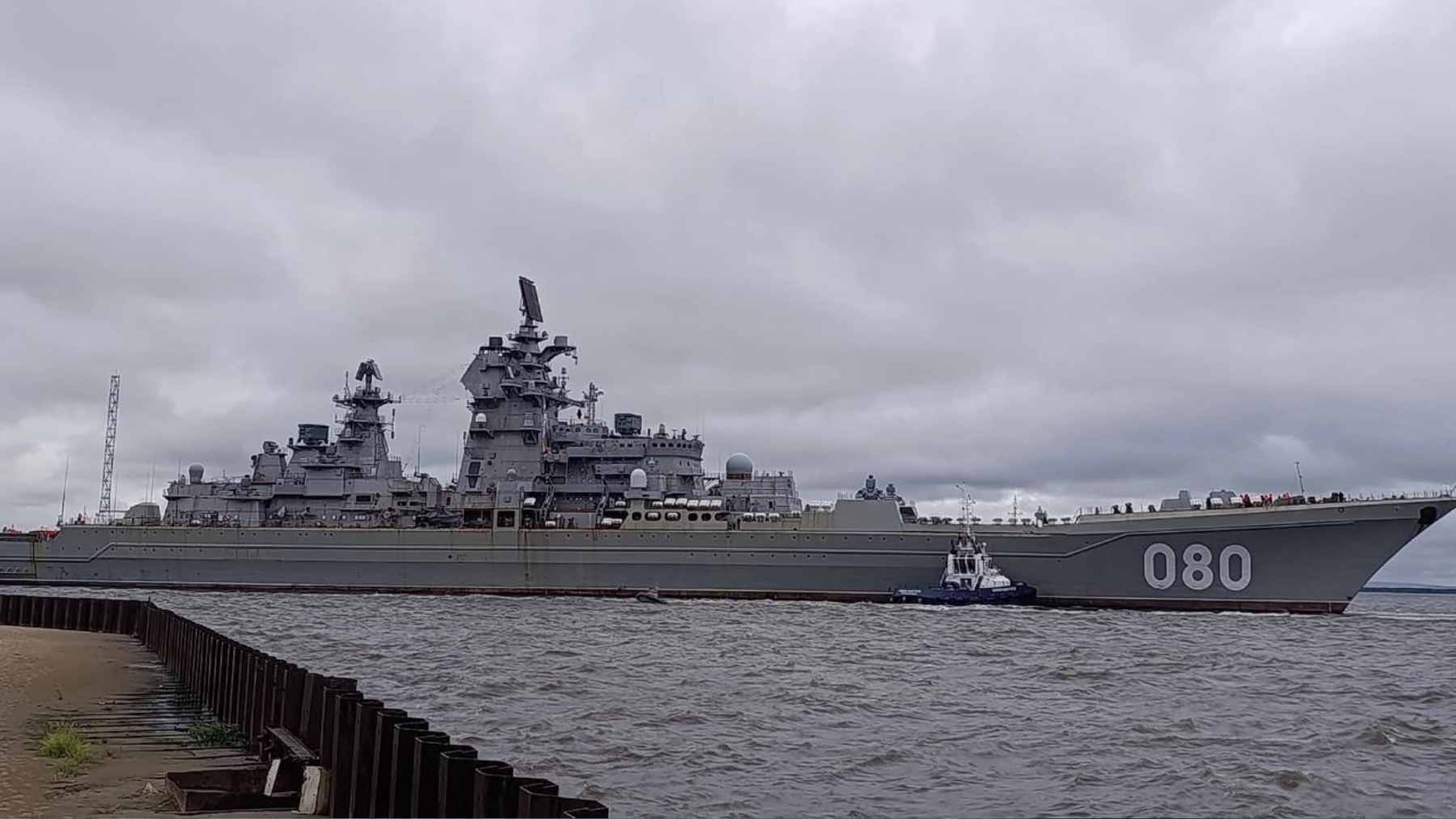
That long pause is part of what makes the ship’s return so striking. This is not a new destroyer rolling out of a modern production line, but an 823-ft. Cold War giant being rebuilt for a very different naval era.
At full load, the ship is often described as being near 31,000 tons, making it one of the largest surface combatants in the world outside aircraft carriers. Big ship, big message.
What the trials must prove
The latest phase is meant to test whether the upgraded cruiser can actually work as a complete warship, not just as a floating collection of new equipment. That includes propulsion, power generation, navigation, sensors, communications, and the integration of combat systems.
The key question is simple: can a nuclear-powered platform designed for one age of warfare be trusted in another?
Open-source reporting indicates the vessel left Sevmash in late May and began trials in the White Sea, with satellite imagery suggesting speed and navigation testing in Dvina Bay. The shipyard itself has not offered much detail about the current voyage, which should come as no surprise for a vessel of this kind.
Missiles are the headline
Most of the attention is on the weapons. Russian officials have previously said the Admiral Nakhimov will carry Kalibr cruise missiles and Tsirkon hypersonic missiles, while open-source naval analysts have also pointed to potential Oniks anti-ship missiles and upgraded air defenses.
That does not mean the final loadout is fully transparent. Some defense reporting estimates the refit could give the cruiser around 80 strike cells plus a large air-defense battery, but the exact configuration remains partly opaque.
In practical terms, the ship is being rebuilt as a long-range missile platform for Russia’s Northern Fleet. It could support operations across the Arctic, North Atlantic, Mediterranean, or Pacific, depending on where Moscow chooses to send it.
The Arctic makes it more complicated
The Northern Fleet is central to Russia’s Arctic posture. The same official notice that mentioned the Admiral Nakhimov also described Northern Fleet activity across the northeastern Atlantic, the Greenland-Norwegian area, and western Arctic maritime zones.
That matters because the Arctic is no longer a remote frozen backdrop. NOAA’s 2025 Arctic Report Card said the Atlantic sector of the Arctic Ocean saw August sea surface temperatures about 13°F warmer than the 1991 to 2020 average.
A nuclear-powered warship does not create the same exhaust profile as a conventional fuel-burning ship, and nuclear propulsion can allow long deployments without refueling.
Still, it brings another kind of environmental question, centered on reactor safety, maintenance, radioactive waste handling, and emergency preparedness near sensitive northern waters.
A cleaner engine is not the whole story
Nuclear propulsion is often discussed as useful for vessels that need to stay at sea for long periods, especially submarines, icebreakers, and aircraft carriers. The World Nuclear Association notes that more than 160 ships are powered by over 200 small nuclear reactors, most of them military vessels.
That does not make every deployment automatically risky. It does mean public confidence depends on training, maintenance, transparency, and the ability to respond if something goes wrong.
The Arctic Council has also been studying ship-related black carbon emissions and ways to reduce harmful gases from vessels in the region.
The Admiral Nakhimov is not a commercial cargo ship burning heavy fuel oil, but its return is happening in the same crowded Arctic conversation about ships, pollution, ice, and emergency response.
The cost of bringing back the past
The modernization also says a lot about Russia’s defense industry. Work on the cruiser’s return stretched far beyond earlier schedules, with Naval News reporting that the modernization effort began in 2014 and was originally expected to be complete by 2018.
That delay is not a small footnote. Rebuilding a nuclear-powered capital ship requires specialized labor, reactor work, weapons integration, electronics, and a shipyard base able to handle unusual complexity.
Some open-source estimates have put the modernization cost as high as about $2.7 billion, though Russia has not publicly confirmed a final figure in a fully transparent way. Either way, the business question is obvious: could that money have bought more smaller ships instead?
A symbol with limits
For Moscow, the Admiral Nakhimov is both a military asset and a symbol. It may eventually take over roles now associated with the Pyotr Velikiy, its Kirov-class sister ship, whose future has been the subject of repeated uncertainty.
For NATO planners, the cruiser will be watched closely. A heavily armed, nuclear-powered surface combatant in the High North is not something any navy can ignore.
Still, one ship does not change the entire naval balance by itself. The bigger story is how Russia is trying to preserve a Soviet-era heavyweight while the Arctic becomes warmer, busier, and more strategically exposed.
The official notice was published on Russia’s Ministry of Transport.