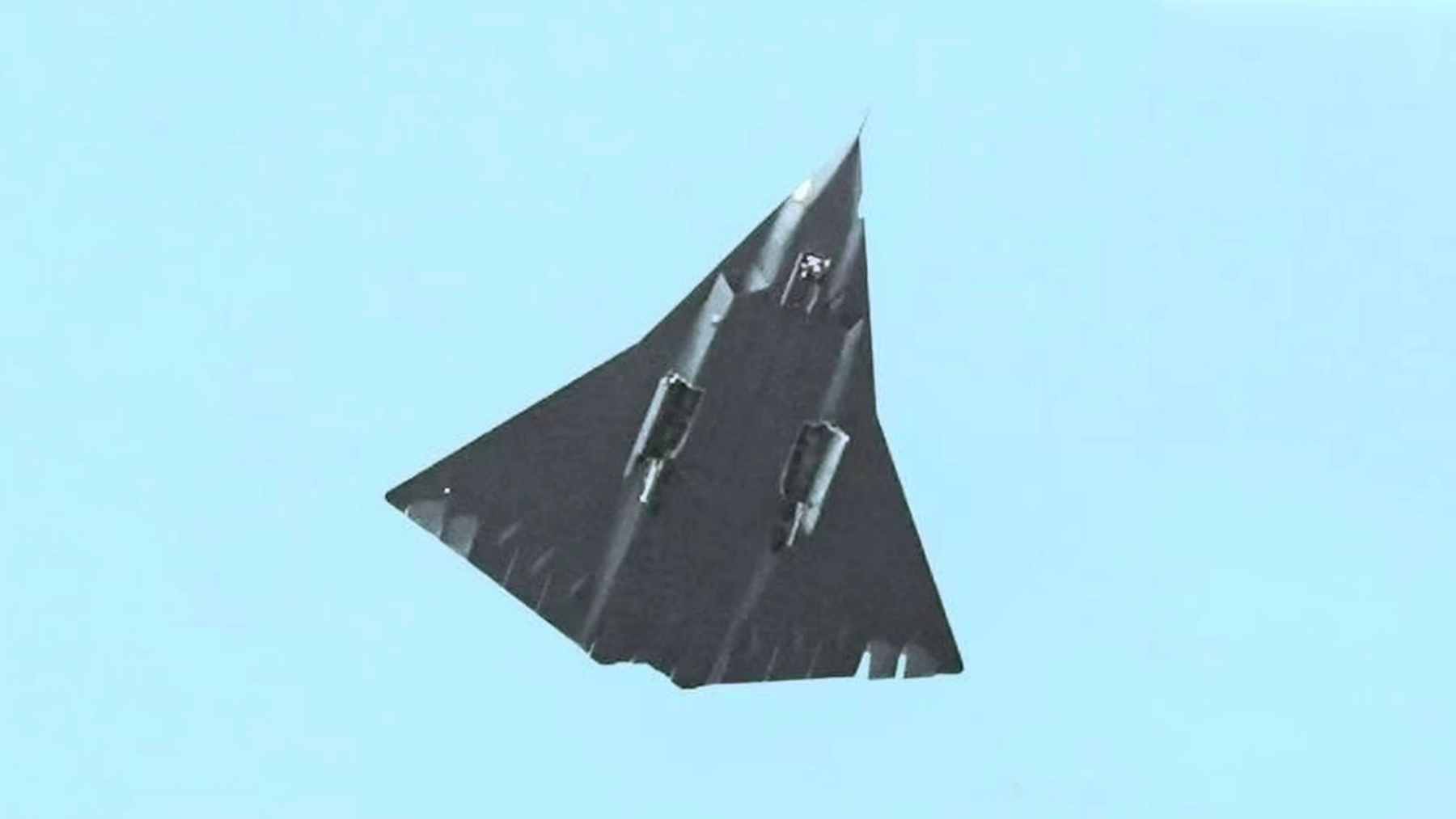
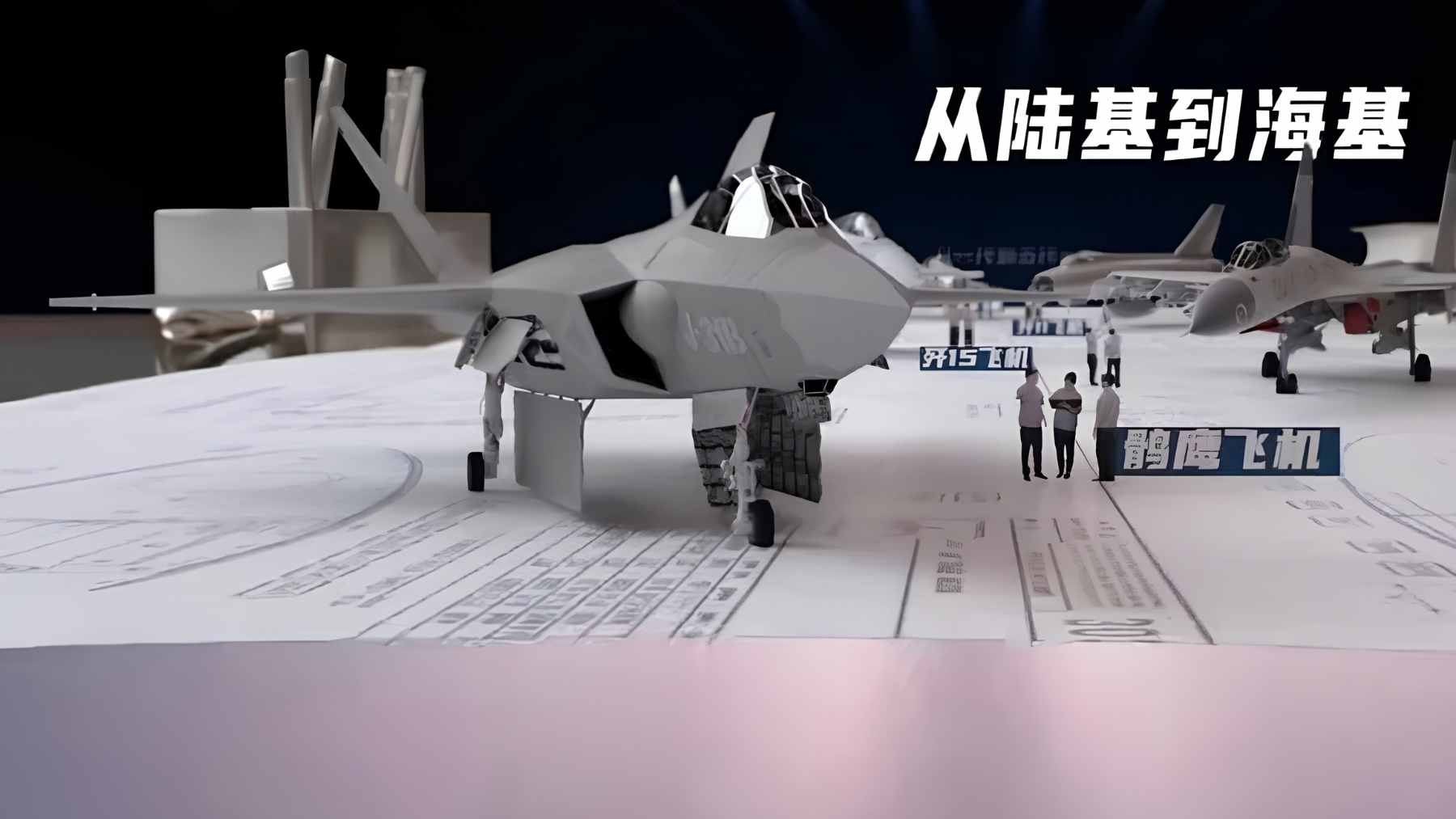
China’s next fighter jet may not be just another stealth aircraft. A defense assessment cited by Arab Defense says a French report views Beijing’s sixth-generation fighter project as more mature than many Western estimates had assumed, with several core subsystems reportedly beyond early testing.
That is a big claim, and it needs care. The aircraft is not operational yet, but the warning is hard to ignore.
The key point is momentum. The U.S. Defense Department has already acknowledged that two Chinese companies conducted initial test flights of two separate sixth-generation prototype aircraft in December 2024, while also describing the programs as nascent and expected to become operational by 2035.
In practical terms, China is still testing, but it is no longer just sketching future jets on a whiteboard.
A new kind of air race
The French assessment described in the brief points to a fighter built around layered stealth, AI support, manned-unmanned teaming, hypersonic weapons carriage, and variable-cycle propulsion. That sounds like a long shopping list, but it is really one idea: the jet is being designed as the center of a flying network, not as a lone hero aircraft.
The Pentagon’s own language points in the same direction. Once operational, it says a Chinese sixth-generation aircraft would likely carry out air-to-air and air-to-surface missions and guide uncrewed aircraft in combat. Picture a quarterback in the sky, but with drones doing the scouting, confusing, and sometimes the striking.
The drone wingman problem
One of the most serious claims in the brief is that China wants its future fighter to direct groups of stealth drones known as loyal wingmen. That would let a pilot or mission commander push sensors, decoys, and weapons deeper into contested airspace without risking as many crewed jets.
Could that reshape a regional crisis? Potentially, yes. A fighter-drone group could stretch an opponent’s radar coverage, force it to waste expensive interceptors, and make it harder to tell which aircraft is the real threat. That is where the future of air combat starts to look less like a dogfight and more like a fast-moving chessboard.
Stealth is no longer just shape
The report says China’s strengths include advanced coatings, intelligent aircraft skins, gallium nitride radar, and AI algorithms for air operations. These details are difficult to verify publicly, so the safest reading is not that every claimed component is ready for war. It is that China appears to be attacking the problem from many directions at once.
Reuters reported in late 2024 that images of two new Chinese military aircraft showed tailless designs with stealth characteristics, while experts said there was not enough detail to judge their exact performance.
That caution matters. In military aviation, a dramatic silhouette is not the same thing as a finished weapon.
The West is moving, but unevenly
America is not standing still. The U.S. Air Force awarded Boeing the Engineering and Manufacturing Development contract for the NGAD platform, now called the F-47, in March 2025. The Air Force says the aircraft is designed around stealth, sensor fusion, long-range strike, and cooperation with Collaborative Combat Aircraft.
Europe’s path looks shakier. Reuters reported this week that France and Germany had ended their joint fighter jet project after disputes among the companies involved, a major blow to the Future Combat Air System. That does not mean Europe is out of the game, but it does mean time has been lost.
The hidden environmental cost
Military aviation has another side that rarely appears in fighter-jet headlines. Faster engines, larger prototypes, specialized materials, and more testing all sit inside a defense sector that burns enormous amounts of fuel. It is not just a budget issue, it is an energy issue.
The Pentagon’s 2021 emissions report said DoD emissions in fiscal 2019 totaled about 60.6 million tons of CO2 equivalent.
Operational sources accounted for about 37.5 million tons, and jet fuel made up roughly 80% of those operational emissions. So when countries race to build the next generation of airpower, the climate ledger does not disappear.
Why this matters now
China’s advantage may not be one magic engine or one invisible coating. It may be the way its defense industry links aircraft design, electronics, drones, missiles, and production capacity into one system. That is the part Western planners are watching most closely.
But there is still a big gap between promising tests and a reliable combat fleet. Flight trials, weapons integration, pilot training, maintenance, production quality, and command software can all slow a program down.
The trouble is, even a program that is not ready today can shape budgets and alliances tomorrow.
At the end of the day, the question is simple: is China catching up, or is it starting to set the pace? Public evidence does not prove every bold claim in the French assessment, but it does show a race that is tighter, faster, and less predictable than many people assumed.
The official annual report cited here was published on Defense.gov.