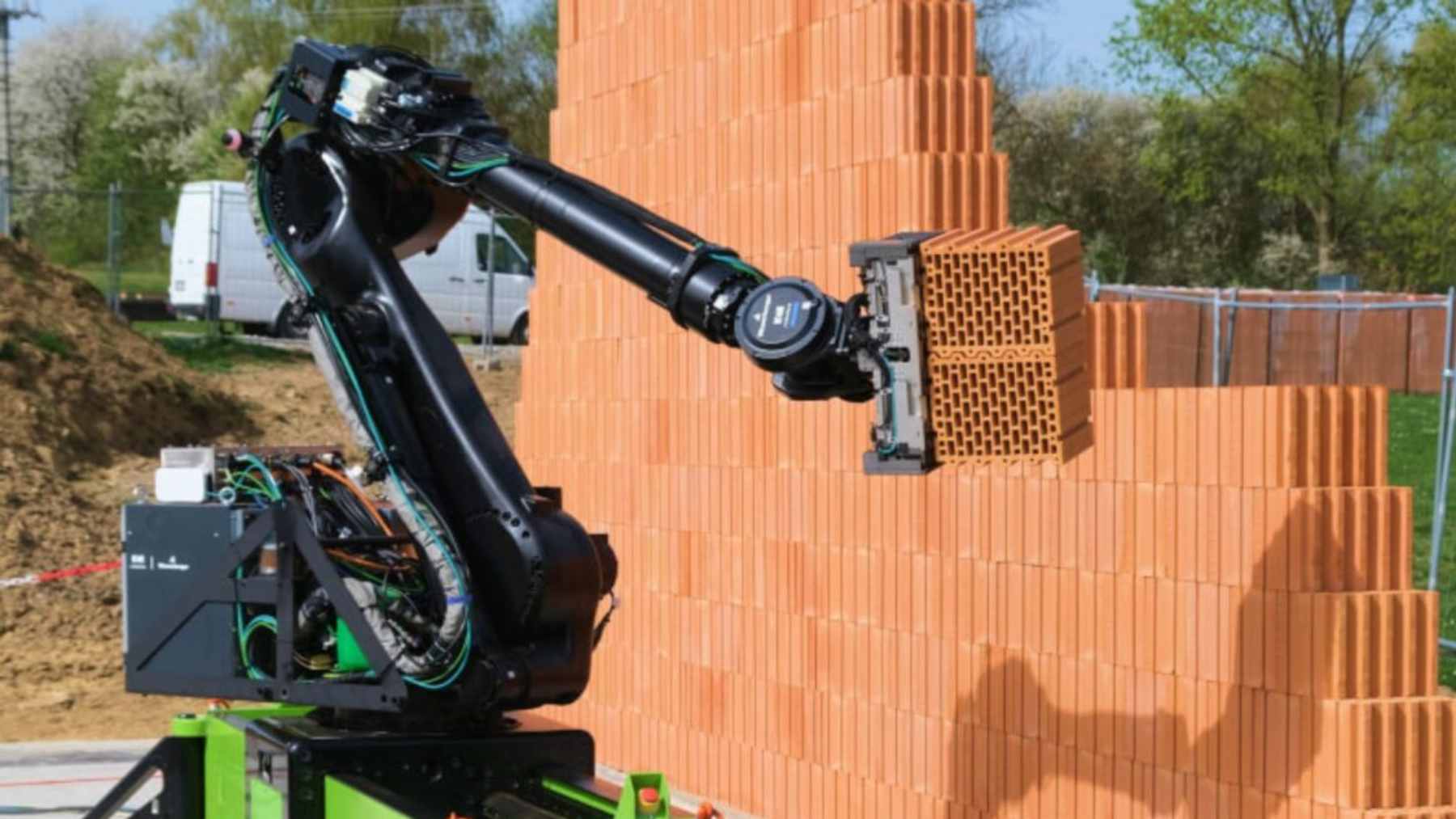
What if the next big shift in homebuilding is not a taller crane or a faster cement mixer, but a robot that quietly lays brick after brick while a human operator watches from a tablet? That is the promise behind WLTR, pronounced “Walter,” a wall-laying robot now being used in the UK as construction firms face pressure to build faster with fewer skilled workers.
The machine’s backers say WLTR can match the output of a five-person bricklaying team, work in tough weather, and build walls without scaffolding up to about 11 1⁄2 feet high.
Just as important, it can use adhesive foam instead of traditional mortar in many applications, a detail that could matter in an industry trying to cut carbon without slowing down the housing pipeline.
A robot for a housing crunch
WLTR is arriving at a sensitive time for Britain. The UK government has set a target of building 1.5 million homes, while official statements have pointed to more than 35,000 construction vacancies and a shortage of workers with the right skills.
That is why a machine like Walter is getting attention beyond the usual robotics crowd. If a housing shortage is partly a labor shortage, then automation becomes more than a gadget–it becomes part of the business case.
The first UK deployment has been tied to a 27-home development in Durham by JT Lifestyle Homes. Industry reports say Walter can lay up to about 2,153 ft.² of masonry per day, far above typical manual output.
How WLTR builds walls
The idea is simple, at least from the outside. WLTR follows a digital wall plan, aligns itself with laser guidance, picks up robot-ready bricks, applies adhesive foam, and places each unit with machine precision.
GreenBuild says the robot can deliver about 108 ft.² of masonry per hour and reach walls of about 11’ 6″. It also says WLTR can work continuously, place bricks according to a virtual model, and reduce waste by following a modular system.
Still, this is not magic. A worker must keep pallets supplied, handle cutting, fit anchoring clips, prepare openings, and monitor the process. In practical terms, the hardest repeated motion moves to the machine, while the human role shifts toward control and problem-solving.
Why the glue matters
The environmental angle begins with cement. The Global Cement and Concrete Association says cement, the key ingredient in concrete, accounts for around 7% of global CO2 emissions, while the International Energy Agency warns that cement emissions remain stubbornly high.
WLTR does not make every building low-carbon by itself. But replacing conventional mortar with Porotherm Dryfix foam in suitable wall systems could reduce one source of on-site cement use, and GreenBuild says the robot applies that foam in two strips before placing the brick.
There is a caveat. GreenBuild also notes that thin-bed mortar can be used for structures with higher static loads, so the “glue instead of cement” claim should be read as application-specific, not universal. That nuance matters, especially when green building claims are under more scrutiny than ever.
What happens to workers
The most dramatic headlines suggest robots are replacing construction workers. The more grounded version is a little different. Wienerberger, one of the companies behind WLTR’s development, says the technology is meant to take over heavy, repetitive, highly precise tasks while elevating the worker into a trained operator role.
Dr. Jan Telensky of JT Lifestyle Homes has framed the shift in similar terms, saying WLTR could create “highly-skilled jobs for operators” who still oversee projects. For younger workers, that matters. A tablet-guided robot may be a more attractive entry point than carrying blocks through cold rain all day.
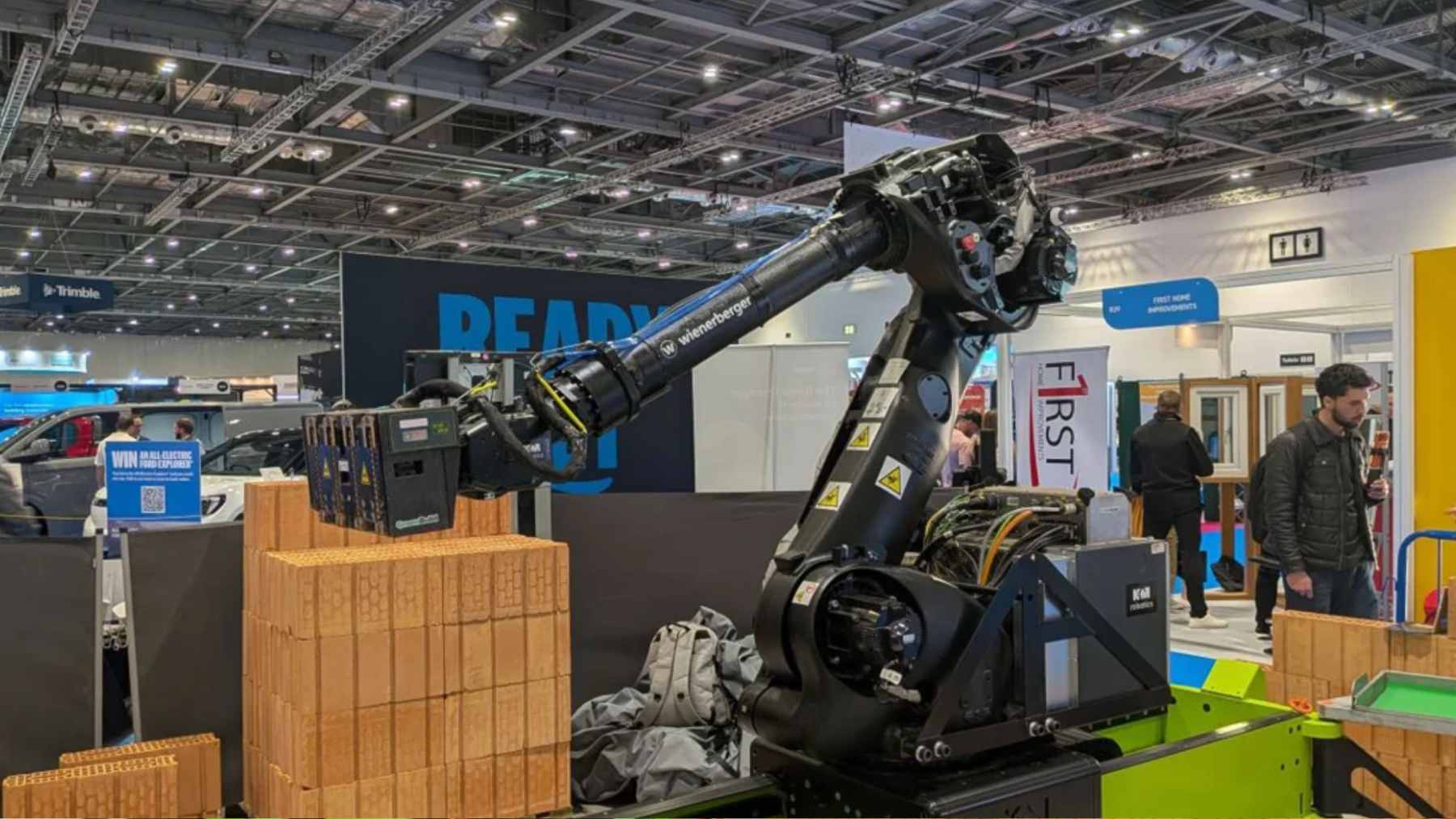
At the end of the day, construction still needs people. Homes need design checks, utilities, safety oversight, finishing, inspections, and judgment when a site does not behave like a computer model. Anyone who has watched a real building site knows that neat plans meet messy ground very quickly.
Construction meets climate pressure
WLTR also points to a broader change in construction technology. Robotics has already transformed factories, warehouses, and vehicle manufacturing, but building sites are harder. They are wet, uneven, crowded, and constantly changing.
That is why the scale-up matters. Wienerberger says WLTR moved from development in 2021 to commercial deployment after 2023, with 12 robots active on construction sites and about 430,556 ft.² of masonry already laid across several European markets.
For the most part, this is less about one machine taking over an industry overnight and more about construction finally absorbing digital tools piece by piece. A robot that can repeat a wall system all day may not solve planning delays or land costs, but it can make one bottleneck less painful.
A cautious next step
So, is Walter the end of human bricklaying? Not quite. It is better understood as a sign that building work is being reorganized around machines, software, and lower-carbon materials.
That could be good news if it reduces injuries, speeds up housing, and cuts waste. But it also raises fair questions about training, certification, long-term adhesive performance, and whether smaller builders can afford the technology.
The real test will not be a flashy demonstration. It will be whether robots like WLTR can deliver durable, affordable homes at scale while proving their environmental benefits with transparent data.
The official statement was published on wienerberger.