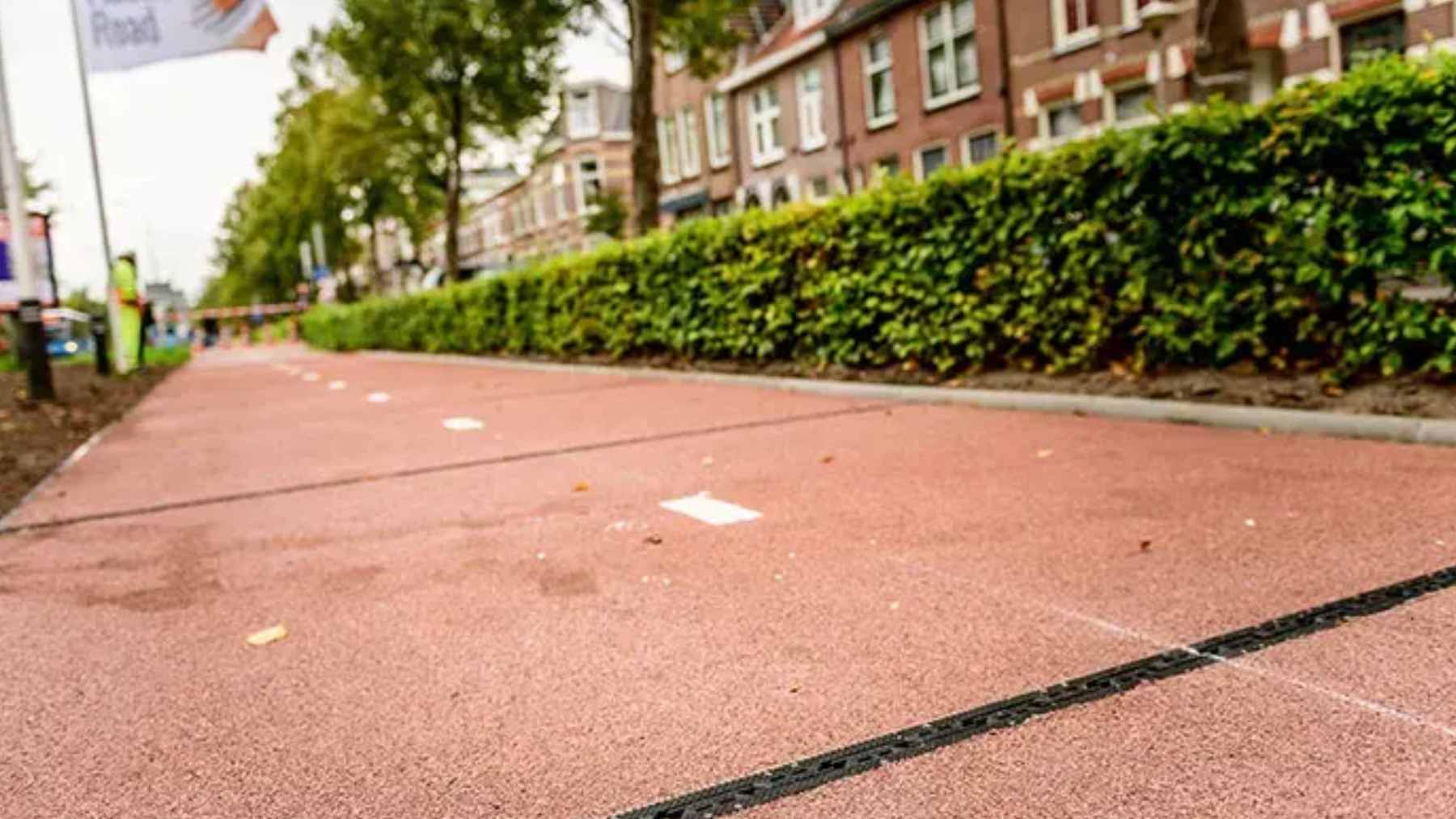
Cities have pothole problems, drainage problems, and plastic waste problems. In Zwolle, Netherlands, one pilot tried to put all three into the same lane, using a 30-meter bike path made with the recycled plastic equivalent of more than 218,000 plastic cups.
The project is called PlasticRoad, and its most interesting feature is not only what it is made of. The path is modular and hollow, giving cities room for drainage, cables, and pipes under the surface, the kind of hidden infrastructure that usually means digging up streets when something needs fixing.
Plastic waste becomes infrastructure
The path opened on September 11, 2018, in Zwolle, where Wavin has its corporate headquarters. The project was developed by KWS, Wavin, and Total, after KWS inventors Anne Koudstaal and Simon Jorritsma advanced the concept.
At first glance, it looks like an ordinary bike lane. But those 30 meters hold over 2,000 lbs. of recycled plastic, according to a later Wavin press release on the pilot results. That is the sort of number that makes a thrown-away cup feel a little less forgotten.
A plastic cup usually has a short life. Here, it became part of a public route where cyclists pass over it every day, without needing to think about where it came from.
Why the hollow design matters
The clever part is the empty space inside the modules. PlasticRoad’s hollow structure can hold rainwater, carry cables and pipes, and give maintenance crews easier access than a typical asphalt road would.
That means fewer cuts in the street and less disruption when a city needs to update infrastructure. Anyone who has sat in traffic beside orange cones knows why that matters.
The structure is also permeable, which helps excess water drain quickly. That is no small thing as heavy rain overwhelms older streets, turning low spots into puddles, flooded lanes, and repair bills.
Faster building and fewer potholes
PlasticRoad was designed as a prefabricated system rather than a traditional road built entirely on site. Wavin says the modules can be assembled in days and may last up to three times longer than a normal road, while reducing the risk of cracks and potholes.
That durability claim will matter most to city budgets. Potholes are not just annoying bumps for cyclists and drivers. They mean maintenance trucks, blocked lanes, noise, and additional public spending.
The pilot was also fitted with sensors to monitor temperature, bike passages, and the durability of the construction. The point was to test the road under real daily use, not just in a lab.
The data moved the idea forward
After more than a year-and-a-half of testing, Wavin said the first PlasticRoad bike path had recorded its millionth crossing. The company also said the two pilot paths in Zwolle and Giethoorn showed the system could handle heavy loads and perform under varied conditions.
There was another figure that cities watching stormwater will care about. In the Zwolle test site, the highest measured water level inside the PlasticRoad reached only 48% of the available storage capacity during heavy showers, and the water infiltrated into the soil within two days, according to Wavin.
The pilot version also cut CO₂ emissions by about 50% to 70% compared with conventional bike paths made from asphalt or concrete slabs, Wavin said. That is a company-reported figure, so it should be treated as a project claim, but it gives city planners a concrete benchmark to study.
From pilot lane to business case
For the companies behind the project, the Zwolle lane was never supposed to be a one-off curiosity. It was a test of whether recycled plastic could become a practical product for streets, sidewalks, parking areas, and other urban surfaces.
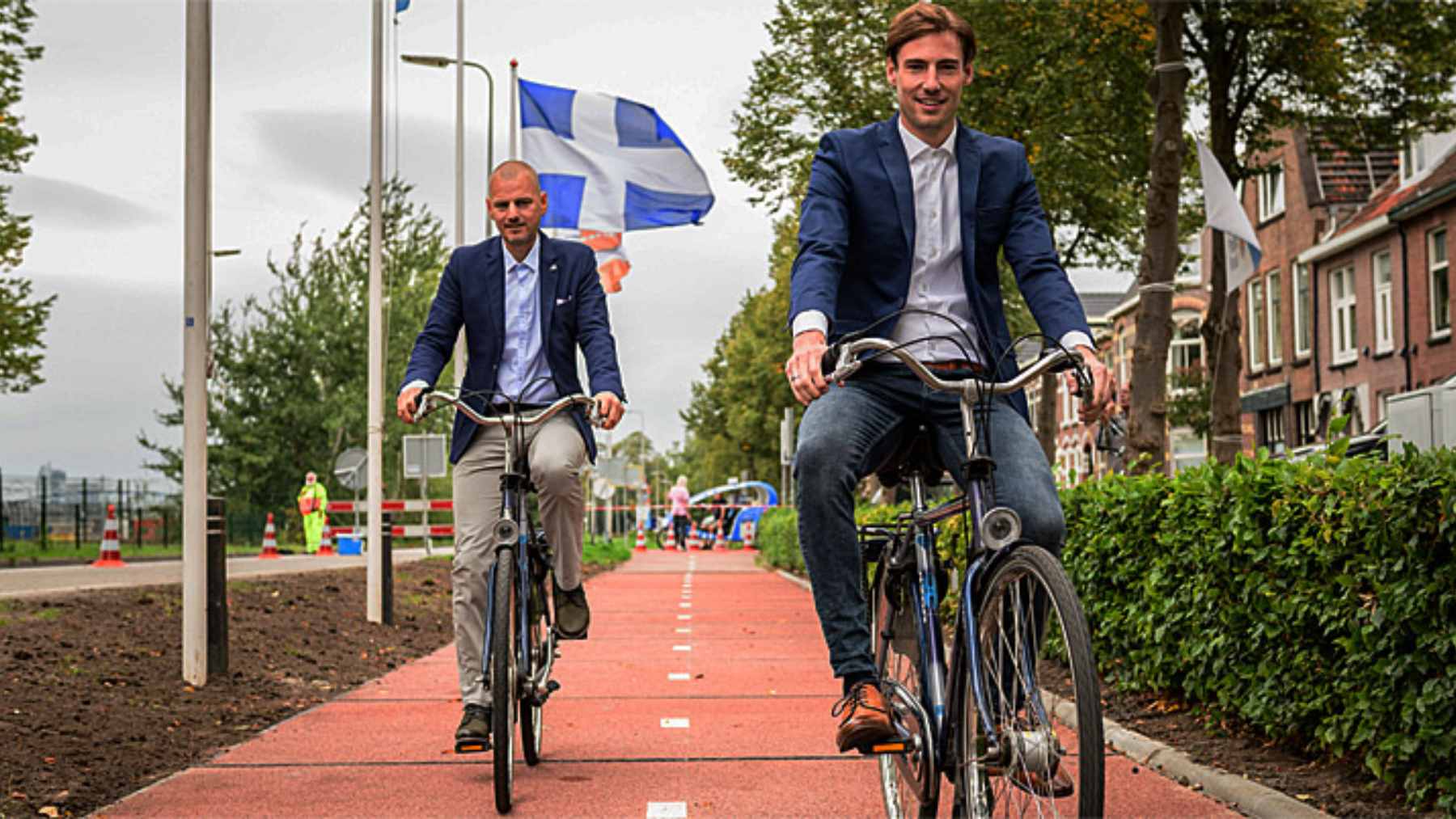
By 2021, VolkerWessels said PlasticRoad had entered a new phase with industrially produced elements and products using 100% recycled municipal plastic waste. The company also said the renewed sensors could support traffic monitoring and predictive insights, which moves the idea closer to smart-city infrastructure.
That business angle is important. A green invention only changes cities if it can be produced, ordered, installed, and maintained at scale. Otherwise, it stays a headline instead of becoming something under people’s wheels.
A road with a bigger lesson
PlasticRoad does not solve plastic pollution by itself. It also does not remove the need to reduce single-use plastics in the first place, because the cleanest waste is still the waste that never gets made.
But the Zwolle bike path offers a useful glimpse of what circular infrastructure can look like. Instead of sending plastic straight to a landfill or incinerator, it gives the material a second job in a system that also tackles drainage and maintenance.
Anne Koudstaal and Simon Jorritsma, the inventors of PlasticRoad, summed up the pilot in simple terms when they said, “When we invented the concept, we didn’t know how to build a PlasticRoad–now we know.”
The official statement was published on TotalEnergies.