Inside a California facility big enough to fit three football fields, scientists are firing the world’s highest-energy laser at a target about the size of a pencil eraser.
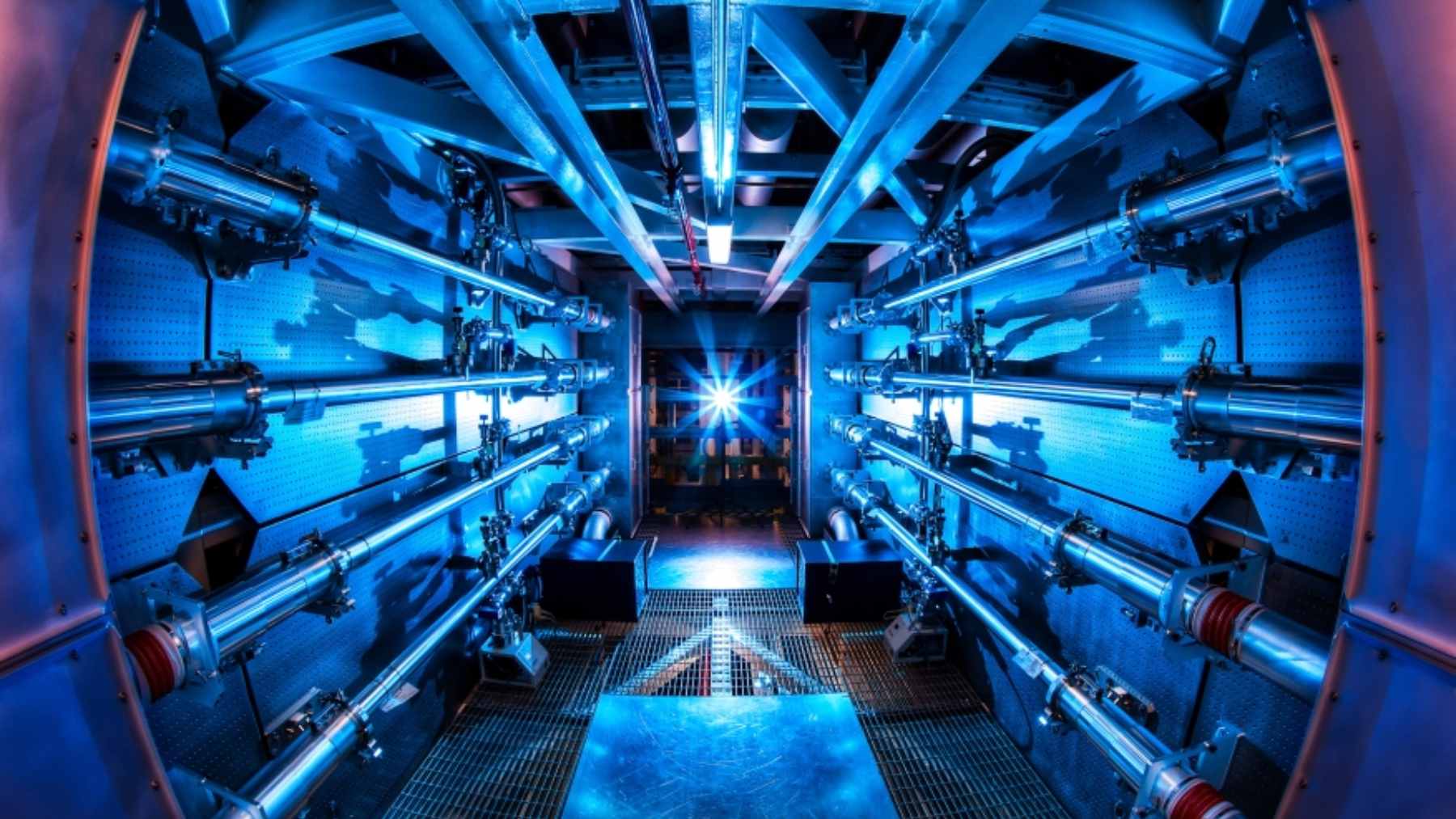
The National Ignition Facility (NIF) at Lawrence Livermore National Laboratory guides 192 laser beams into one point, delivering more than 2 million joules of ultraviolet energy and 500 trillion watts of peak power in only a few billionths of a second.
Why should anyone outside a physics lab care? This machine is testing fusion, the same process that powers the Sun, and it could shape clean energy, national security, and the business race around advanced power. It is not a power plant yet, and it will not lower the electric bill this summer, but it has already crossed a line researchers have been chasing for decades.
A giant laser, a tiny target
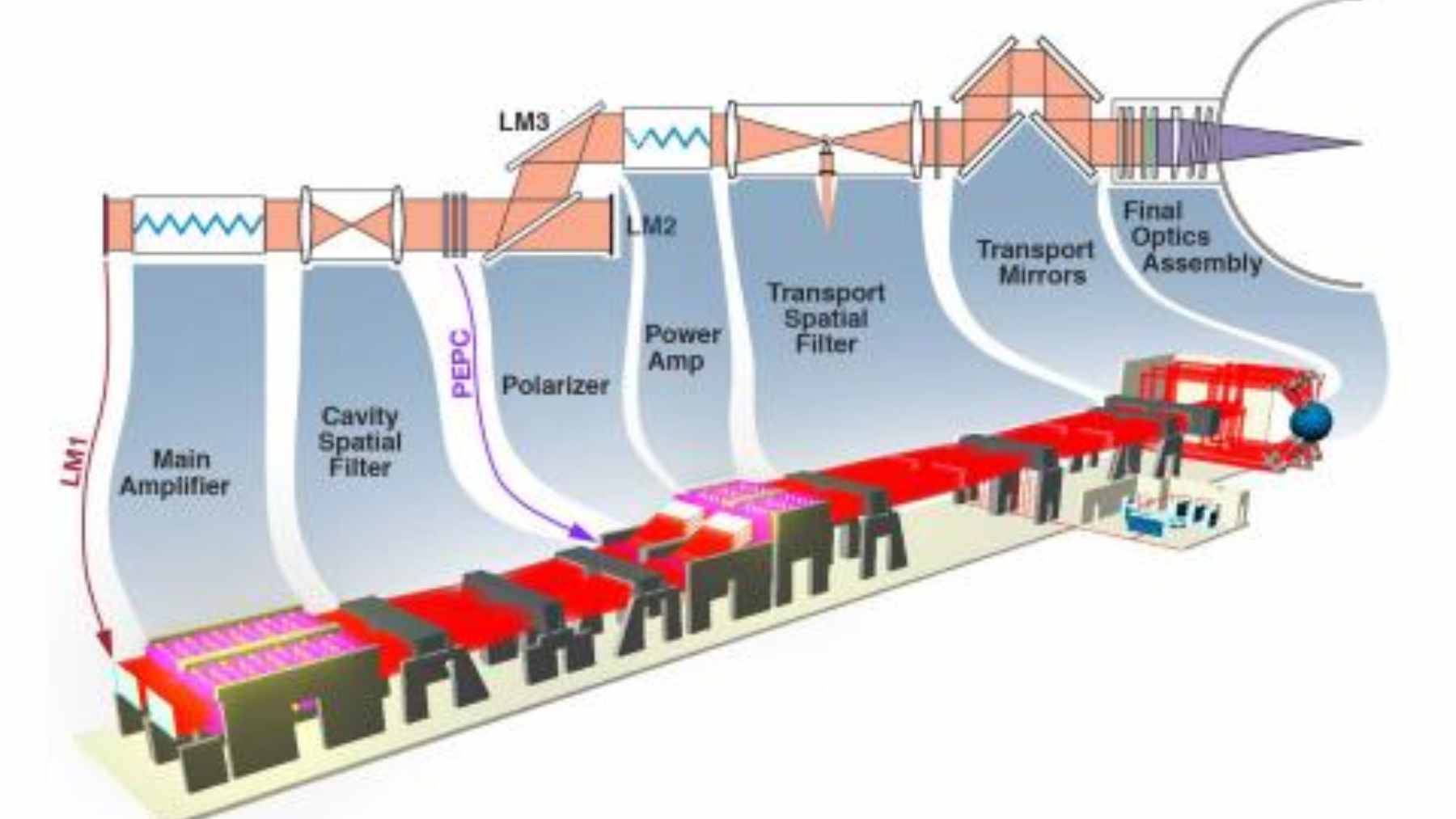
NIF does not work like a bigger version of a classroom laser pointer. It is a massive optical system that guides, amplifies, reflects, and focuses its beams so they arrive at the target almost at the same time. Even a tiny mismatch can weaken the compression.
At the center of the experiment sits a small capsule containing hydrogen isotopes. The laser energy creates an intense burst of x-rays around it, forcing the capsule to implode and pushing the fuel toward conditions found in stars and giant planets. That is the hard part–everything has to happen before the fuel flies apart.
Star conditions on Earth
The numbers are almost hard to picture. NIF can generate temperatures of more than 180 million°F and pressures greater than 100 billion Earth atmospheres inside the target. In practical terms, it briefly creates one of the most extreme environments ever produced in a laboratory.
That 500 trillion watts figure sounds like something that could power a country, but there is a catch. The pulse lasts only a few billionths of a second, so this is not continuous electricity. It is more like squeezing an enormous punch into a blink.
The ignition breakthrough
On December 5, 2022, NIF made history by achieving fusion ignition in a controlled laboratory experiment. The shot produced 3.15 megajoules of fusion energy from 2.05 megajoules of laser energy delivered to the target, which meant the fusion reactions released more energy than the laser energy that struck the capsule.
Since then, the achievement has been repeated and improved. NIF’s official material lists an April 7, 2025, shot that produced 8.6 megajoules of fusion energy from 2.08 megajoules delivered to the target, setting new records for yield and target gain. By October 1, 2025, LLNL had achieved ignition at NIF for a 10th time.
Clean energy, but not yet
This is where the environmental promise comes in. Fusion could, in theory, offer a powerful source of low-carbon energy without the same meltdown risk associated with fission reactors. For a world dealing with hotter summers, rising demand, and noisy debates over power grids, that possibility matters.
Still, the gap between a record laboratory shot and a working power plant is huge. NIF’s own energy security page notes that the total energy used to power the lasers remains far greater than the fusion energy produced. A future inertial fusion plant would need high repetition rates, roughly 5 to 20 pulses per second, and much higher overall system efficiency.
Defense and science
NIF is not only an energy experiment. It is also a central tool for the National Nuclear Security Administration’s Stockpile Stewardship Program, which helps maintain the safety and reliability of the U.S. nuclear deterrent without full-scale nuclear testing. That defense role is one reason the facility receives so much attention and investment.
There is also a wider science payoff. By recreating extreme pressure and temperature, NIF helps researchers study materials, planetary interiors, supernova physics, plasma behavior, and other processes that usually happen far beyond everyday life. It is, in a way, a bridge between Earthbound engineering and the physics of the universe.
What comes next
The next phase is less glamorous than the headline numbers but just as important. Scientists need better targets, tougher optics, faster systems, and a way to turn short fusion bursts into dependable electricity. That means engineering, manufacturing, data analysis, and probably a lot of trial and error.
At the end of the day, NIF’s biggest message is not that fusion power has arrived, it is that a once-theoretical milestone has become repeatable. For clean energy, defense science, and the companies watching this field closely, that is enough to keep the race moving.
The official statement was published on National Ignition Facility & Photon Science.