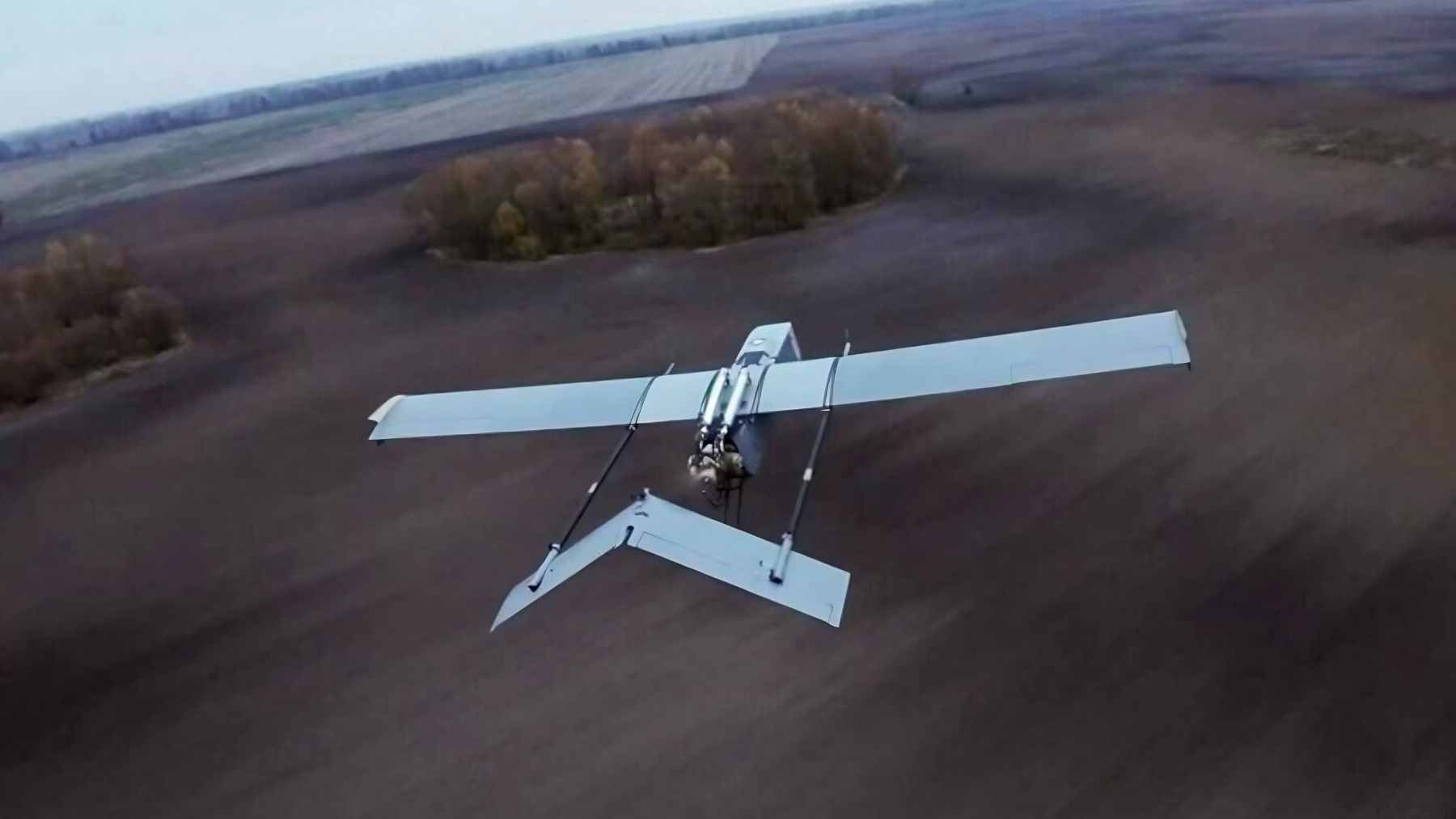
What does a drone factory smell like? In a recent visit to a secret Fire Point facility, Yle described resin-coated parts drying on racks while 3D printers wrap carbon fiber around frames, all feeding a line that can turn out more than 100 long-range drones a day.
Fire Point’s leaders say that same pace is now driving bigger ambitions, including a ballistic missile meant to reach Moscow and an air defense interceptor pitched as a cheaper Patriot alternative. But the environmental footprint of this sprint, from chemical fumes to carbon emissions, rarely shows up in the headlines.
A drone factory built for speed
Yle’s account of the production floor reads more like a carpentry shop than a clean-room lab, with workers sanding and hammering airframes and wings that reportedly use wood.
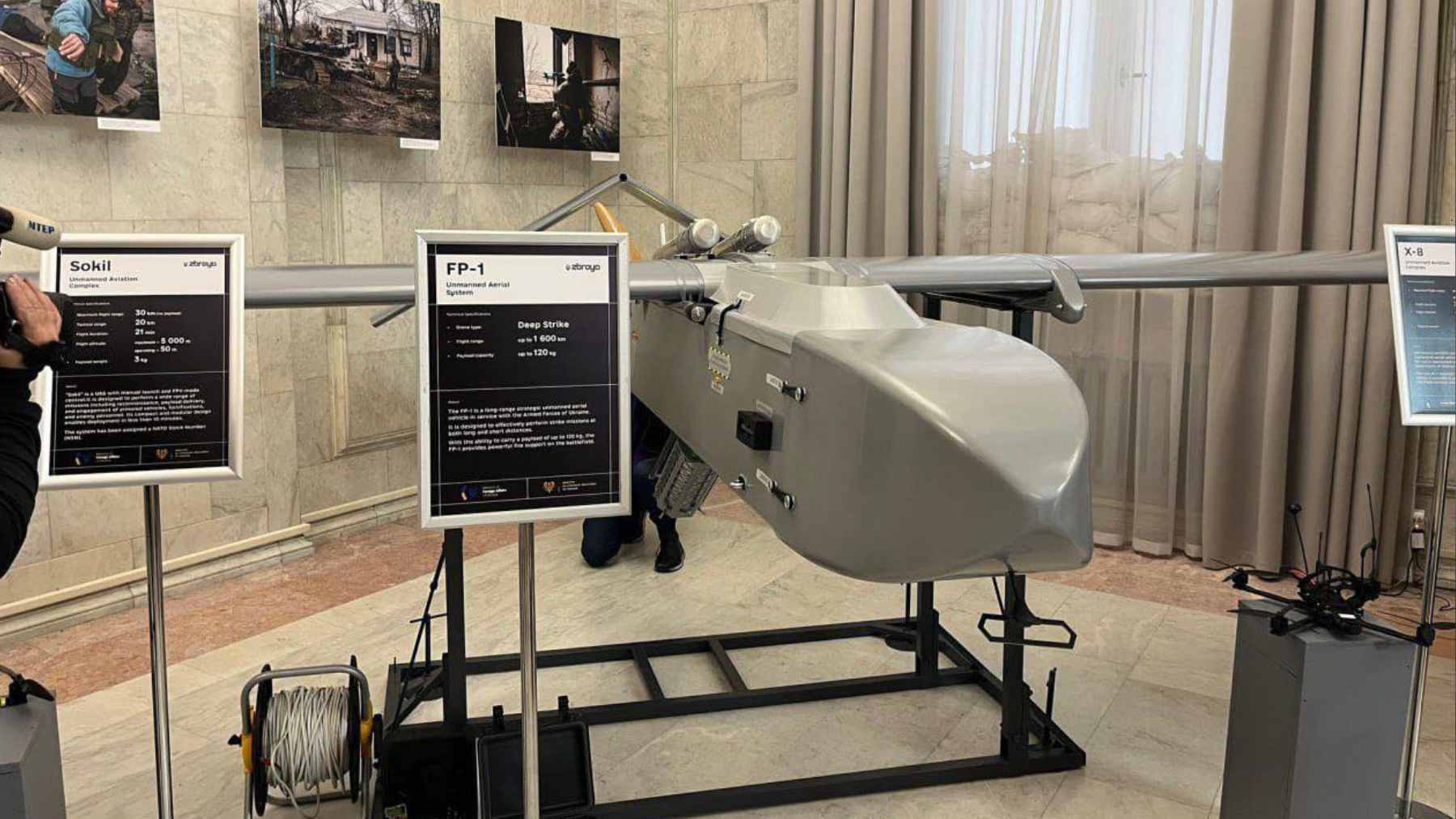
The company’s FP-1 long-range drones are described as simple and priced around €50,000 ($59,000) each, yet produced fast enough that one plant alone could build roughly 3,000 a month.
That kind of output is changing the war’s math. The same report says the FP-1 has been credited with about 60% of Ukraine’s long-range strikes into Russia, and it notes estimates that Ukraine has recently surpassed Russia in long-range drone attacks.
From “Flamingo” hype to ballistic promises
Fire Point was founded in 2022 and has grown to more than 50 factories inside Ukraine, with thousands of employees, according to Yle. It is also building a factory in Denmark, a sign that wartime manufacturing is starting to look like a European supply chain.
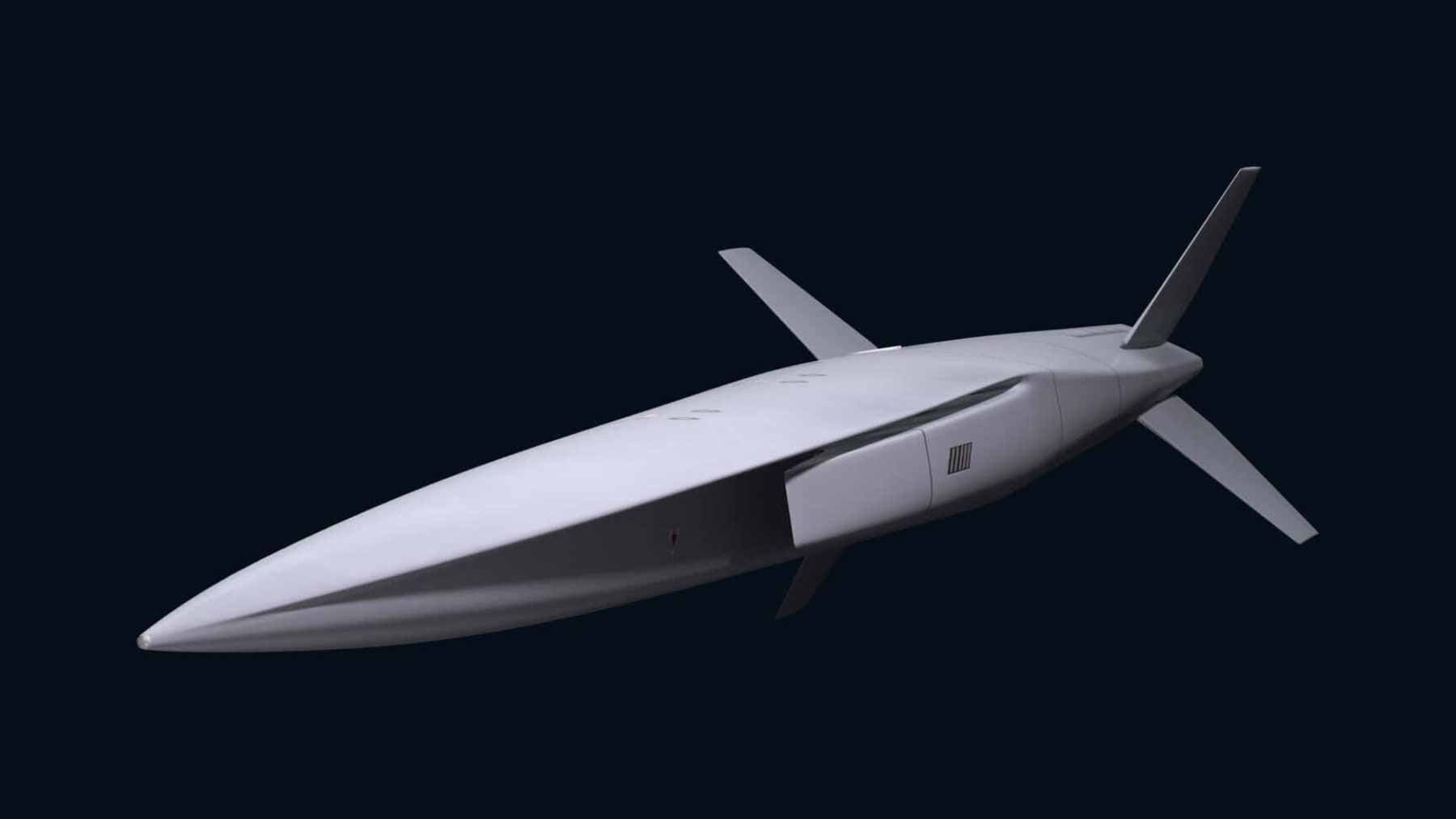
The company’s pink-painted “Flamingo” cruise missile drew attention with a claimed range of up to 1,800 miles, but Yle notes that only a few confirmed strikes have been attributed to it so far. Now co-founder Denys Shtilerman says Fire Point’s FP-9 ballistic missile, described with an approximate 530-mile range, is far along, and he expects the first strikes this year.
The Patriot problem and a cheaper interceptor pitch
Ballistic missile defense is still one of Ukraine’s hardest problems. Yle reports that Patriot interceptors are produced in limited numbers, and it cites a cost of at least €3.5 million ($4.12 million) to fire a single missile, which turns every night of air defense into a budget and logistics stress test.
Fire Point claims its own vertical-launch interceptor could be priced under €600,000 ($700,000) and designed to be “manufacturer-independent,” meaning no outside maker can disable it after sale.
Yet Shtilerman also acknowledges missing pieces, saying the company does not yet have a seeker or suitable radars and is using the missile as a short-range ballistic weapon until that gap is closed, while missile expert Fabian Hoffmann warns that even a 30% intercept rate is difficult to achieve.
The war’s carbon ledger is already heavy
Military activity is a climate story, even when governments do not highlight it.
A joint estimate by the Conflict and Environment Observatory and Scientists for Global Responsibility put the global military carbon footprint at roughly 5.5% of global greenhouse gas emissions, and a later SGR review linked a standardized $100 billion rise in military spending with about 35 million tons of additional CO2 equivalent, while stressing uncertainty.
Ukraine’s war has its own direct climate bill. A report associated with the Initiative on Greenhouse Gas Accounting of War put emissions attributable to the first 24 months of Russia’s full-scale invasion at about 193 million tons of CO2 equivalent, driven by warfare, fires, and damage to energy systems, and Zelenskyy has said that “not a single power plant” in Ukraine has avoided damage from Russian strikes. Keeping the lights on has a carbon cost.
The overlooked environmental tradeoffs of “fast” manufacturing
That resin smell is not just atmosphere for a news report. In reinforced plastic composites production, the US Environmental Protection Agency has highlighted styrene as an air toxin that can evaporate from resins and gel coats, which is why ventilation and controls matter when composites work scales up.
There is also the upstream footprint of the materials themselves. A 2025 meta-analysis of carbon fiber production reported cumulative energy demand estimates ranging from hundreds to more than 2,000 megajoules/lb., with greenhouse gas emissions estimates that can span roughly 19 to 69 lbs. of CO2-equivalent per pound of carbon fiber, depending on methods and assumptions.
What to watch as Europe talks “air defense”
The near-term question is simple. Can Fire Point deliver on a ballistic missile and an interceptor on the aggressive timelines suggested in public interviews, and will independent verification catch up with wartime secrecy?
Europe’s longer-term choice is trickier. Zelenskiy has urged Europe to build an integrated defense project that protects infrastructure and helps Ukraine prepare for winter, and any scaled-up production should also make room for transparent emissions reporting and safer handling of the chemicals and composites that quietly power modern war tech.
Either way, the environmental ledger is getting longer. The official statement was published on Official website of the President of Ukraine.