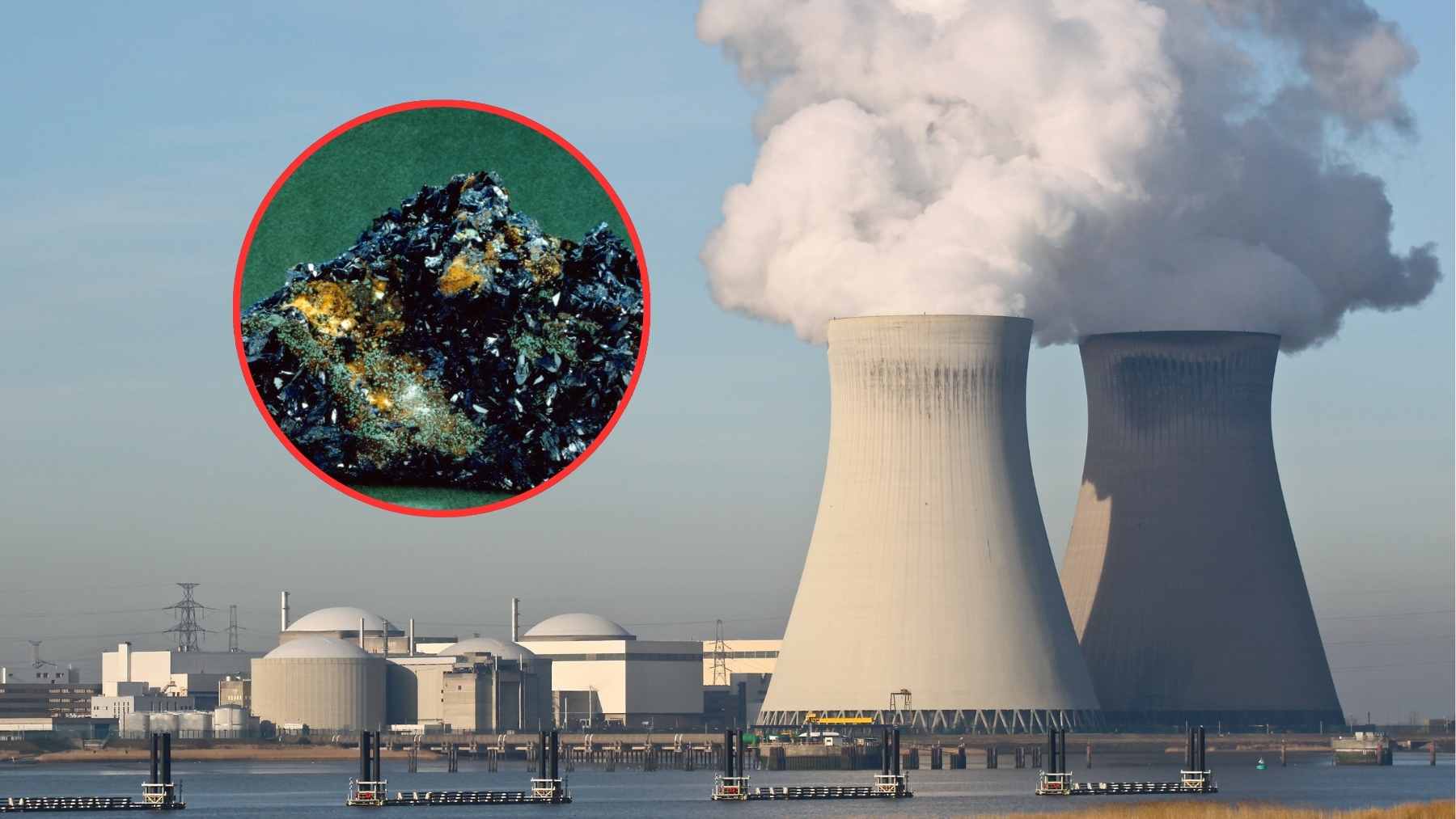
Kazakhstan’s state-backed uranium leader Kazatomprom says shareholders have approved a long-term contract to sell natural uranium concentrates to India’s Directorate of Purchase and Stores (DPS), part of the country’s Department of Atomic Energy.
The absentee vote passed with 92.9% in favor, with 99.19% of voting shares represented, according to the company’s disclosed results.
For India, which has publicly set a goal of reaching 100 gigawatts (GW) of nuclear power by 2047, fuel certainty is not a side issue anymore. It is one of the hard constraints that can speed up or slow down the entire clean energy plan.
A climate push that needs steady fuel
India’s government has framed its nuclear expansion as “environment-friendly clean energy,” and it has tied the 2047 target to wider climate commitments like net-zero by 2070. It is also pitching small modular reactors (SMRs) and opening the sector to more private participation to move faster.
That climate logic is familiar. IPCC assessments have long found nuclear power’s life-cycle emissions are low compared with fossil fuels, and coal remains among the highest-emitting options once you count the full chain.
In plain terms, every extra low-carbon kilowatt-hour can matter, especially when grids are still leaning on coal during peak demand in summertime.
What the shareholder vote actually approved
The core of the deal is straightforward on paper. Kazatomprom says it has approved a “major transaction” involving a long-term contract to sell U3O8 (natural uranium concentrates, often called “yellowcake”) to India’s DPS via physical delivery, under contract number DPS/HQ/069/—Kazakh-2025.
But U3O8 is only the start of the nuclear fuel story. The front end of the fuel cycle typically runs through mining and milling, then conversion, enrichment (for most reactor types), and fuel fabrication before it ever reaches a reactor.
That’s why uranium deals are increasingly treated less like a normal commodity purchase and more like access to an industrial pipeline.
A business deal that ripples through a tight market
Kazatomprom’s own disclosures underline why this vote caught global attention. The company reported U3O8 production of 28,483 tons in 2025 (100% basis), and it guided 2026 production at 30,200 to 31,900 tons, while warning that 2026 guidance “remains subject to sulphuric acid availability.”
In its 2025 full-year statement, Kazatomprom’s CEO described a market where “major consumers are prioritizing physical availability over short-term price concerns.”
That mindset tends to favor long contracts and sovereign-to-sovereign reliability, even if it reduces flexibility for buyers who usually rely on spot purchasing. Put differently, when big volumes are pre-allocated, the “extra” supply that cushions surprises can shrink fast.
Low carbon does not mean low impact
Kazatomprom says all of its mining operations are in Kazakhstan and that it uses ISR (in-situ recovery) technology, highlighting ISO 14001 environmental certification and reporting “no environmental incidents” recorded in 2025.
Those are company-reported signals that matter, especially when the climate debate is also about local ecological risk.
ISR is often described as less disruptive at the surface than conventional mining, since it extracts uranium by circulating groundwater fortified with chemicals through an underground ore zone and pumping the solution back to the surface for processing.
That design can reduce digging and hauling, but it also puts a premium on groundwater protection, monitoring, and restoration because the “mine” is happening inside an aquifer system.
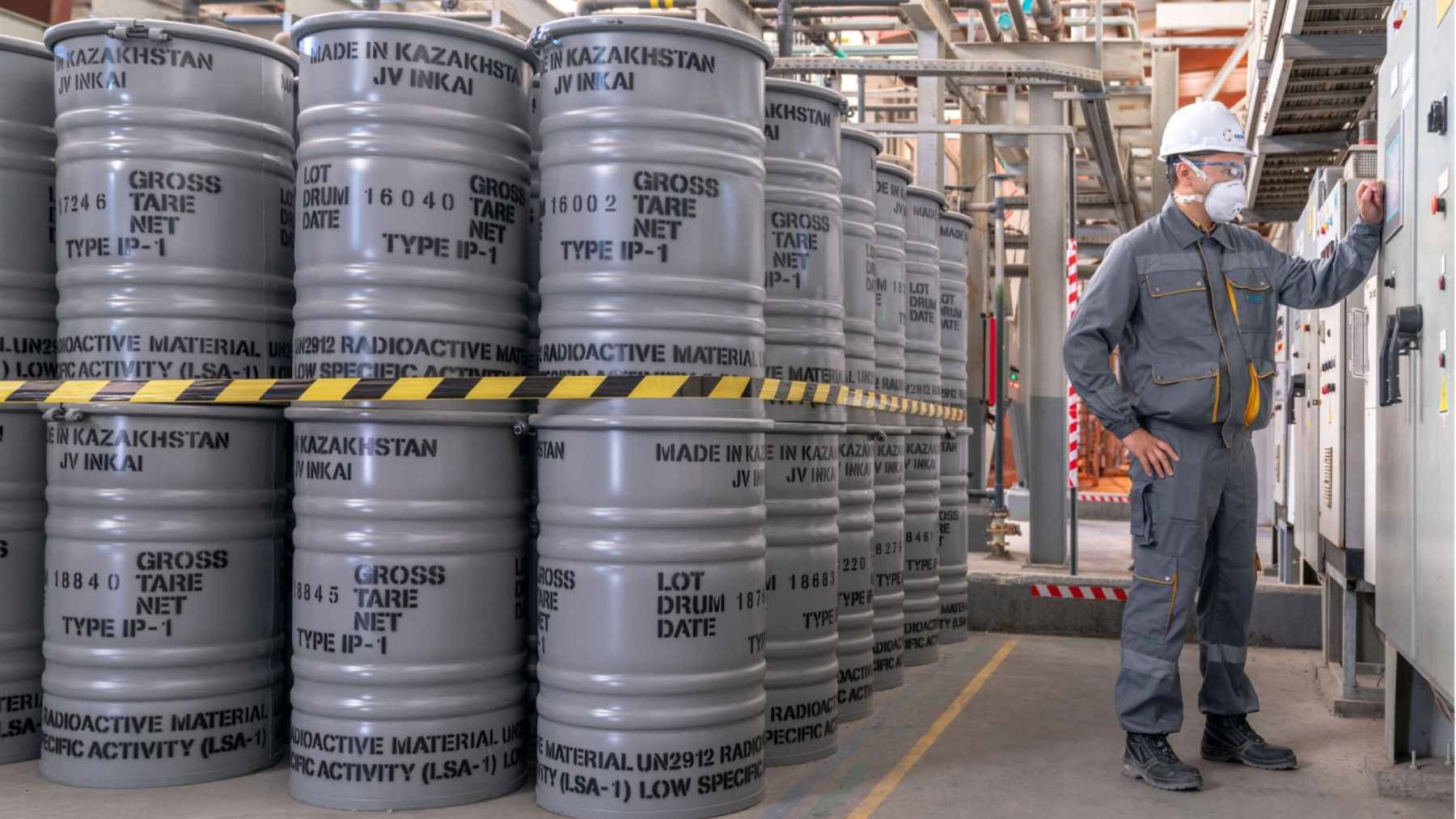
And then there is the unglamorous chemistry behind it all. Kazatomprom has explicitly flagged sulphuric acid as both an operational constraint and a cost pressure, which is a reminder that clean electricity still depends on heavy industry inputs upstream. If those inputs bottleneck, decarbonization timelines can slip, even when the reactors are ready.
When nuclear fuel becomes a national security question
The deal also lands in a world where energy supply is treated as strategic infrastructure. Kazatomprom says it monitors international sanctions regimes, and it noted that it exports via routes including transit through the Russian Federation and the Trans-Caspian International Transport Route, describing both as operational according to its financial statements.
Supply chains like these are not just “business,” because disruption risk quickly turns into a national planning problem.
On India’s side, government messaging has leaned into energy security and speed. A government-appointed panel reviewed by Reuters has urged faster approvals and stronger long-term uranium fuel security as part of the 100 GW push, while India’s own nuclear mission messaging highlights private participation and SMR development as tools to scale.
You can see the connective tissue here, since big capacity targets are hard to hit if fuel procurement is uncertain.
What should readers watch next? Pricing, volumes, and delivery schedules are confidential, so the best signals will be whether India signs additional multi-year supply deals and whether producers can expand output without running into more reagent and logistics constraints.
The official statement was published on Investegate.