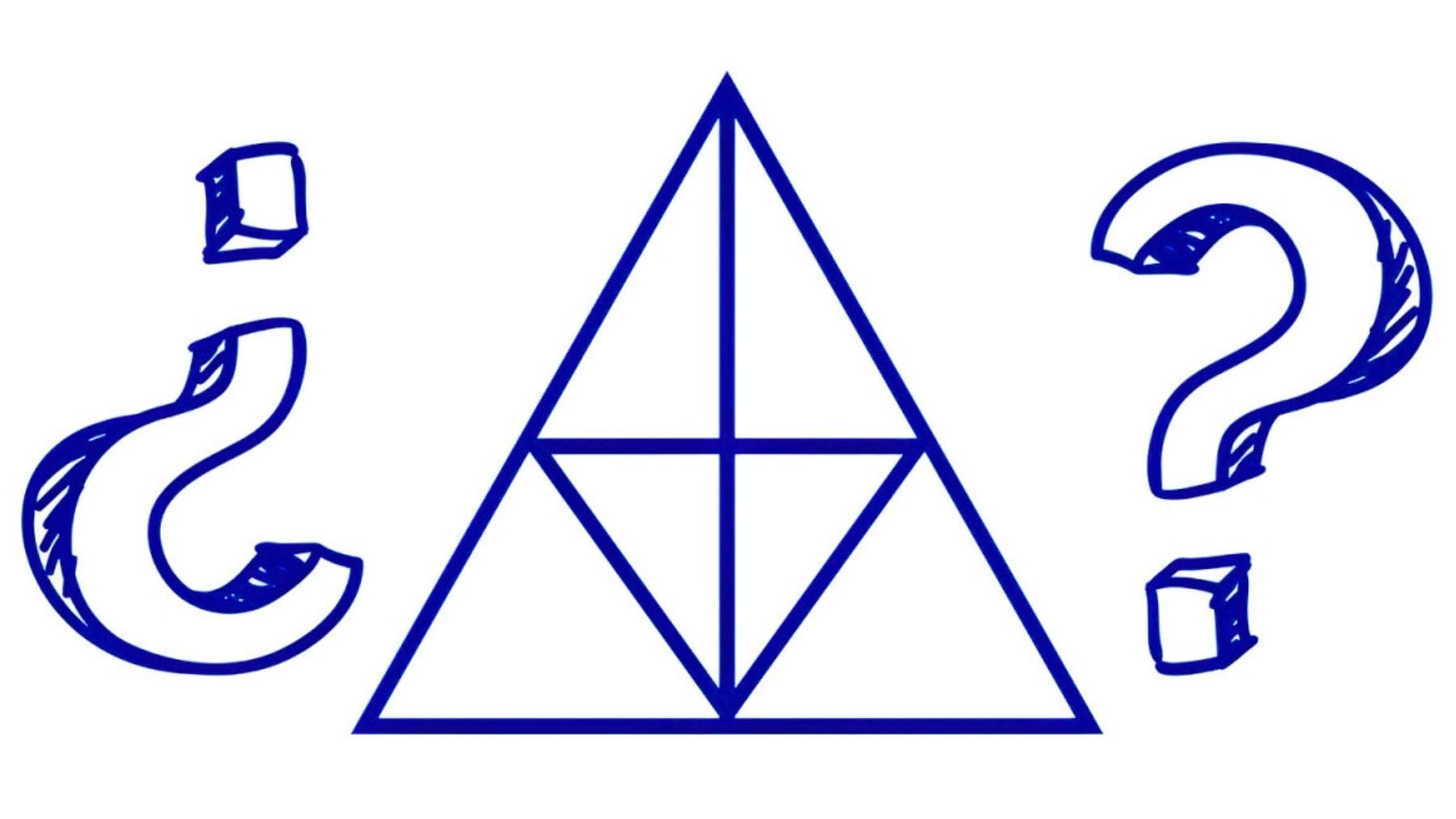
Your brain is naturally attuned to detecting patterns, whether they be shapes, faces, or even imaginative figures drifting among the clouds. However, how keen is your ability to decipher intricate geometric puzzles? This visual challenge suggests that only a limited percentage of individuals can accurately count every triangle concealed within a specific image.
Let’s find out whether you’re among that exceptional group. In the following sections, we’ll explain the test and show you how to verify your answer.
How the triangle test works
The image above presents a geometric figure composed of overlapping lines. At first glance, it appears to be a straightforward configuration of triangles. Your challenge is to count each triangle within 40 seconds. The twist is that numerous triangles are easily overlooked because they emerge from intersecting lines or are nested within larger, more complex forms.
Begin by scanning the entire image systematically. Focus on one section at a time, identifying the most obvious triangles first. Then, pay close attention to the smaller shapes produced by overlapping lines and angles that may yield less conventional triangle types, such as obtuse or right-angled triangles. Time yourself carefully to see if you can outpace the clock while maintaining precision.
Breaking down the test’s answer
If you found it challenging to identify all 13 triangles, rest assured, you’re not alone. Here is the breakdown of the count:
- The main triangle: The most prominent, outer triangle establishes the overall framework of the puzzle.
- Mirrored right triangles: A pair of medium-sized right triangles are positioned symmetrically within the main shape, arranged along a central axis.
- Four equal right triangles: Four compact right triangles (three positioned upright and one inverted) are embedded within the main triangle.
- Central vertical line dividers: A vertical line bisecting the image forms four right triangles in the vicinity of the center.
- Hidden obtuse triangles: Two broader triangles materialize at the intersections where the vertical divider traverses a diamond figure.
Many individuals overlook the four small central triangles or the pair of obtuse triangles because they seamlessly blend with the network of intersecting lines. Successfully counting them requires a refined ability to notice how lines converge to form new shapes, rather than simply isolating the most conspicuous ones.
Solving the challenge swiftly depends on robust spatial reasoning, the cognitive skill that aids architects, engineers, artists, and even graphic designers in visualizing intricate structures. Spotting all 13 triangles shows an elevated sensitivity to detail and pattern recognition.
Conversely, if you did not locate every triangle, practicing similar puzzles, brain teasers, or visual perception challenges can help train your brain to uncover hidden complexities beyond surface-level shapes.
Spatial intelligence tests like this are not only entertaining but also serve as a window into how your brain interprets visual complexity. Whether you mastered the challenge or missed a few triangles, understanding why certain shapes are easy to miss and practicing can enhance your observational capacity in everyday tasks, from navigating maps and assembling furniture to solving complex design problems.
Keep challenging your limits as your brain is far more adaptable than you might believe.