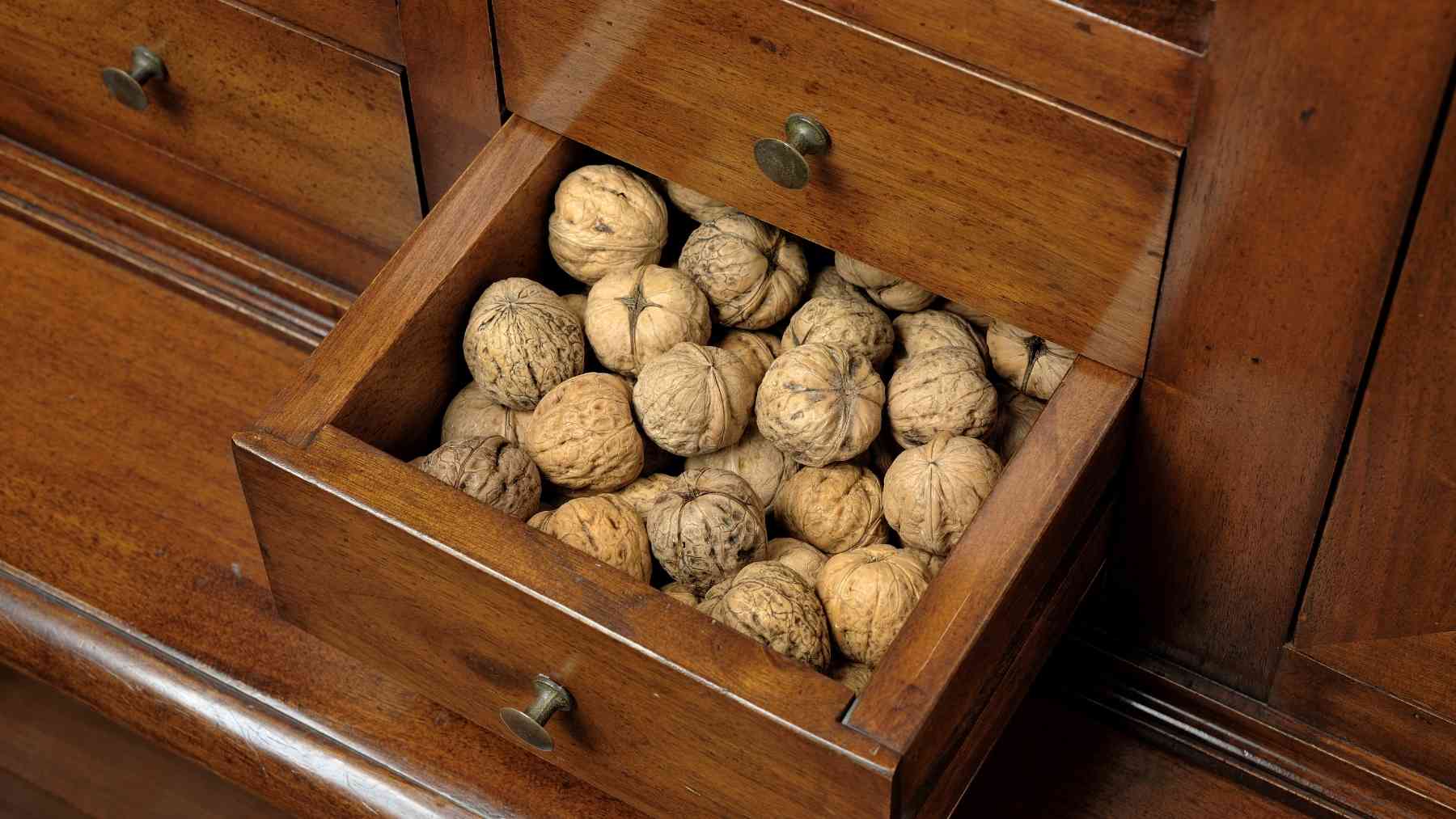
Have you ever opened a bag of walnuts for a salad, used one handful, then left the rest sitting in the baking drawer for weeks? Most of us have. It feels harmless, but that half-open bag may be losing its fresh flavor much faster than you think.
The better place for walnuts is not the pantry shelf and not the kitchen counter. For the most part, experts recommend keeping them cold, sealed, and away from light, because the same healthy fats that make walnuts worth eating are also what make them spoil when exposed to heat, air, and time.
A 2025 storage study found that low temperatures, especially 0°F with protective packaging, helped slow oxidation and preserve quality markers in walnuts.
Why walnuts spoil so fast
Walnuts are rich in unsaturated fats, which is one reason they are often linked to heart-conscious eating. But there’s a catch. Those oils are sensitive, and warm kitchens can turn them from sweet and nutty to sharp and unpleasant.
The University of California Agriculture and Natural Resources explains that room-temperature storage shortens nut life and causes nut oils to become rancid more quickly. Michigan State University Extension also notes that walnuts can develop a strange odor similar to paint thinner when they turn rancid.
That does not mean you need to panic over every walnut in your house. It means the usual “toss it in the cabinet” habit is not doing them any favors. The snack drawer is convenient, but the refrigerator is much kinder.
The best spot
If you plan to eat walnuts soon, the refrigerator is a smart choice. If you bought a big bag for baking, smoothies, oatmeal, or those once-in-a-while banana muffins, the freezer is better.
Michigan State University Extension says walnuts can stay fresh for up to three months in the refrigerator and up to one year in the freezer. UC ANR gives broader cold-storage guidance, listing walnuts at up to one year in a refrigerator at 40°F or colder and two years or more in a freezer at 0°F or colder, which shows how much conditions and packaging can matter.
In practical terms, that means small bag in the fridge, bulk bag in the freezer. FoodSafety.gov also notes that freezer storage times are mainly about quality, and foods kept continuously at 0°F or below can remain safe indefinitely, although flavor and texture may still change over time.
Airtight is not optional
Cold storage helps, but the container matters too. Once a package is opened, walnuts should be moved into an airtight container, preferably a clean glass jar, freezer-safe bag, or sealed food container.
California Walnuts advises storing unopened sealed packages in the refrigerator or freezer, then transferring opened walnuts to an airtight container before putting them back in cold storage. The group also warns that walnuts can absorb strong odors from foods like fish, cabbage, and onions. Nobody wants onion-scented brownies.
Moisture is another problem. UC ANR recommends storing cracked nuts in clean, closed containers and says washing nuts in the shell before storage is not recommended because extra moisture can encourage bacteria or mold growth.
Don’t chop them too early
Whole walnuts tend to hold up better than chopped or ground walnuts because less surface area is exposed to air. That’s why it makes sense to chop only what you need, right before using them.
California Walnuts gives the same advice for shelled nuts, in-shell nuts, and walnut meal. Wait to shell, chop, or grind walnuts until you are ready to add them to a recipe, since that helps protect the flavor.
This is a small habit, but it can make a real difference. Keep the bag sealed, scoop out what you need, then close it again and send it back to the cold.
How to spot rancid walnuts
Fresh walnuts should smell mildly nutty and taste slightly sweet. Rancid walnuts are different. They may smell chemical, sour, oily, or like paint thinner, and they often taste bitter or harsh.
Michigan State University Extension says walnuts that are rubbery, shriveled, or smell like paint thinner should be thrown away. California Walnuts gives the same simple warning, noting that walnuts with a paint-thinner smell are rancid and should be discarded.
What if the smell is only faint? Trust your nose. A good walnut should not make you pause and wonder whether it belongs in your oatmeal.
What the newest research adds
The newest research helps explain why cold storage is more than just an old kitchen tip. In the 2025 study, researchers stored walnuts for 42 weeks under different temperatures and packaging methods, including 0°F, about 39°F, and room temperature.
The study found that low temperatures, especially 0°F combined with vacuum lightproof packaging, helped suppress increases in oxidation indicators such as acid value and peroxide value. It also helped maintain nutritional markers such as tocopherol and phytosterol retention.
At the end of the day, the advice is simple. Put walnuts in the refrigerator if you will use them soon, freeze them if you will not, and keep them sealed either way.
The study was published on Oil Crop Science.