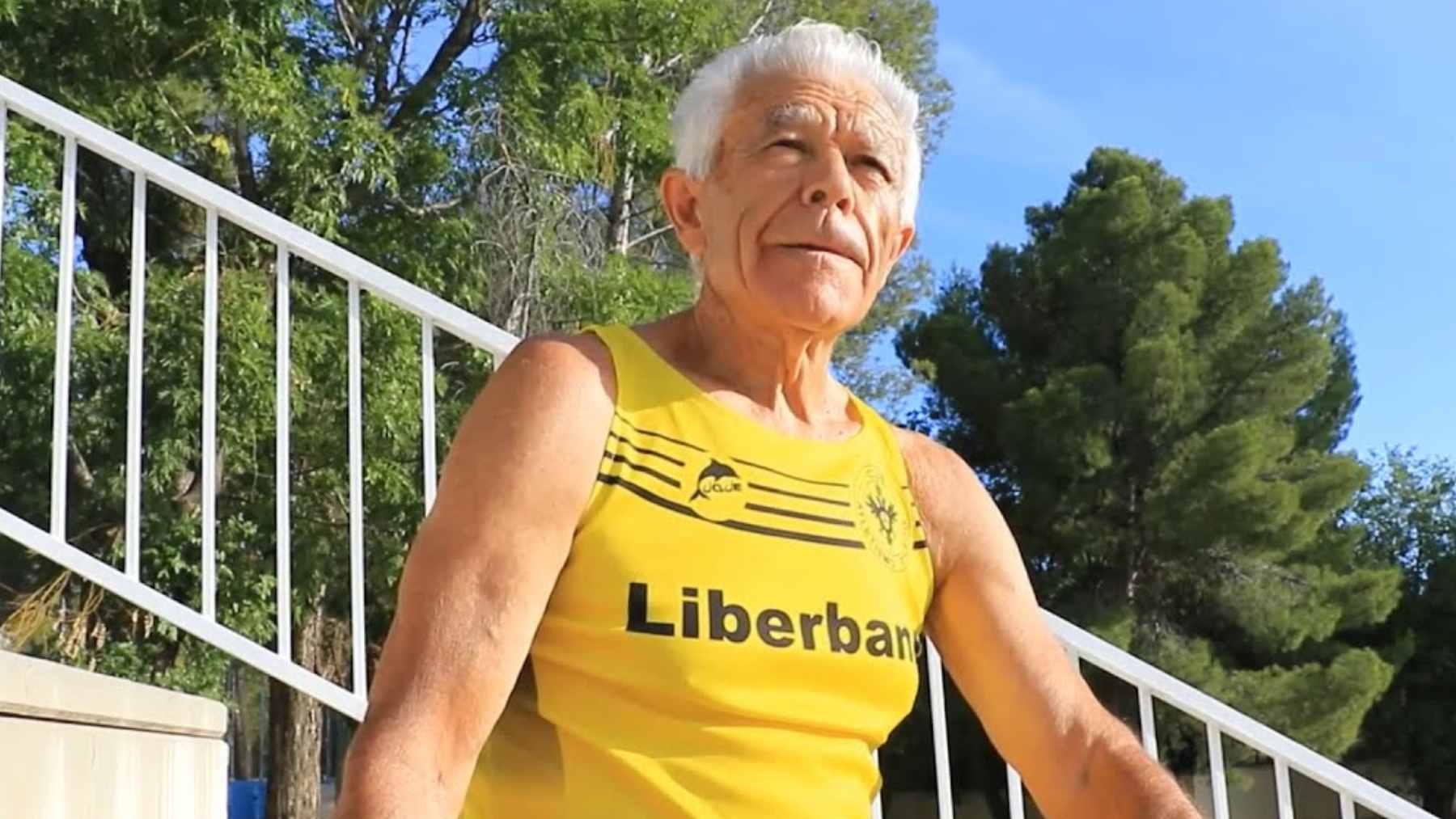
At 82, Juan López García is doing something many people half his age would struggle to finish. The retired Spanish mechanic from Toledo runs marathons and ultramarathons, even though he did not begin running until age 66.
His pre-run breakfast sounds almost ordinary. It includes toast, olive oil, fresh cheese, honey, coffee, and a spoonful of bee pollen.
The science points away from any miracle ingredient, however, and toward a more demanding explanation involving years of training, unusual oxygen use, and remarkable consistency.
A late start, then world records
For most of his working life, López García repaired cars and left sports in the background. After retiring, he walked roughly 500 miles of the Camino de Santiago in 20 days, then started running after encouragement from one of his daughters.
He entered competition at 70 and kept moving into longer events. At the 2024 World Masters Marathon Championship in Bucharest, he won the 80-plus category with a time of 3 hours, 39 minutes, and 10 seconds, while also setting a European record.
In May 2025, at age 81, he completed a 31-mile race in about 4 hours and 48 minutes. That performance cut roughly 49 minutes from the previous age-group world record. Not bad for someone who once planned only to “run a little to stay in shape.”
What scientists found
Senior author Simone Porcelli of the University of Pavia worked with Julián Alcázar and the GENUD Toledo group at the University of Castilla-La Mancha to study the runner.
The team tested him on a treadmill and stationary bike, scanned his body composition, and measured how oxygen moved from his lungs and blood into working muscle.
The headline result was his VO2 max, a measure of how much oxygen the body can use during very hard exercise. His score reached 52.8, which the researchers described as the highest reported in a person in their 80s.
Compared with U.S. reference standards for the same test, it sat in a range seen in healthy men ages 20 to 30.
At 5’2” and about 130 lbs., he also had nearly 77% lean mass. More importantly, his muscles were exceptionally good at extracting and using oxygen, while his ability to burn fat during hard exercise resembled that of much younger athletes.
His running economy was good but not extraordinary, suggesting an exceptional engine even though every part of the vehicle was not.
Breakfast before the miles
Before training, López García says he eats a slice of toast topped with olive oil, fresh ricotta-style cheese, and honey. He also drinks a large coffee with milk and honey, a simple meal that would not look out of place on many breakfast tables.
Then comes the unusual part. “I put a spoonful of pollen in my mouth and then eat breakfast,” he said, adding that he sometimes has a tangerine or banana. He says he has kept the bee pollen habit for about four decades.
Does that make pollen the secret? No. The scientific paper did not test his breakfast, compare diets, or isolate the effects of pollen, honey, olive oil, or any other food. His meal is part of his routine, not proof of a performance formula.
Training is the bigger clue
When he is not preparing for a race, López García runs about 40 miles a week. In the two months before a major event, that can rise to nearly 75 miles, spread across six or seven weekly sessions.
Most runs are continuous and moderately hard. Closer to competition, he adds intervals that become progressively longer and are completed slightly faster than his target race pace, all under the guidance of a professional coach.
Across a year, he covers more than 2,175 miles. That workload is closer to an athlete’s job than a casual wellness plan, and it makes the breakfast look less like a trick and more like fuel for a highly structured routine.
What his story can teach us
This was a case study of one exceptional person, not a clinical trial. The researchers lacked long-term laboratory data and could not rule out favorable genetic traits. López García himself said, “Of course, I have a lot of good genetics, but also a lot of hard, daily training.”
His results do not mean everyone can become a world-record runner after retirement. They do suggest, to a striking extent, that age does not fully erase the body’s capacity to adapt and that a late start can still lead much farther than expected.
The less exciting answer may also be the most useful one, because consistency matters.
The official study has been published in Frontiers in Physiology.