
Could the brain already carry part of the answer to harmful inflammation? Early laboratory work in Austria points to an immune receptor called Toll-like receptor 10, or TLR10, that may help tell brain immune cells when to ease off.
If that braking role is confirmed, it could offer a new starting point for therapies aimed at Alzheimer’s disease and Parkinson’s disease.
Biotechnologist Esther Hellmann is studying the receptor in human microglia at IMC Krems University of Applied Sciences through a cooperative doctoral program with the University for Continuing Education Krems, funded by the Austrian Science Fund.
The work offers a testable lead, but it remains preclinical and has not shown that TLR10 can prevent, slow, or treat either disease in people.
The brain’s cleanup crew
Microglia are the brain’s resident immune cells. Think of them as a cleanup and security team that removes damaged material, attacks some threats, and trims extra connections between nerve cells as the brain develops and adapts.
That useful response can become damaging when it stays switched on. Long-lasting inflammation may disturb healthy tissue and is increasingly linked to neurodegenerative diseases, although inflammation is only one part of the much larger Alzheimer’s puzzle.
A 2026 study in Nature Aging analyzed cerebrospinal fluid, the liquid around the brain and spinal cord, from 834 people across different stages of Alzheimer’s disease. Researchers found 109 altered microglia-related proteins, with immune patterns changing between early disease and dementia.
A receptor that may apply the brakes
Toll-like receptors are sensors used by the innate immune system, the body’s fast first line of defense. Most recognize signs of infection or damage and trigger an immune response. TLR10 stands out because its job is still not fully understood.
“TLRs mainly serve pattern recognition by identifying danger signals and initiating an immune response, at least from TLR1 through TLR9,” she said. “With TLR10, the situation is less clear because the pathway may inhibit inflammatory responses, or its regulatory activity may depend heavily on context.”
An earlier human-cell study found that TLR10 could dampen signaling from another immune receptor. That supports the brake idea, but results from different cell types do not automatically prove that the receptor behaves the same way inside the human brain.
Why mice left a blind spot
One reason TLR10 remains mysterious is surprisingly simple. Mice, a standard tool in biomedical research, do not have a functional version of the receptor. That makes the usual laboratory shortcut far less useful.
The researcher instead works with immortalized human microglia. The word “immortalized” does not mean the cells cannot be damaged. It means they have been altered so they can keep dividing in a dish, giving scientists enough material for repeated tests.
She compares an unchanged cell line with another line genetically edited so it no longer produces TLR10. In practical terms, this lets the team ask what changes when the suspected brake is removed.
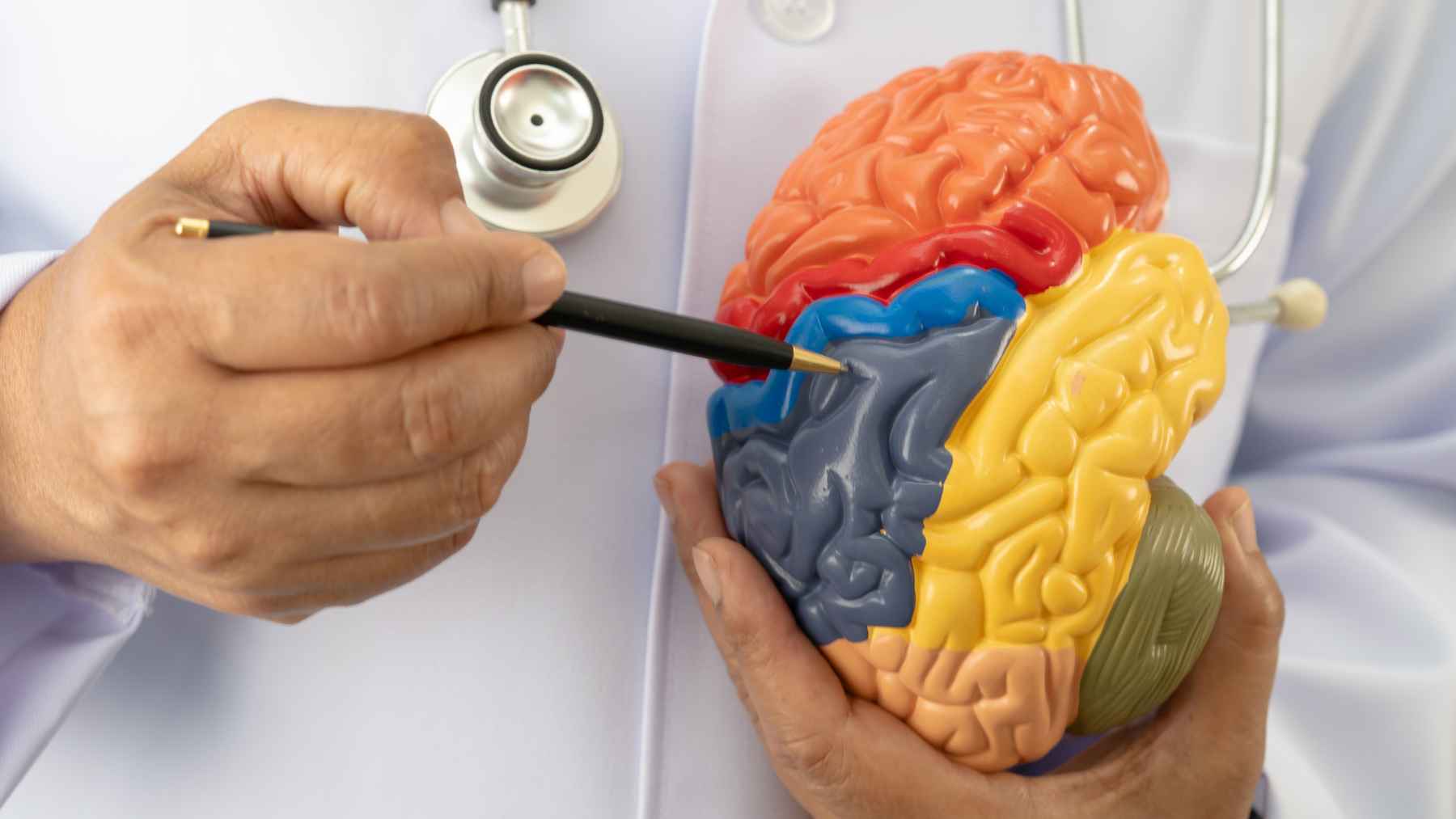
Scientists are investigating how the TLR10 immune receptor may help regulate brain inflammation, a process linked to Alzheimer’s and other neurodegenerative diseases.
Reading every protein at once
The experiments use proteomics, a broad method for measuring proteins throughout a cell. A specialized form of mass spectrometry separates and identifies those proteins, creating something like a detailed inventory of the cell’s working parts.
That inventory is enormous. Bioinformatics tools then search the data for patterns that may reveal which pathways change when TLR10 disappears, including pathways tied to inflammation, movement, and communication between cells.
Microscope work has already found major changes in cell migration and the extracellular matrix around microglia without TLR10. The extracellular matrix is the supportive mesh surrounding cells, a little like scaffolding that also carries signals. These findings are clues, not proof of protection against Alzheimer’s disease.
Why the finding could matter
The most interesting possibility is not simply turning inflammation off. Microglia still need to clear debris and respond to danger, so silencing them could create new problems. A useful therapy would have to restore balance rather than pull the plug on the brain’s defenses.
“If the receptor’s anti-inflammatory effect can be confirmed, it could lay the groundwork for new therapeutic approaches in neurodegenerative diseases,” she said. Reaching that point would likely require researchers to reproduce the results, identify what activates TLR10, test more human cell systems, and show that changing the receptor is safe.
That road is long. Still, targeting the immune system’s own stop signal offers a distinct idea in a field often focused on removing the protein plaques associated with Alzheimer’s disease. At the end of the day, the question is whether microglia can be helped to do their job and then stand down.
The researcher behind the work
The scientist, born in Braunau, Austria in 2001, first studied nutritional sciences at the University of Vienna and later earned a master’s degree in medical and pharmaceutical biotechnology. She also teaches yoga, which gives her a practical counterweight to long evenings in the laboratory.
“Research can be very frustrating,” she said, adding that yoga helps and at least keeps her back from hurting.
The original research profile was published by Der Standard on July 6, 2026.