A fly ball can look easy from the stands. For the player chasing it, the sun, stadium lights, and a white baseball moving fast can turn one routine catch into a very public mistake.
That is why many baseball players put black stripes under their eyes before a game.
The marks, known as ‘eye black’, are partly about glare, partly about habit, and partly about feeling ready when the next ball comes screaming off the bat. Adam Annaccone, a clinical associate professor in kinesiology at the University of Texas at Arlington, explains that the practice sits at the crossing point of vision, sunlight, and confidence.
What eye black is meant to do
Eye black usually comes as greasy black paint or adhesive stickers placed below the eyes. The basic idea is that bright light can bounce off the cheeks and into the eyes, while a dark surface absorbs more of that reflected light.
In simple terms, it is a low-tech glare shield. It does not block the sun like a cap brim, but it may reduce some of the light bouncing upward into the player’s field of view.
The look has been around for generations. McGill University’s Office for Science and Society notes that stories link the habit to Babe Ruth using burned cork, while modern eye black is commonly based on carbon mixed with waxy ingredients for easier spreading.
The science is helpful but limited
The strongest support came from a 2003 study published in Archives of Ophthalmology. Brian M. DeBroff and Patricia J. Pahk at Yale School of Medicine tested 46 young adults in unobstructed sunlight and found that black grease improved contrast sensitivity in binocular testing compared with no product and anti-glare stickers.
Contrast sensitivity means the eye’s ability to separate an object from its background. On a baseball field, that can mean seeing a white ball against a hazy sky, a light cloud, or a bright bank of stadium lamps.
The evidence is not a grand slam, though. A later study led by Fraser C. Horn found that eye black did not significantly improve low-contrast visual sharpness in bright outdoor conditions, while tinted contact lenses did better in that test. Eye black may help a little, but it is not superhero vision.
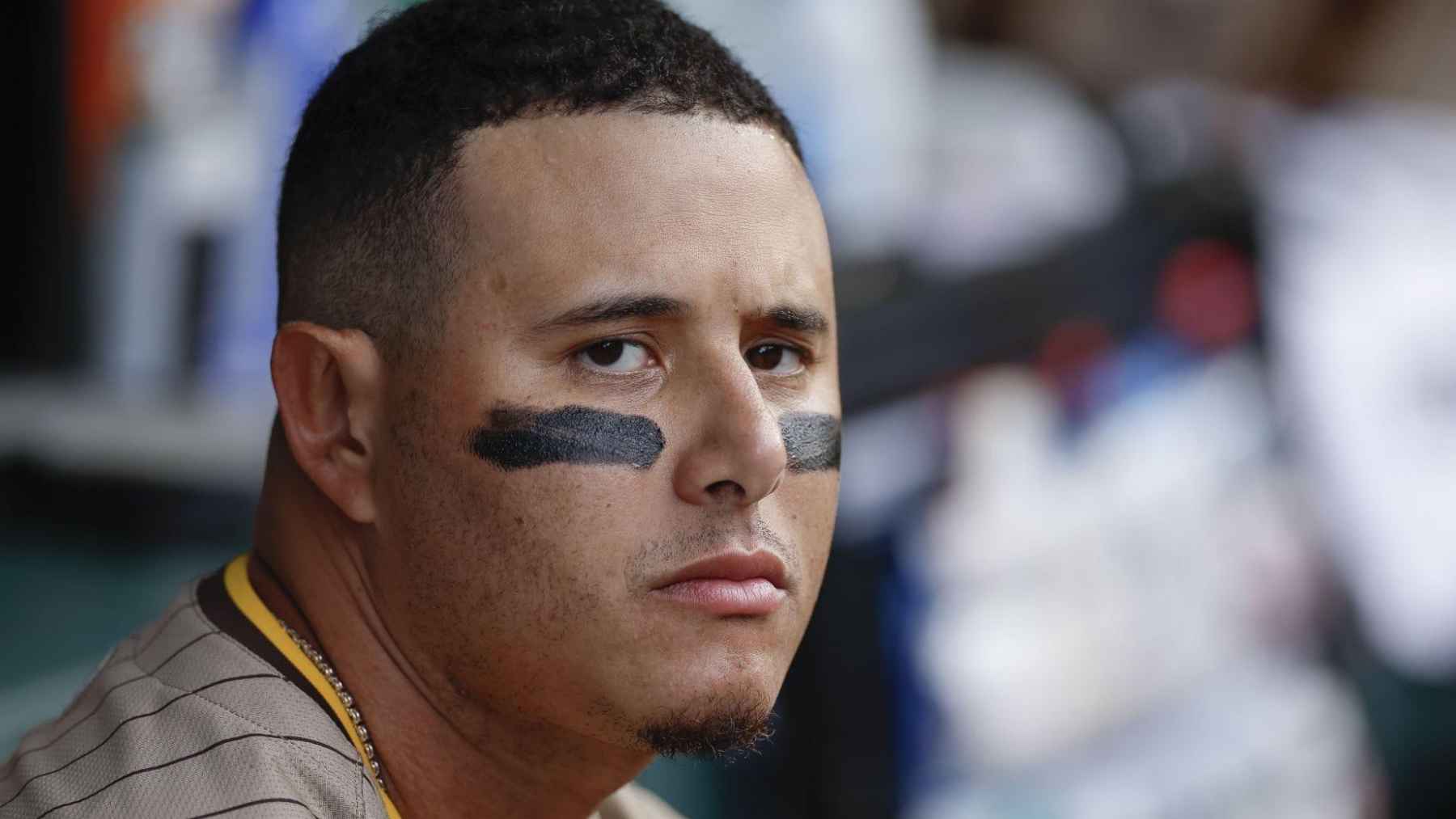
A baseball player wears traditional eye black in the dugout before the game, a long-used practice believed to reduce glare and sharpen focus under bright sunlight and stadium lights.
Why not just wear sunglasses
So why not just wear sunglasses? Some players do, especially outfielders who spend long innings staring into open sky, but baseball is a game of tiny adjustments, and comfort matters more than it seems.
Glasses can fog, slip, collect sweat, or change how a ball looks for a player already tracking spin, speed, angle, while dealing with crowd noise. As such, one athlete may feel sharper with sunglasses, while another prefers only a cap and two black streaks.
There is also the pace of the sport. Major League Baseball defines a hard-hit ball as one leaving the bat at 95 mph or more, and at that speed, a small visual delay can matter.
More than sun protection
Eye black is not only about physics. It has become part of baseball’s daily theater, like tapping the plate, tightening batting gloves, or refusing to step on the foul line.
Sport psychologists have studied why routines matter. A meta-analysis connected to the University of Vienna and authored by Anton Rupprecht, Ulrich Tran, and Peter Gröpel found that pre-performance routines can improve sport performance across skill levels and pressure situations.
Gröpel put the idea in plain language, saying routines can “strengthen concentration” and help athletes move into a better mental state. That may be part of eye black’s staying power–you put it on, the face in the mirror looks like game mode, so the body follows.
A small edge in a fast game
That does not mean the black marks are a secret weapon. They are closer to a small tool in a larger kit, along with caps, visors, tinted lenses, training, and countless hours learning how a ball behaves off the bat.
Still, small tools matter in baseball. A fielder looking into that harsh afternoon glare is not thinking about journal articles. He is thinking about the ball, the runners, the wall, and the roar that will come if he misses it.
Eye black lasted because it sits in that rare spot where science and culture overlap. There is enough evidence to make the idea reasonable, but enough tradition to keep it alive even when the benefit is small.
It also looks unmistakably like baseball. Simple black lines, stickers with messages, team slogans, and personal symbols have all become part of the sport’s visual language. For the most part, the marks say the same thing: the player is trying to see better and feel ready.
Next time a center fielder shades his eyes and drifts under a fly ball, those dark stripes will not guarantee the catch. But they may trim the glare, calm the routine, and give him one more tiny edge before the ball drops.
The official explainer that prompted this article has been published by The Conversation and republished by the University of Texas at Arlington.