
A sincere compliment should feel simple. Someone says you handled a meeting well or noticed how calmly you helped a friend. But for some adults, the words arrive, sit there for a second, and bounce off.
Psychology suggests one reason may be rooted in how praise was learned early in life. People who grew up with little steady praise may build a strong internal scoring system, so outside approval feels like background noise.
That is not fake modesty or fishing for more praise; often, they simply learned to trust their own measure first.
Praise reaches the brain
Praise is not just a nice social extra. In a 2008 functional MRI study, Keise Izuma, Daisuke N. Saito, and Norihiro Sadato at Japan’s National Institute for Physiological Sciences found that gaining a good reputation activated the striatum, a reward-related brain area, in a way that overlapped with money rewards.
The study involved 19 people and was reported in Neuron.
Functional MRI is a brain scan that tracks activity through blood-flow changes. The finding helps explain why a child who regularly hears approval may learn to treat it as useful information. Praise becomes one way the child learns that an action mattered.
But what happens when that signal is rare? The brain still needs a way to judge success. So a child may lean more heavily on private standards, such as finishing the task, avoiding mistakes, or holding everything together.
When compliments feel like static
By adulthood, that private system can feel automatic. Someone says, “You did a great job,” and the person hears the sentence but feels almost no inner shift. The mind asks a different question instead, “Did I really do it well?”
That question can be useful. It can build discipline, independence, and a steady sense of direction when no one is clapping. Still, competence can hide the cost.
When praise has to pass through an internal audit, affection can feel like an unsigned receipt. It might be true, but the person still wants to check the books.
Not all praise helps
Research on children gives this issue more nuance. Work listed in the University of Amsterdam’s research archive included one study with 357 people and another with 313 children.
It found that adults were more likely to give children with low self-esteem praise about who they were as people, while children who received that kind of praise were more likely to feel ashamed after failure.
That matters because “you are so smart” and “you worked carefully through that problem” are not the same message. One can make success feel like an identity to defend. The latter points to a behavior the child can repeat.
Other findings point in the same direction. In research reported by The Ohio State University, Eddie Brummelman, Brad Bushman, and colleagues found that adults gave more inflated praise to children with low self-esteem, and that this kind of big praise could make those children pull back from harder tasks.
Why loved ones get tired
This pattern does not stay neatly inside childhood. In adult relationships, it can turn a sweet moment into a tiny failure of connection. A partner says something kind, the other person waves it away, and both people leave the exchange feeling misunderstood.
From the receiver’s side, the reaction may not feel like rejection. They are not trying to be difficult. Their mind is simply comparing the compliment against its own record.
From the giver’s side, though, it can feel exhausting. How many times can you say “I meant that” before you stop saying it? That is why some people quietly give fewer compliments over time, not because they care less, but because nothing seems to get through.
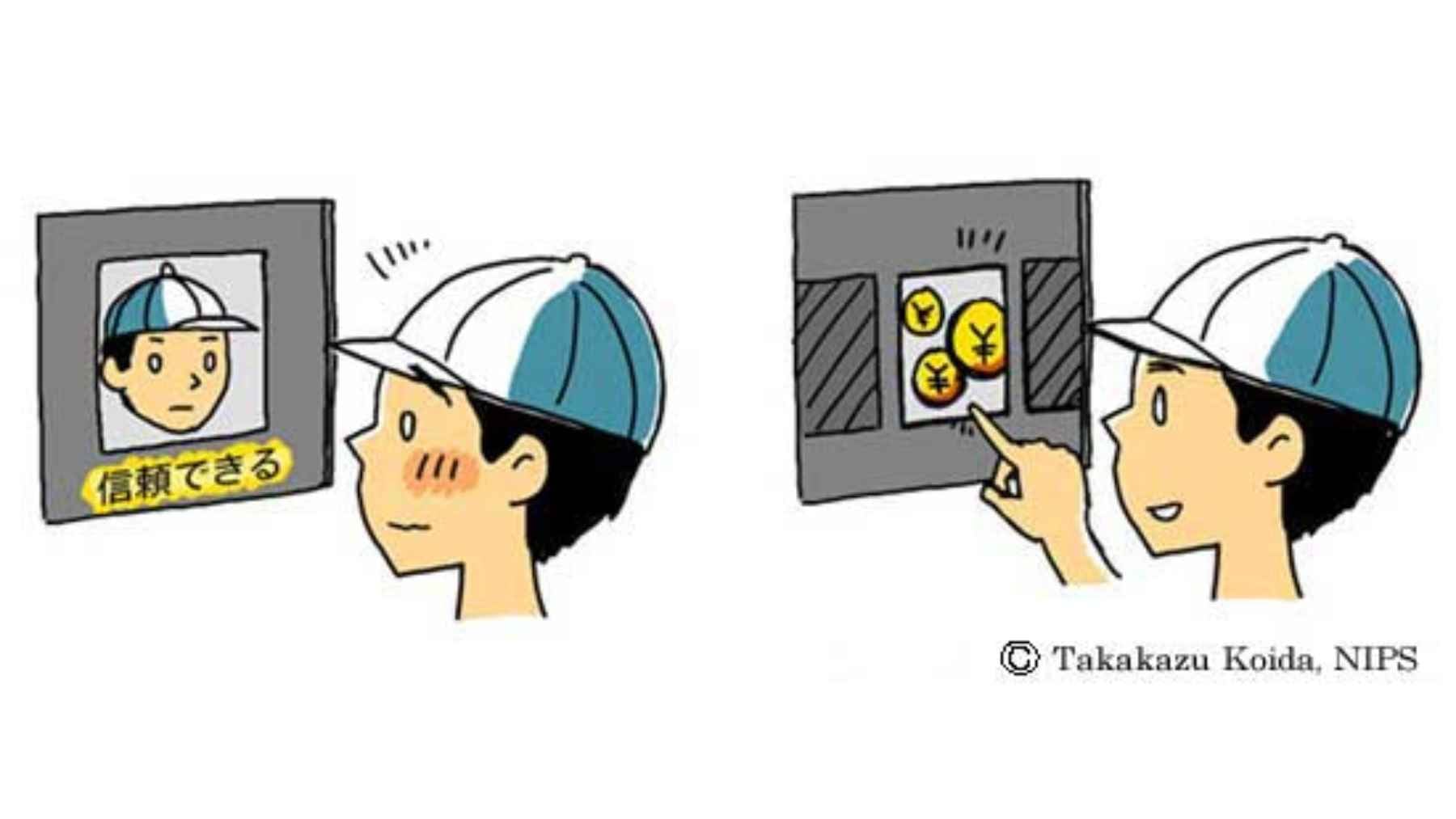
A diagram illustrates how social approval can activate reward pathways in the brain, helping explain why praise shapes self-worth and behavior.
Specific praise lands better
The useful lesson is not to praise louder. Bigger compliments can make the problem worse because they are harder to verify. “You are amazing” may sound kind, but it gives the internal scoring system almost nothing concrete to work with.
Specific praise has a better chance. “The way you stayed calm during that tense call helped everyone focus” is easier to accept than a sweeping statement about being brilliant. It names an action, a moment, and an effect.
That small detail matters. The compliment becomes evidence rather than pressure. It does not demand that the person believe they are wonderful forever, it only asks them to notice one real thing that happened.
A small window for praise
For adults who recognize themselves in this pattern, the goal is not to become dependent on approval. Nobody needs to tear down a strong inner compass just because compliments feel awkward. The aim is smaller and more realistic.
When someone close offers a specific kind word, try not to dodge it right away. Breathe, let it sit for a few seconds, and answer with a simple “thank you.” Not a speech, just enough to keep the door open.
Over time, that pause can change the room. The internal system may still be in charge, but it no longer has to block every sign of affection at the door. Allowing praise is not about believing every word instantly, but about letting people who love you be heard.
The main work on social and monetary rewards has been published in Neuron.