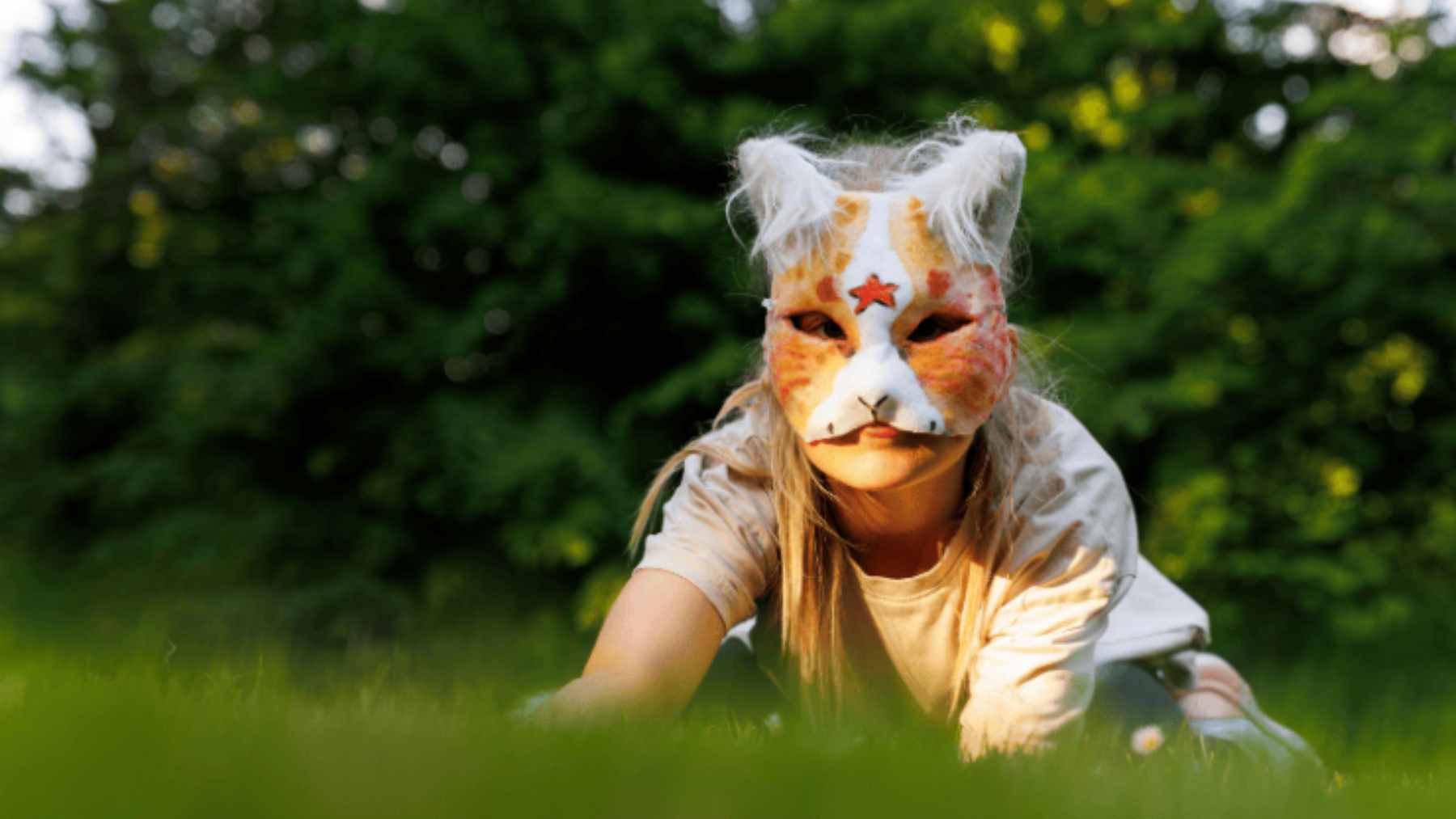
Videos of teenagers and young adults wearing fox, dog, cat, bird, or reptile masks have spread quickly across TikTok and other social platforms.
Some run on all fours, some wear tails or ears, and some describe themselves as “therians,” a word that has suddenly moved from niche online communities into everyday debate.
The reaction has been loud, and not always kind, but psychologists quoted in the source material say the trend should not be treated as a mental disorder by default.
Instead, they describe it as a search for identity, belonging, and emotional expression in a generation that often feels disconnected.
What therians are
Therians are people who identify, psychologically or spiritually, with a nonhuman animal. That does not necessarily mean they literally believe they are an animal, said psychologist Rebeca Rodríguez, who explained that the identification is more about inner experience than physical reality.
From the outside, that can mean wearing masks, using animal accessories, or copying certain animal movements. To observers, it may look like a costume trend, but psychologist Andrea Anaya argues that for participants it is closer to identity than cosplay.
Why it is not a diagnosis
The most important point is also the easiest to miss. In one of the clearest explanations, the behavior was described as “not a disorder” because it is not listed as a DSM-5 diagnosis, the manual clinicians use to classify mental health conditions.
That does not mean professionals should ignore it. The DSM-5-TR is meant for trained clinical judgment, not for quick labels applied to viral behavior from a phone screen. In other words, a mask on TikTok is not a diagnosis by itself.
Identity and belonging
So, what is really happening? Maga, the psychologist behind the Pochoclo Profiling account, described therian identity as “an exploration of identity, a search for belonging to a community, and even a form of emotional regulation.”
That idea fits a familiar teenage pattern. A psychology dictionary describes adolescence as a stage when peer focus, social acceptance, and group involvement become especially important. The clothes, names, and symbols change, but the need to find a place does not.
Not the first youth subculture
That same expert compared the pattern with earlier groups such as emos, hippies, punks, and other youth subcultures. “The form changes, but the psychological need to find identity and belonging is the same,” she said.
That comparison matters because adults have often reacted with concern when young people use style, music, or group language to define themselves. Today, the difference is the size of the stage. A teenager exploring identity is no longer doing it only at school or in a local park, but in front of millions of strangers.
The animal as a symbol
For some therians, the chosen animal may work like a symbol. Saying “I am a wolf” can mean “I feel lonely, protective, or different,” according to the psychologists cited in the source material.
Seen that way, the animal becomes a kind of emotional shorthand. It gives a young person a way to express something hard to explain at the dinner table, in class, or even to friends. Not everything symbolic is dangerous.
When concern is justified
Still, experts warn against treating every case as harmless. Concern rises when there is loss of contact with reality, delusional thinking, extreme identification, or severe isolation.
The issue becomes serious if the identity causes suffering, isolation, or disconnection from reality. That is the line parents, schools, and clinicians should watch carefully. The problem is not the mask, rather, it is suffering and when daily life starts to fall apart.
What research suggests
Therian identity is not brand new. A small 2014 study listed by the University of Northampton examined identity in the therian community and found themes of self-discovery, gradual personal development, and a desire for public acceptance.
That research was limited, so it should not be stretched too far. But it does support one key point from the psychologists now speaking online: the phenomenon is better understood through identity and community first, not panic.
A better response
Mockery may be the easiest reaction, especially when a trend looks strange. But it rarely helps a teenager explain what they are feeling, and it can push them deeper into the only group that seems to understand them.
The more useful question is the one raised by one psychologist. “What human part are they unable to integrate?” That question does not ridicule the behavior, and it does not romanticize everything seen online–it merely opens a door.
Therians and mental health
At the end of the day, psychologists are not saying every therian experience is healthy or unhealthy. They are saying it deserves context before judgment.
For the most part, the trend appears to sit in the wide and sometimes messy space of identity exploration.
Parents do not need to panic over every tail, mask, or animal video. But if a young person is suffering, withdrawing, or losing touch with reality, it is time to ask for professional help. That distinction is small, but important.
The main official reference work mentioned in this article is DSM-5-TR, published by the American Psychiatric Association.