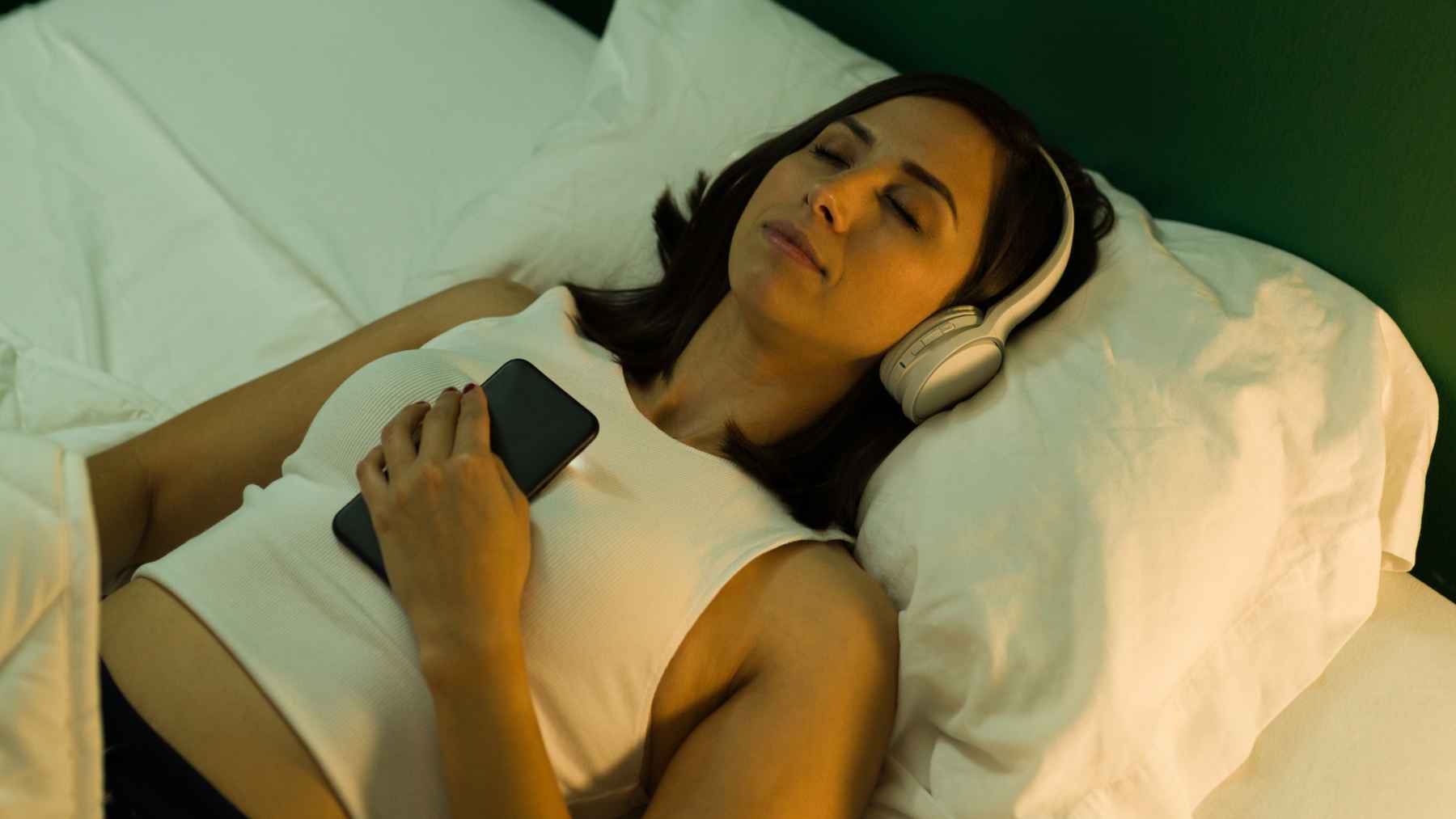
Wireless earbuds are now part of the soundtrack of daily life. They sit in our ears during workouts, commutes, work calls, grocery runs, and those late-night podcast sessions when we swear we are only listening for “five more minutes.”
That is why a dramatic phrase from longevity doctor Patricio Ochoa caught so much attention. In a recent video, he opened with the idea that using Bluetooth headphones is “like putting a microwave on your head,” but then quickly made the real point (the science is far less scary than the phrase sounds).
The viral claim
Ochoa’s message was not that people should panic or throw away their earbuds. In fact, he said “the reality is much less dramatic,” explaining that Bluetooth devices and microwave ovens may use similar kinds of electromagnetic waves, but they do not deliver the same amount of energy.
That distinction matters. A microwave oven is built to heat food, while a Bluetooth earbud is built to send a short range, low power signal from your phone to your ear.
Why frequency is not the whole story
Bluetooth Classic and Bluetooth Low Energy use the 2.4 gigahertz industrial, scientific, and medical band, according to the Bluetooth Special Interest Group. That is also why people sometimes compare Bluetooth with microwave ovens, but frequency alone does not tell you how much energy reaches the body.
Think of it this way. A match and a bonfire both involve heat, but nobody treats them as the same thing at a backyard cookout. In practical terms, power output is the detail that changes the risk conversation.
What the evidence says
Ochoa said a Bluetooth headset uses “tiny amounts” of energy, too low to heat the brain, damage neurons, or alter cells. That lines up with the broader public health view that radiofrequency radiation from common wireless devices is nonionizing, meaning it does not carry enough energy to damage DNA the way X-rays can.
The National Cancer Institute says the evidence to date suggests cell phone use does not cause brain or other cancers in humans. It also notes that the only consistently recognized biological effect from radiofrequency energy absorption is heating near where a phone is held, but not enough to measurably raise core body temperature.
What recent reviews found
A 2024 WHO-commissioned systematic review published in Environment International found moderate certainty evidence that near-field radiofrequency exposure to the head from mobile phone use likely does not increase the risk of several tumors, including glioma, meningioma, acoustic neuroma, pituitary tumors, and salivary gland tumors in adults. The review also found no likely increase in pediatric brain tumors from mobile phone exposure.
That does not mean scientists stop asking questions. The International Agency for Research on Cancer classified radiofrequency electromagnetic fields as “possibly carcinogenic to humans” in 2011, a category that reflects limited evidence and uncertainty rather than proof of harm.
Bluetooth is usually lower exposure
One reason Bluetooth headphones are often viewed as lower concern is simple. They generally emit much less radiofrequency energy than a cell phone held directly against the head.
A real-world exposure study published in Environmental Research found that Bluetooth headset exposures were 10 to 400 times lower than direct near-ear exposures from the connected cell phones. The same study also found that phone exposure can rise sharply in weak signal areas, which is something many people notice in daily life when a phone battery drains faster in a bad reception zone.
The risk people overlook
Here is the twist. For most users, the more practical health concern is not Bluetooth radiation. It is volume.
The World Health Organization advises keeping headphone volume below 60% of the maximum and using well-fitted, noise canceling headphones so people do not crank up the sound in noisy places like public transportation or a busy cafeteria. That advice feels less dramatic than a “microwave” warning, but it is much more useful.
Hearing damage is real
The National Institute on Deafness and Other Communication Disorders says sounds that are too loud and last too long can permanently damage hearing. It also notes that headphones can reach 110 A-weighted decibels at maximum volume, which is loud enough to become a problem quickly.
Noise-induced hearing loss can sneak up slowly. One day the music sounds fine, then conversations feel muffled, tinnitus starts after long listening sessions, or the old volume setting no longer feels loud enough.
What users can do
The simplest move is to keep the volume lower than you think you need. Noise canceling headphones can help because they reduce the temptation to compete with traffic, subway noise, gym music, or that loud coffee shop blender.
It is also smart to take breaks. Let your ears rest between long calls, workouts, or streaming sessions, especially if you notice ringing, pressure, or muffled hearing after taking the earbuds out.
Wired headphones are still fine
Ochoa’s final point was refreshingly practical. If Bluetooth still makes you anxious, “using cable is also fine,” he said.
That is a reasonable choice, not an overreaction. Health advice works best when it lowers risk and lowers stress, because anxiety has a way of turning every small device into a mystery.
The bottom line
For now, the best evidence does not support the idea that Bluetooth headphones are frying your brain. The better everyday habit is to watch the volume, take listening breaks, and choose the kind of headphones that helps you keep sound at a safe level.
The study was published on Environment International.