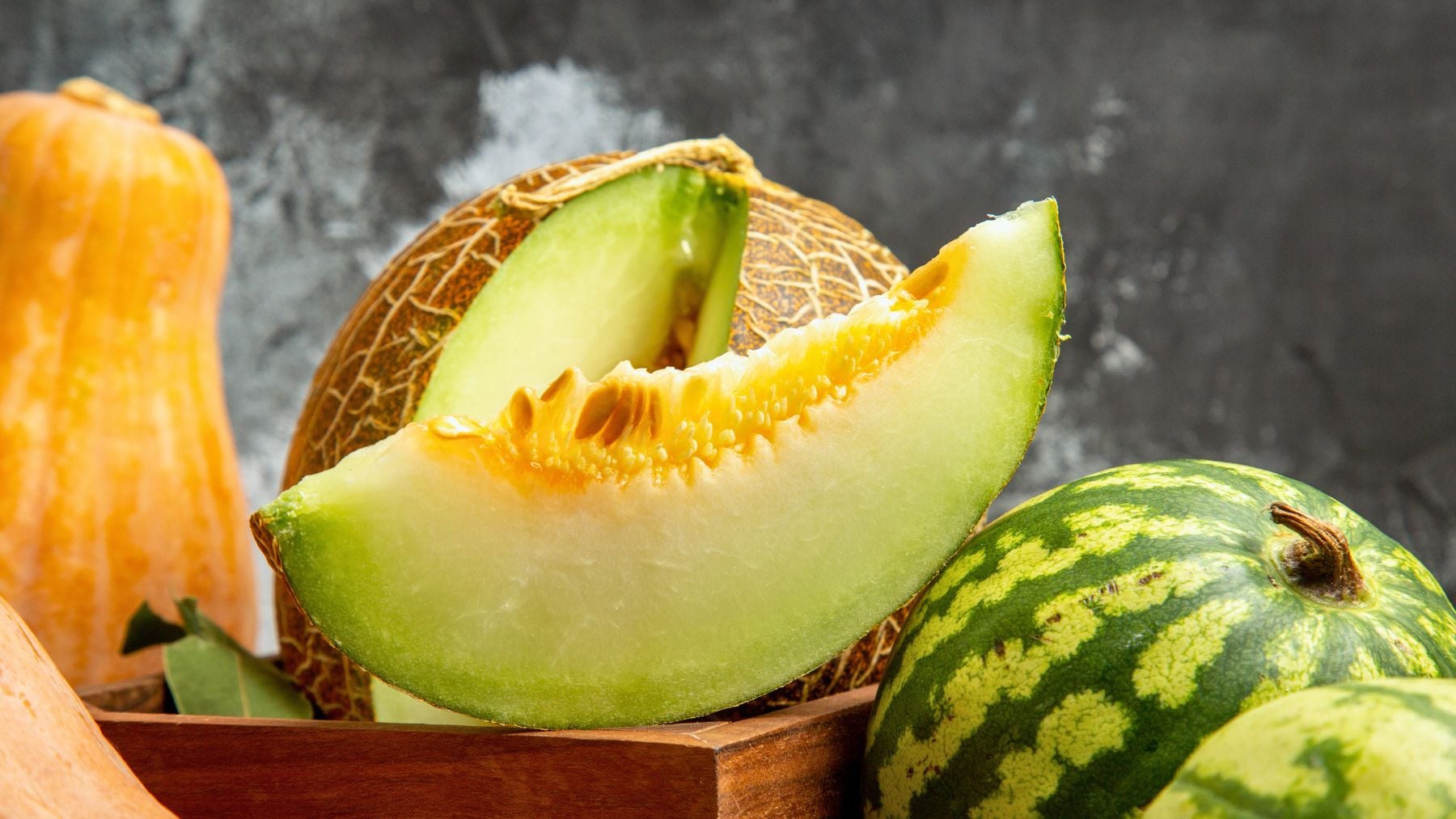
You’ve probably heard that nothing beats water when it comes to hydration. Registered dietitian nutritionist Jonathan Purtell says some fruits can actually hydrate your body just as effectively, and in some cases, even better. One of the top contenders is cantaloupe.
This soft, orange melon is made up of nearly 90% water and provides natural electrolytes, fiber, and essential vitamins that help your body retain fluids longer. Here, we’ll explore why cantaloupe stands out for hydration, how it compares to water, and which other fruits can help you stay hydrated when temperatures climb or your water bottle feels out of reach.
Why cantaloupe keeps you hydrated longer
Cantaloupe’s high water content is only part of the story. Hydration from food is often more effective because it combines water with electrolytes and nutrients that support fluid balance. When you eat cantaloupe, you’re getting potassium, magnesium, and natural sugars that help your body absorb and hold onto that water more efficiently than plain H2O.
A single wedge of cantaloupe contains around 23 calories and is packed with vitamin A, beta-carotene, and fiber. Vitamin A supports skin health, which is vital for maintaining hydration since the skin acts as a barrier against moisture loss. The fiber slows digestion slightly, meaning the water and nutrients are absorbed more steadily.
Unlike many sports drinks or sweet beverages, cantaloupe provides natural hydration without added sugar or artificial electrolytes. Its mild sweetness also makes it an easy addition to smoothies, salads, or even savory dishes like prosciutto and melon, where the salt helps replenish sodium levels lost through sweat.
Other fruits that help you stay hydrated
If you want to mix things up beyond cantaloupe, there are plenty of other hydrating fruits worth adding to your day. Many are rich in water, fiber, and electrolytes that work together to keep you refreshed from the inside out. Let’s see a few:
- Cucumbers. These are about 96% water. They’re low in calories and high in potassium, magnesium, and vitamin K, which are all nutrients that help prevent dehydration.
- Watermelon. Made of roughly 92% water, watermelon is rich in citrulline, an amino acid that supports blood flow and helps your body distribute fluids evenly.
- Strawberries. These berries are about 92% water and contain antioxidants like anthocyanins, along with vitamin C and manganese for cellular hydration and repair.
- Tomatoes. At 94% water, tomatoes add hydration along with lycopene, an antioxidant that protects against UV damage and supports skin health.
- Grapefruit. With a 90% water content, grapefruit provides vitamin C and polyphenols that help reduce inflammation. Just check for medication interactions before adding it to your diet.
- Pineapple. Around 87% water and is full of bromelain, an enzyme that supports digestion and reduces swelling. It also provides vitamin B6 and magnesium for electrolyte balance.
Fruits like these can easily make up 20% or more of your daily fluid intake. Pairing them with water throughout the day helps your body stay hydrated from both the inside and out. It’s a natural, refreshing way to beat fatigue, support your skin, and keep your energy steady.