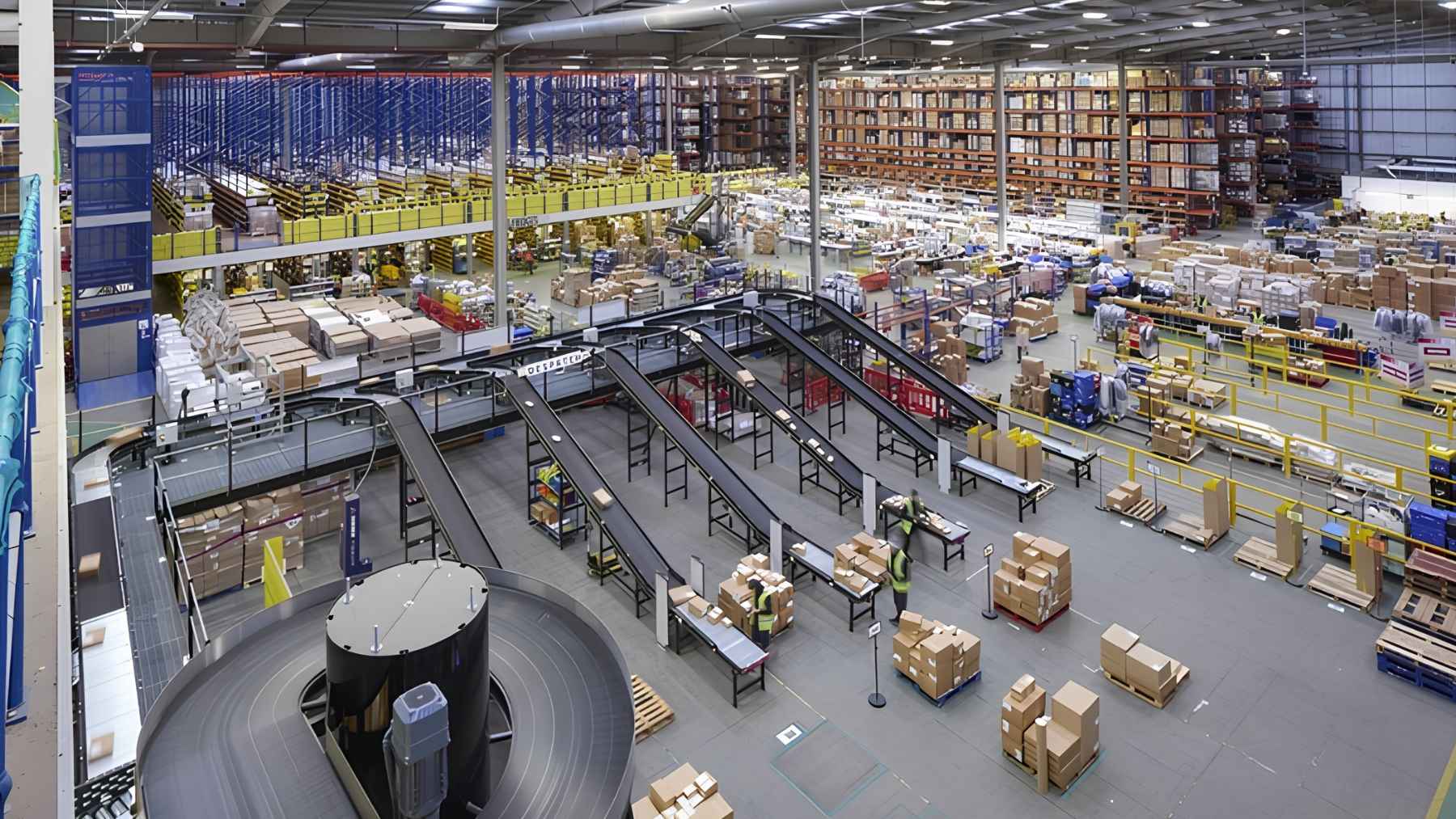
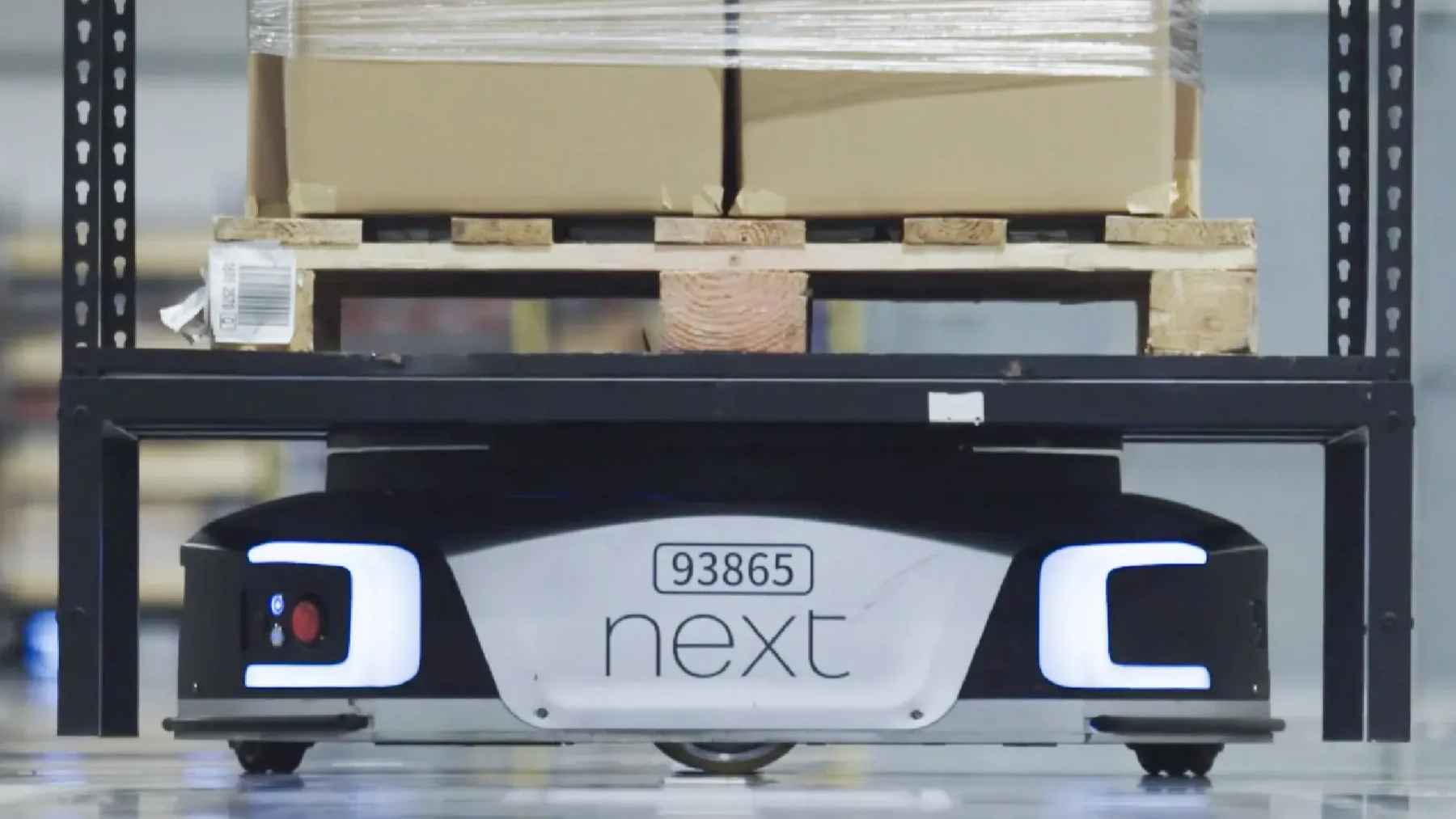
British warehouse personnel have been welcoming some new team members. Geek+ partner MotionTech reports that an army of more than 2,000 made-in-China robots are now moving stock from shelves to workers for chains like Tesco, Asda, and Next at 10 UK sites.
They promise more efficient picking, storage, and delivery, but can this improved productivity make online retail genuinely cleaner?
The answer is “possibly, but not automatically.” An Organisation for Economic and Cooperative Development (OECD) report published in April 2026 found that UK businesses adopt mature tools such as cloud computing and data analytics relatively well, but remain weaker in advanced technologies including robotics and automation.
Energy per order, battery life, delivery practices, and the treatment of workers will decide whether this new machine workforce delivers more than speed.
Robots are already changing the warehouse
Geek+ robots are squat, wheeled machines that follow digital maps and QR-code floor markers, slip under storage racks, and carry them to fixed picking stations. Unlike conveyor-heavy systems, autonomous mobile robots can be installed with minimal permanent infrastructure, making them attractive for warehouses that need to expand quickly. “Customers want fast deployable solutions,” MotionTech account director Barry Pemberton said.
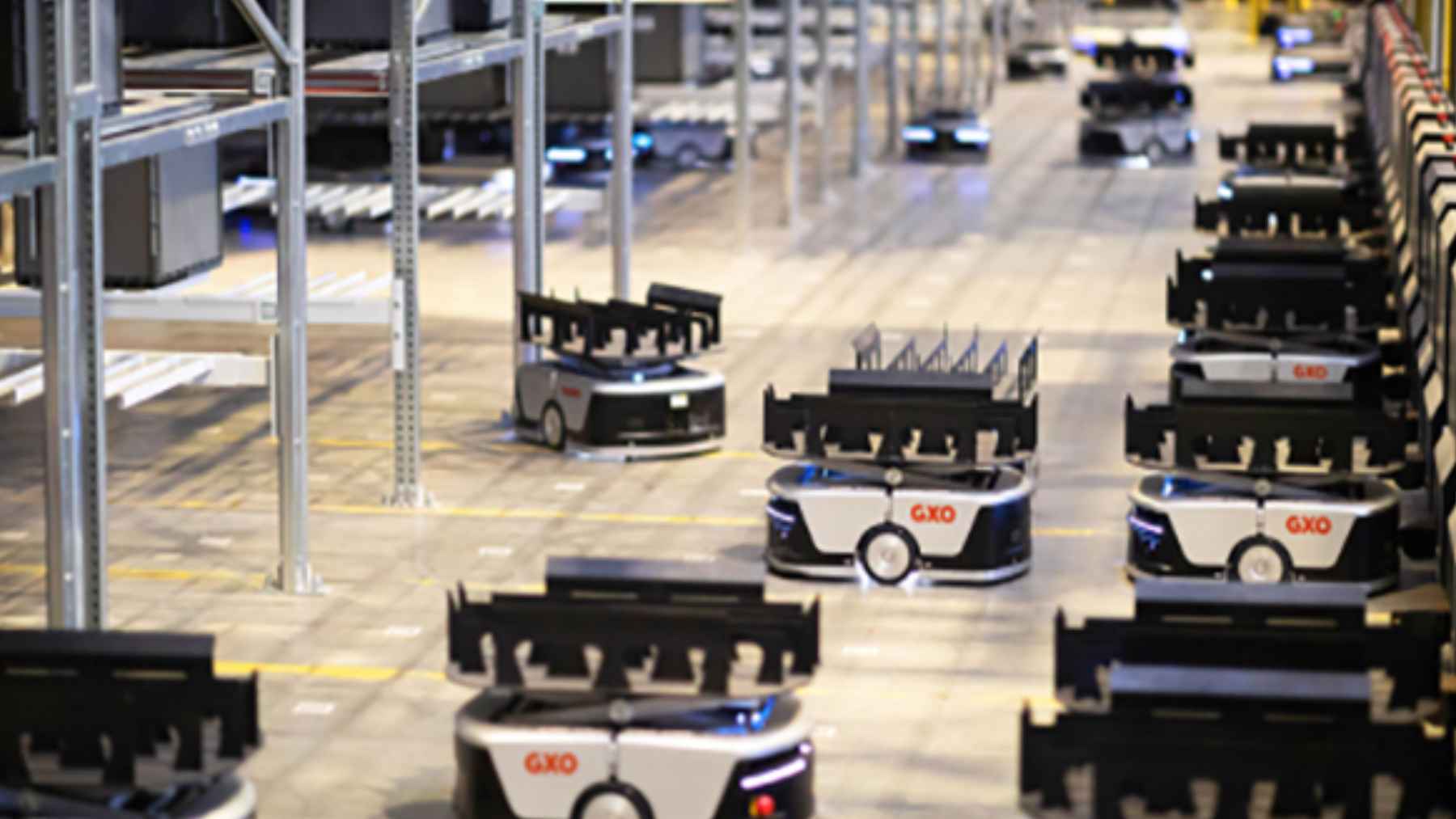
Geek+ says it had deployed more than 72,000 robots worldwide by 2025 and was active in over 40 countries. That scale helps explain why Britain has become its biggest European market, but it also turns UK warehouses into a real-world test of a Chinese technology platform moving from simple transport toward robotic picking and end-to-end automation.
Why the environmental case looks attractive
So, where does the environmental gain actually come from? A warehouse filled with robots does not need every aisle to be lit, heated, or cooled like a human work area.
Geek+ says its mobile robots can reduce warehouse energy consumption by up to 75% compared with manual warehouses, while dense storage can limit the need for more floor space and major building work.
Those are company claims, not a universal result, but they identify the main green opportunity. The company also said its internal 2022 tracking attributed 16 million kilowatt-hours of energy savings and about 140,000 tons of avoided carbon emissions to a fleet of 30,000 robots.
The estimate compared traditional operations with robot-supported warehouses, so it should be read as a company benchmark rather than an independent industry-wide measurement.
Smarter software decides the result
Robots still consume electricity, and adding too many can create congestion, idle time, and unnecessary charging. A 2025 peer-reviewed simulation of robotic mobile fulfillment found that fleet size, speed, routes, and traffic rules strongly affected both energy use and output. Automation alone was not the solution.
In that study, a new priority rule reduced energy consumption by 3.41% while increasing throughput by 26.07% compared with the first-come, first-served control. In practical terms, the greener warehouse is not simply the one with more robots; it is the one that measures energy per order and continuously tunes how the fleet moves.
Faster delivery can cancel the savings
Warehouse efficiency is only one part of e-commerce’s environmental footprint. UN Trade and Development says warehousing, packaging, transportation, and returns must be addressed together because savings inside a building can be overwhelmed by excessive packaging, fragmented delivery rounds, or high return rates.
That creates a familiar rebound risk. Reporting based on MIT logistics research estimated that fast shipping can increase emissions by 10% to 12% for the same level of demand, partly because vehicles leave before loads are fully consolidated.
Retailers will get more climate value from robots when automation is paired with grouped orders, cleaner delivery vehicles, practical return policies, and less wasteful packaging.
Workers need a share of the gains
Automation is entering British warehouses amid labor shortages and a long productivity squeeze. MotionTech argues that robots can keep operations moving on smaller footprints while reducing repetitive walking and handling, but the same systems can also be used primarily to cut headcount. That tension cannot be brushed aside.
The Trades Union Congress says workers and unions should help shape automation, with retraining and high-skilled work placed ahead of “job-cutting, low-productivity automation.” This is not separate from sustainability. A system that burns through workers, batteries, and equipment in pursuit of speed is unlikely to be sustainable in any meaningful sense.
China brings scale to Britain
China’s robotics rise did not start from scratch. The industrial ecosystem built around electric vehicles also supplies batteries, motors, cameras, sensors, and semiconductors for robots, allowing manufacturers to develop products quickly and produce them at scale.
That gives Chinese suppliers an advantage as British retailers look for flexible systems without years of construction.
For the UK, the opportunity is obvious, but so is the need for clear standards. Retailers should know where batteries and critical components come from, how long equipment is expected to last, whether parts can be repaired locally, and what happens at the end of a robot’s service life. Otherwise, operational energy savings could hide a larger material footprint.
What Britain should measure next
Geek+ says its next goal is an end-to-end unmanned warehouse that automates picking, handling, and packing as well as movement. Humanoid robots may eventually work in buildings designed around people, but today’s systems still lack the dexterity required for many repetitive tasks. For now, robot arms and better software are more likely to complement wheeled fleets.
Before scaling further, retailers should publish independently verified electricity use and emissions per order, battery replacement and recycling rates, equipment lifetimes, and worker training outcomes. Without those numbers, “green automation” remains mostly a marketing label, but with them it could become a credible productivity and climate strategy.
The official report was published on the OECD website.