Seven years is a long time to wait for a car, especially one of only 72 planned examples. What happened when the keys finally arrived? Roughly a month after receiving the first customer De Tomaso P72, its owner took the midnight-blue “Aurelian Night” commission through Monaco, following earlier appearances in Munich and Frankfurt under the same German plate, EI DT72.
That matters because this rare machine is not being treated like a sealed investment.
The 700-horsepower, six-speed manual supercar is appearing in regular city traffic at a moment when one in four new cars sold worldwide was electric in 2025, making the P72 a striking symbol of the specialized market that still values combustion engines, mechanical controls, and old-school theater.
A seven-year wait ends in traffic
De Tomaso first unveiled the P72 at the 2019 Goodwood Festival of Speed, presenting it as a modern tribute to the little-known P70 racing project of the 1960s. Buyers who committed early then faced an unusually long development period before the first customer-level car was ready.
The company revealed the production-specification P72 in May 2025. By November, De Tomaso said its internal DT002, DT003, and DT004 cars were refining ergonomics, mechanical calibration, and carbon-fiber fitment, while DT005 would become the first customer-level example. “Aurelian Night” was officially presented on June 2, 2026.
Monaco was not the first stop
The Monaco videos may look like the car’s public debut, but the same P72 had already appeared in Germany. Reports placed it in Munich shortly after delivery and later in Frankfurt, where its low body, curved fenders, and unusual color drew phones from pockets almost immediately.
Now it has been filmed moving slowly through Monaco, a place where Ferraris, Bugattis, and Paganis are hardly rare. Even there, the P72 stands out. More importantly, the owner appears willing to put mileage on a car that many collectors might keep in a climate-controlled garage.
A design built around dusk
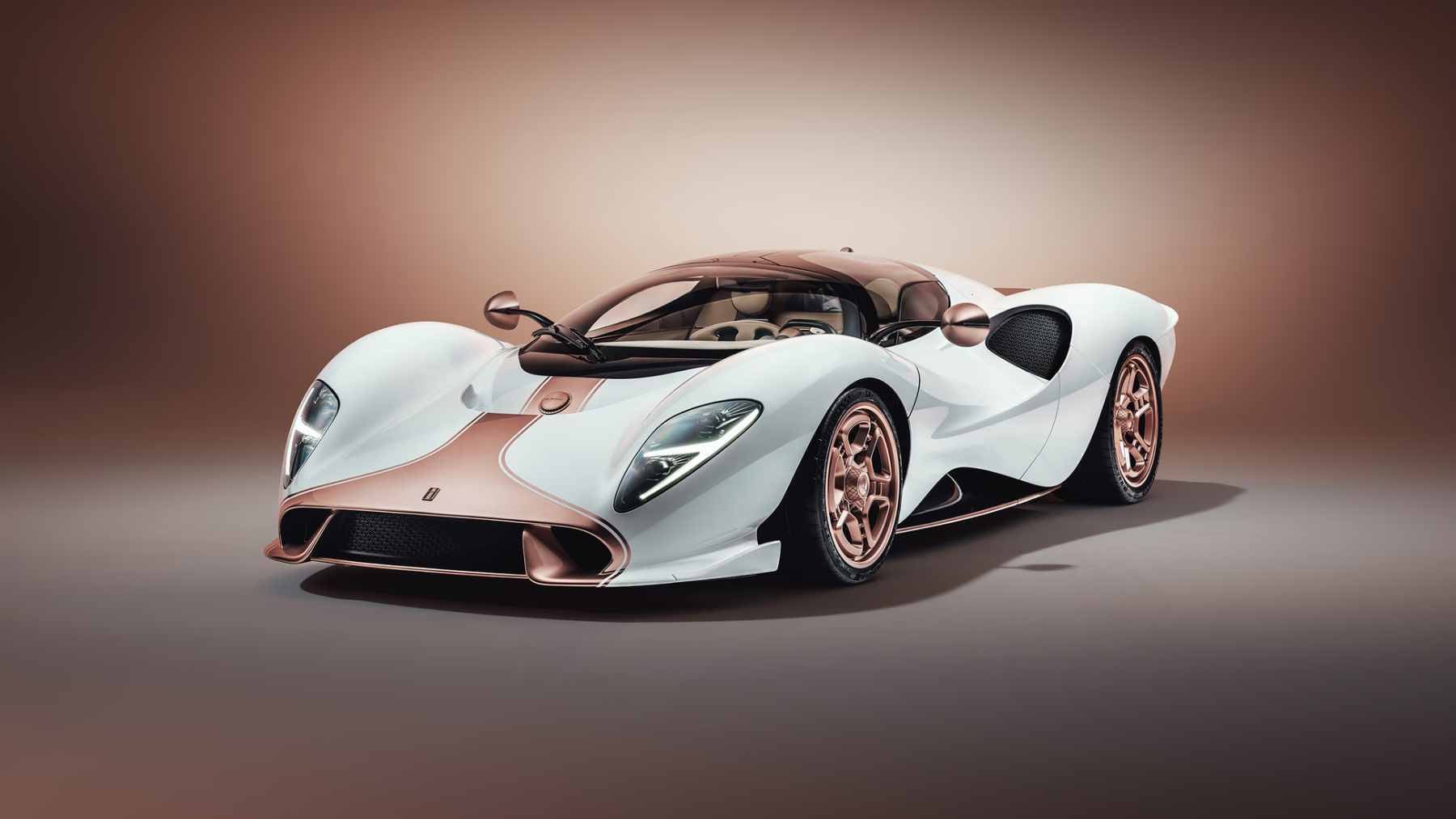
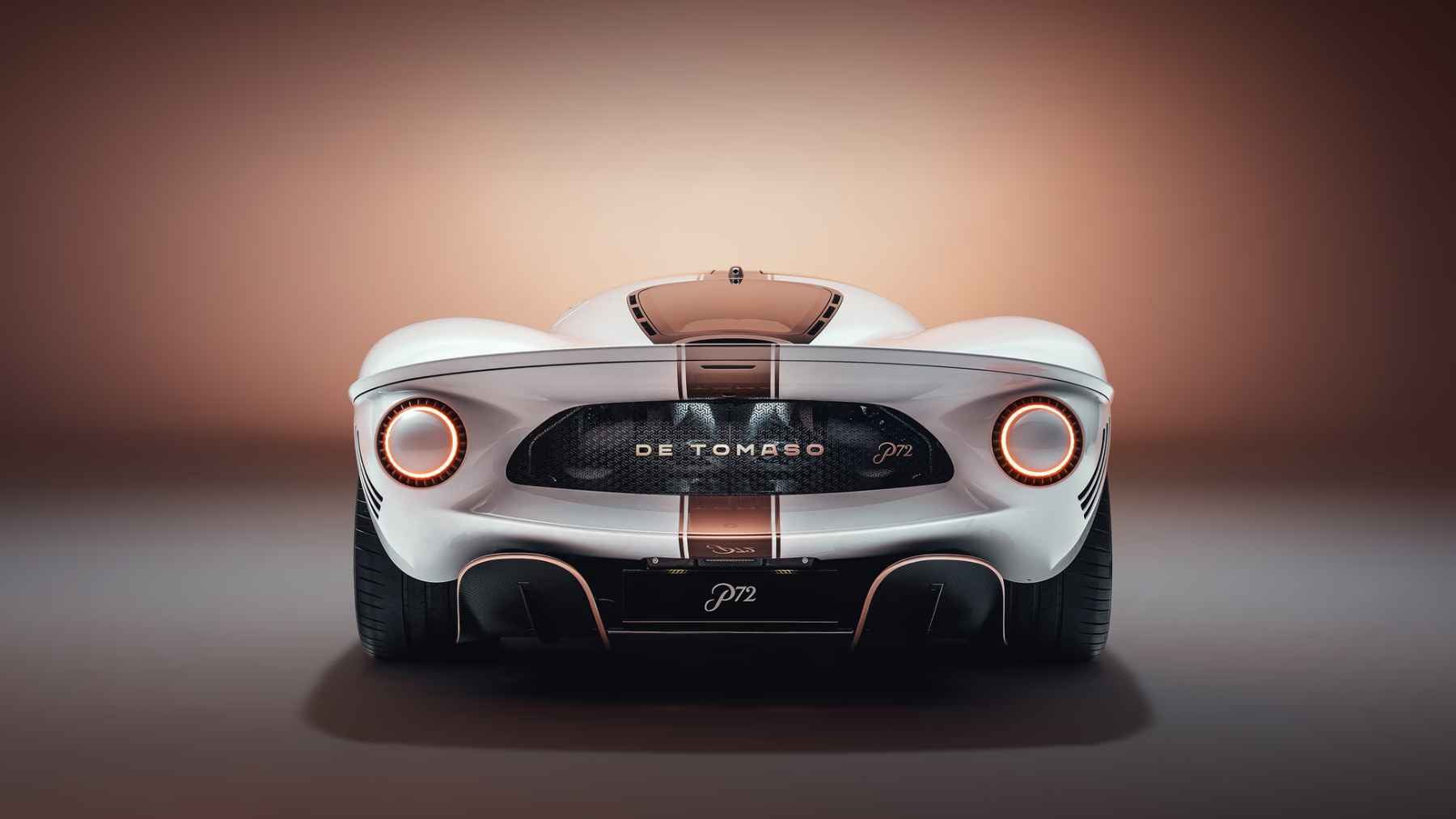
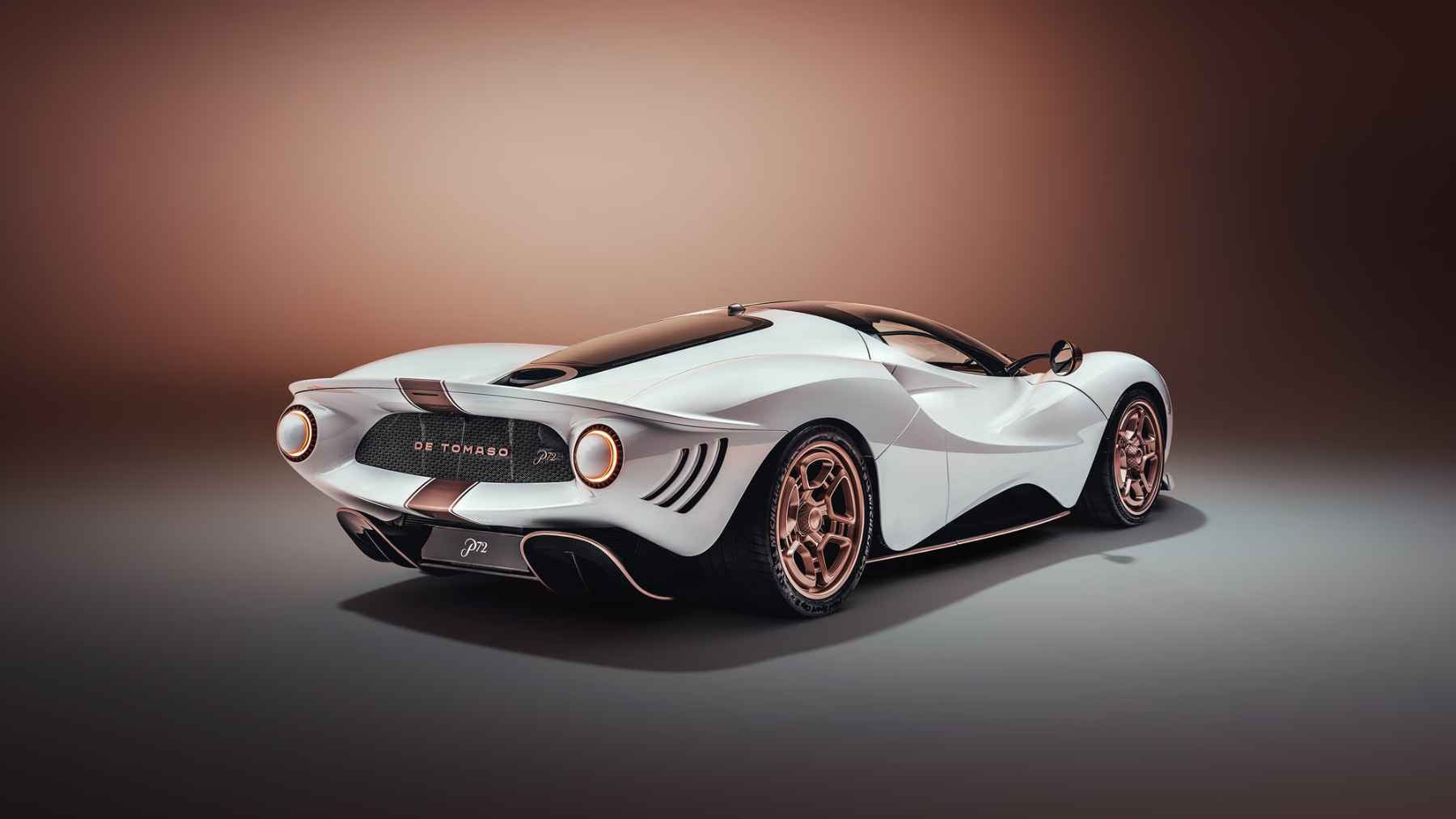
De Tomaso says the “Aurelian Night” finish was inspired by the brief shift from a summer evening into dusk. Midnight-blue paint forms the base, while hand-polished rose-gold details add warmth across the wheels, mirrors, trim, and other exterior elements. As the light changes, so does the car’s appearance.
The same theme continues inside. Venetian Blue leather covers the seats, dashboard, and surrounding surfaces, while rose-gold stitching connects the cabin to the exterior. The shape itself reaches further back, borrowing its narrow cockpit and flowing proportions from the P70 and the endurance racers of the 1960s.
Old-school feel meets new engineering
Under the sculpted body is an all-new carbon-fiber structure. De Tomaso says the central monocoque is formed as one uninterrupted piece, with carbon fiber extending into the front and rear subframes, while the body is also made from the lightweight material. Pushrod suspension and manually adjustable dampers complete a layout developed around driver feel.
The cabin deliberately avoids screens and conventional infotainment. Traditional gauges and an exposed linkage connect the driver to a six-speed gearbox, leaving a phone holder as one of the few concessions to modern daily life. It is almost the opposite of stepping into a new car and waiting for a touchscreen to wake up.
A 700-horsepower analog machine
The supplied report describes the 5.0-liter (305-cubic-inch) supercharged V8 as Ford-derived and developed with Roush Performance involvement. De Tomaso’s current production statement focuses instead on bespoke forged internals and a company-developed supercharger, while confirming an output of 700 horsepower and about 605 pound-feet of torque.
Short gear ratios matter more here than chasing a headline top speed. There are no selectable drive modes, and power is delivered through a manual transmission to the rear wheels. In practical terms, the P72 uses advanced materials to preserve a deliberately mechanical driving experience.
The environmental contradiction
With only 72 customer cars planned, the P72 is not a mass-market emissions story. Its importance is more symbolic. In 2025, global electric-car sales passed 20 million and reached 25% of all new-car sales, yet this small manufacturer has built its flagship around a supercharged V8, no drive modes, and a screen-free cockpit.
There is another trade-off in the structure. Carbon fiber can reduce vehicle weight, but producing virgin carbon-fiber composites is energy-intensive, and U.S. Department of Energy research has identified substantial energy benefits from recycled material.
De Tomaso’s public P72 information does not specify recycled content, fuel consumption, or tailpipe emissions, so its full environmental footprint cannot be calculated from the available data.
A rare car that is actually being used
Every P72 will be individually commissioned, which almost guarantees that each car will be treated as a collectible. De Tomaso CEO Norman Choi described the model as having “a mechanical soul, timeless beauty, and a driving experience that rises above modern convention.” The first owner appears to be taking the final part seriously.
That may be the most interesting detail of all. After nearly seven years of waiting, the first customer has not hidden the car from the public. Munich, Frankfurt, and Monaco have turned this P72 into a moving piece of De Tomaso’s revival, not just another low-mileage asset waiting behind a locked door.
The official “Aurelian Night” commission statement was published on De Tomaso Automobili.