Singapore is building its next-generation port on a foundation that sounds almost unreal. Along the country’s western coast, 227 concrete caissons, each roughly as tall as a 10-story building, have been installed to form a 5.7-mile seawall for Phase 2 of Tuas Port.
The bigger story is not the wall alone. Can a port built by reclaiming the sea truly call itself green? Tuas is Singapore’s bet that much larger, faster, and more automated operations can cut day-to-day emissions, even though construction has already reshaped part of the marine environment.
A seawall built with precision
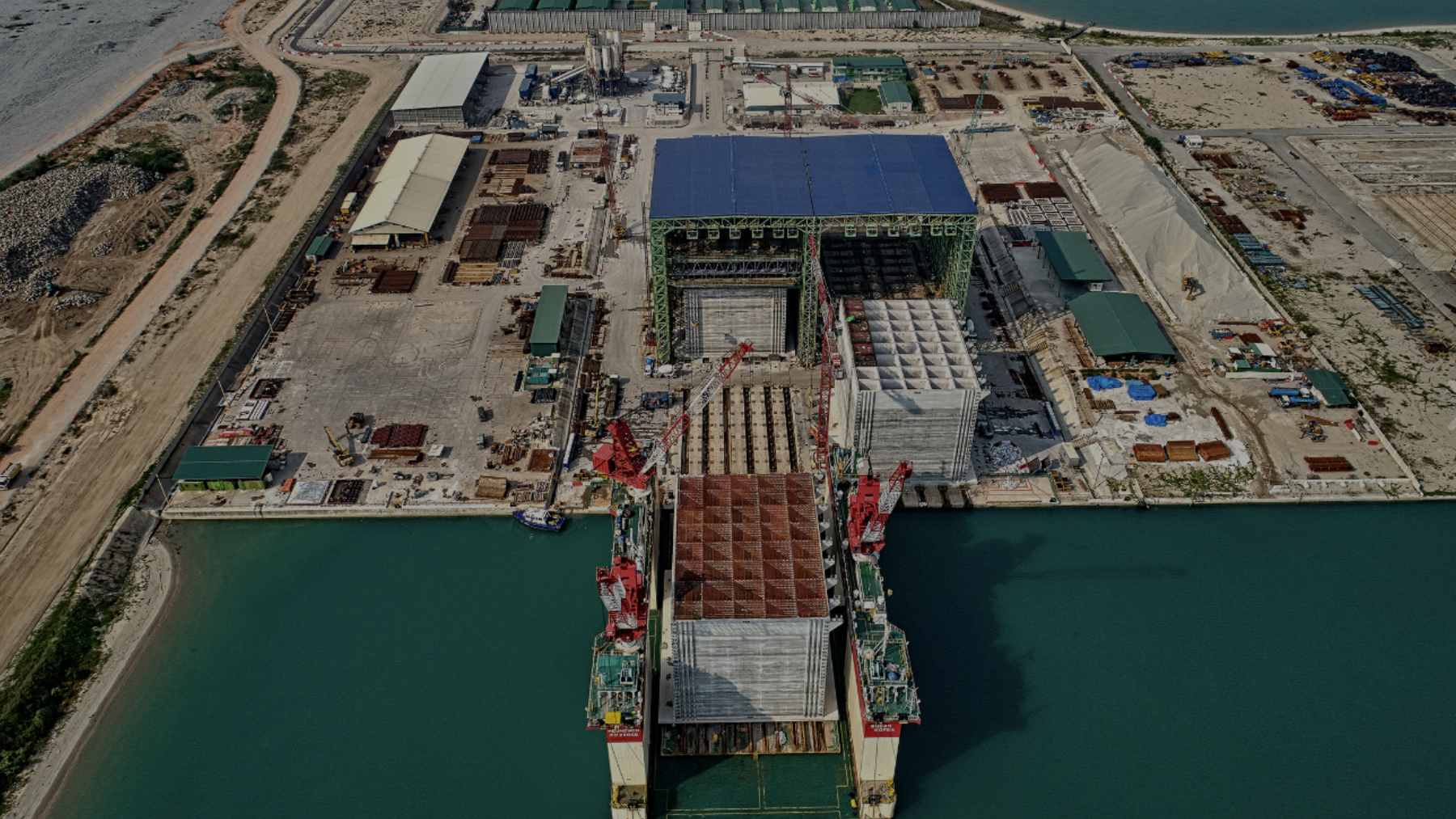
The caissons were not simply dumped into the water. Contractor Boskalis says each one measured about 131 feet long, 66 feet wide, and 98 feet high, then traveled by floating dock before tugboats positioned and sank it onto a prepared rock base.
Once in place, the cells inside the concrete structures were filled with sand and compacted. It is closer to assembling a row of hollow buildings at sea than tossing blocks overboard.
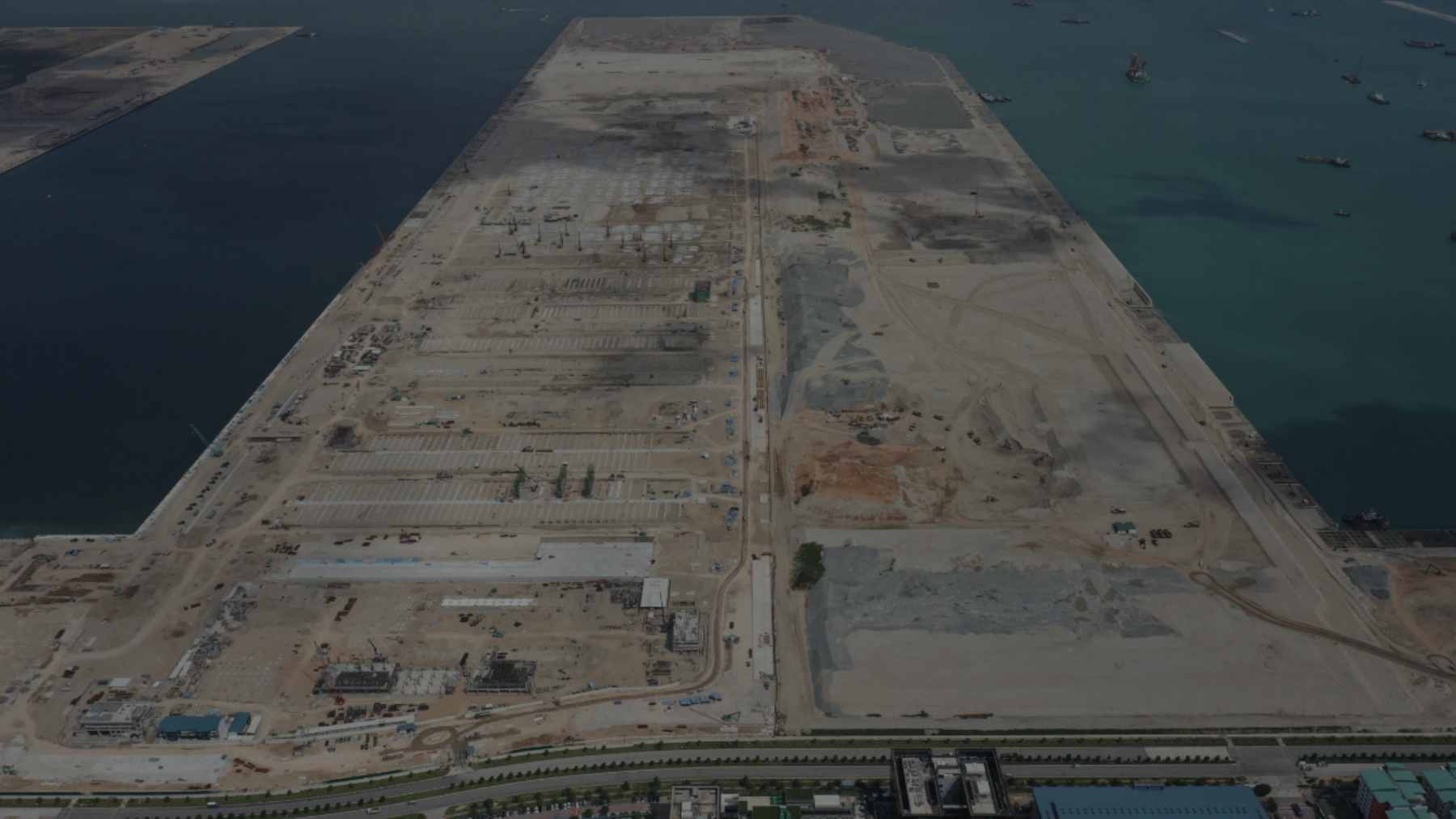
All 227 caissons for Phase 2 had been fabricated by April 2022, and together they form about 5.7 miles of seawall. Phase 2 reclaims roughly 956 acres and is designed to add 21 million TEUs of annual container capacity.
The project is already moving
By March 2026, Phase 2 reclamation was close to 80 percent complete. Earlier official plans placed completion of those works in 2027, so the giant wall is largely in place while the terminal infrastructure behind it continues to take shape.
Tuas entered 2026 with 12 operational berths, and Singapore said four more would open during the year. One of them will include the Tuas Living Lab, a real-world testing ground for technologies such as autonomous vehicles.
That matters because this is not a distant blueprint waiting for the 2040s. Ships are already calling, containers are already moving, and the environmental claims can increasingly be tested against real operations.
Why Singapore is going this big
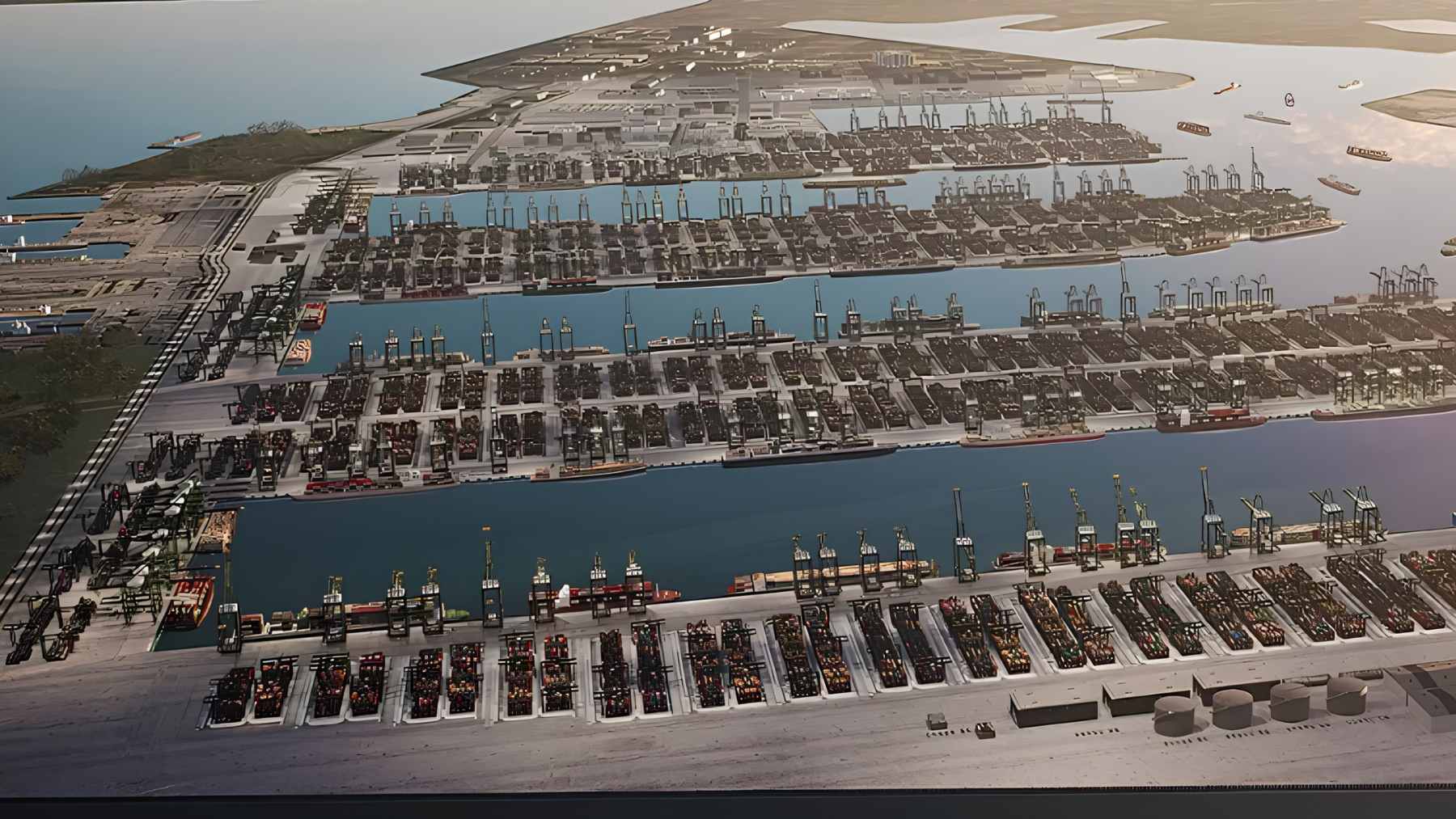
When all four phases are complete, Tuas Port is expected to cover about 3,304 acres, operate 66 berths along 16.2 miles of quay, and handle up to 65 million TEUs each year. That would make it the world’s largest fully automated container terminal, according to Singapore’s transport authorities.
Singapore handled a record 44.66 million TEUs in 2025, up 8.6 percent from 2024. The final Tuas capacity would be about 46 percent above that record, giving the country more room for growth, schedule recovery, and sudden changes in global shipping patterns.
This is also a strategic hedge. MPA Deputy Chief Executive Chin Yi Zhuan put the approach plainly in April 2026, saying, “We don’t just survive disruption. We build through it.”
Automation changes the port floor
Picture a warehouse the size of a small city, except the boxes weigh several tons and ships arrive from every time zone. Electrified automated guided vehicles will carry containers between the wharf and yard, automated cranes will stack them, and many operations will be managed remotely from a control center.
A private 5G network is intended to keep cranes and vehicles connected, while digital systems coordinate vessel traffic and port clearances. In practical terms, that means fewer paper handoffs and a better chance of moving a container without unnecessary waiting.
Automation does not remove people from the picture. It shifts more work toward remote monitoring, systems engineering, data analysis, and specialized maintenance, while machines take on repetitive movement across the yard.
The greener claim has limits
MPA says the electrified quay cranes, yard cranes, and automated vehicles at current Tuas berths can cut carbon emissions by about 50 percent compared with diesel prime movers. The port’s maintenance building also uses 58 percent less energy than similar buildings and produces enough solar power to offset its own electricity use.
Those are meaningful operating gains, but they are not a full life-cycle score for the megaproject. Concrete, dredging, soil treatment, and land reclamation all happen before the first container moves, so a lower-carbon terminal can still carry a significant construction footprint.
At the end of the day, the green case rests to a large extent on whether Tuas delivers lower emissions for decades after construction. Electric vehicles are important. They are not the whole answer.
Marine habitat cannot be ignored
MPA’s own environmental assessment for the first phase found that reclamation would adversely affect corals at Sultan Shoal. Corals were relocated to Sisters’ Island and St. John’s Island, followed by a five-year monitoring program and nursery work using recovered fragments.
The project has also reused material rather than relying only on fresh sand. Boskalis said dredged soil, along with clay and silt from other civil-engineering projects in Singapore, was used as fill for the terminal site.
But relocation and material reuse are mitigation, not a reset button. The ecological question now is whether nearby reefs, water quality, and seabed conditions remain healthy as reclamation and terminal construction continue.
What happens next
The latest published target for Phase 2 reclamation is 2027, while the full four-phase port is slated for the 2040s. Since Tuas is already operating, Singapore can now measure environmental performance alongside construction instead of postponing that judgment until the grand opening.
The numbers worth watching are energy use per container, actual emissions, turnaround times, reuse of fill, and marine monitoring results. A giant wall makes headlines, but the longer test is whether the port behind it delivers cleaner trade at the scale Singapore promises.
The official statement was published on the Maritime and Port Authority of Singapore website.