Gina Rinehart’s Hancock Prospecting has made one of its boldest moves beyond iron ore, taking a reported stake of more than $1 billion in Elon Musk’s SpaceX after the rocket, satellite, and AI company completed a record-breaking IPO. Reuters reported that SpaceX raised $75 billion at $135 a share, valuing the company at $1.77 trillion at the offering price.
This is not just another billionaire backing another billionaire, however. The deal connects three worlds that are usually discussed separately (mining, artificial intelligence, and space infrastructure) and it raises a down-to-earth question: can the new space economy grow fast without leaving a bigger environmental footprint in the skies above us?
A mining fortune moves into space
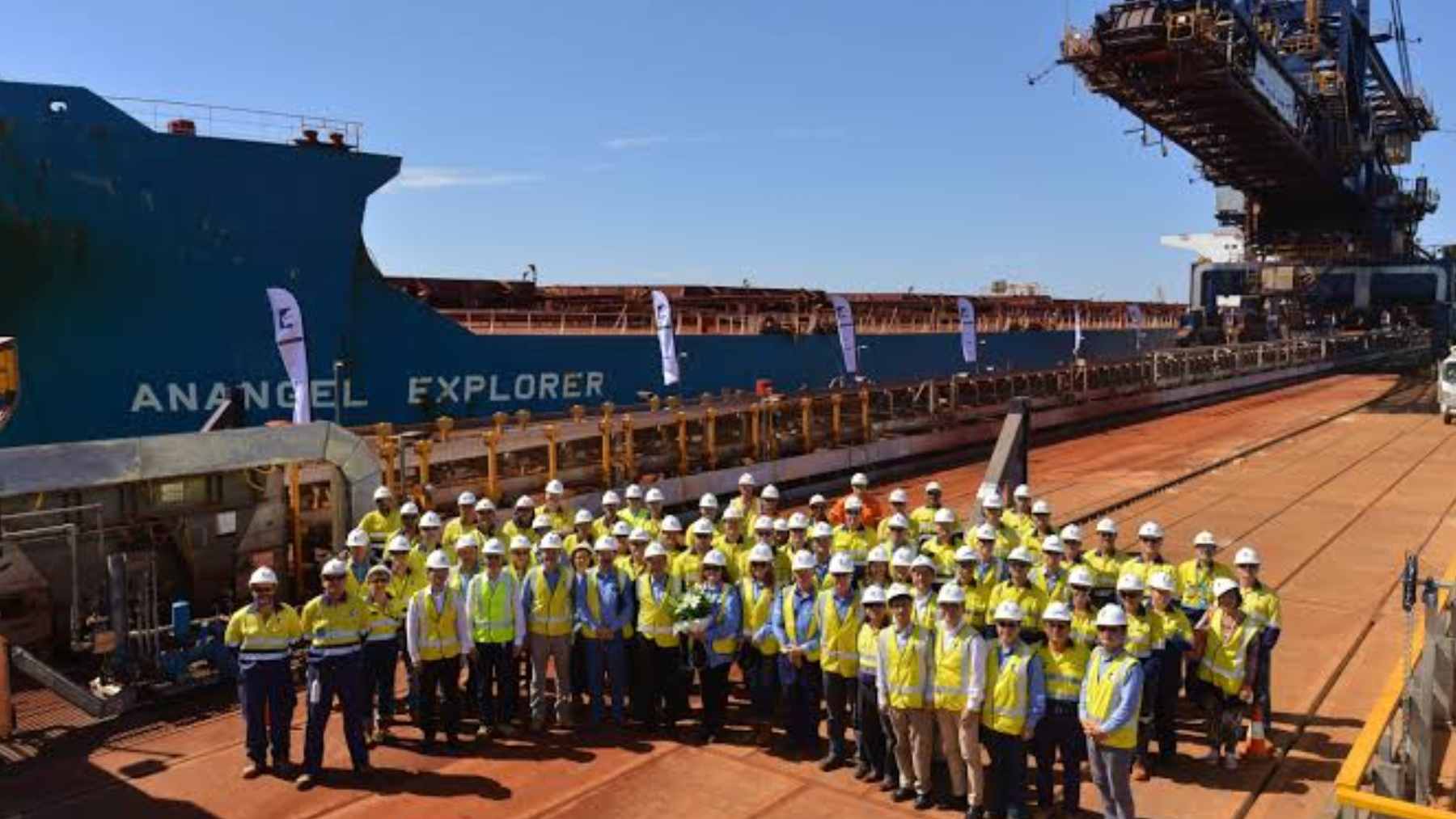
Hancock Prospecting said Rinehart’s investment reflected confidence in Musk and in the need for Western countries to keep leading in technology and innovation. In its official statement, Hancock called SpaceX “one of the defining companies of the 21st century” and described the IPO as the largest in history.
The company did not confirm the exact size of the holding, but Reuters reported that Rinehart took a stake of more than $1 billion, citing a person familiar with the matter. Hancock also said it was pleased to receive an allocation in what Rinehart described as an “extremely popular and oversubscribed IPO.”
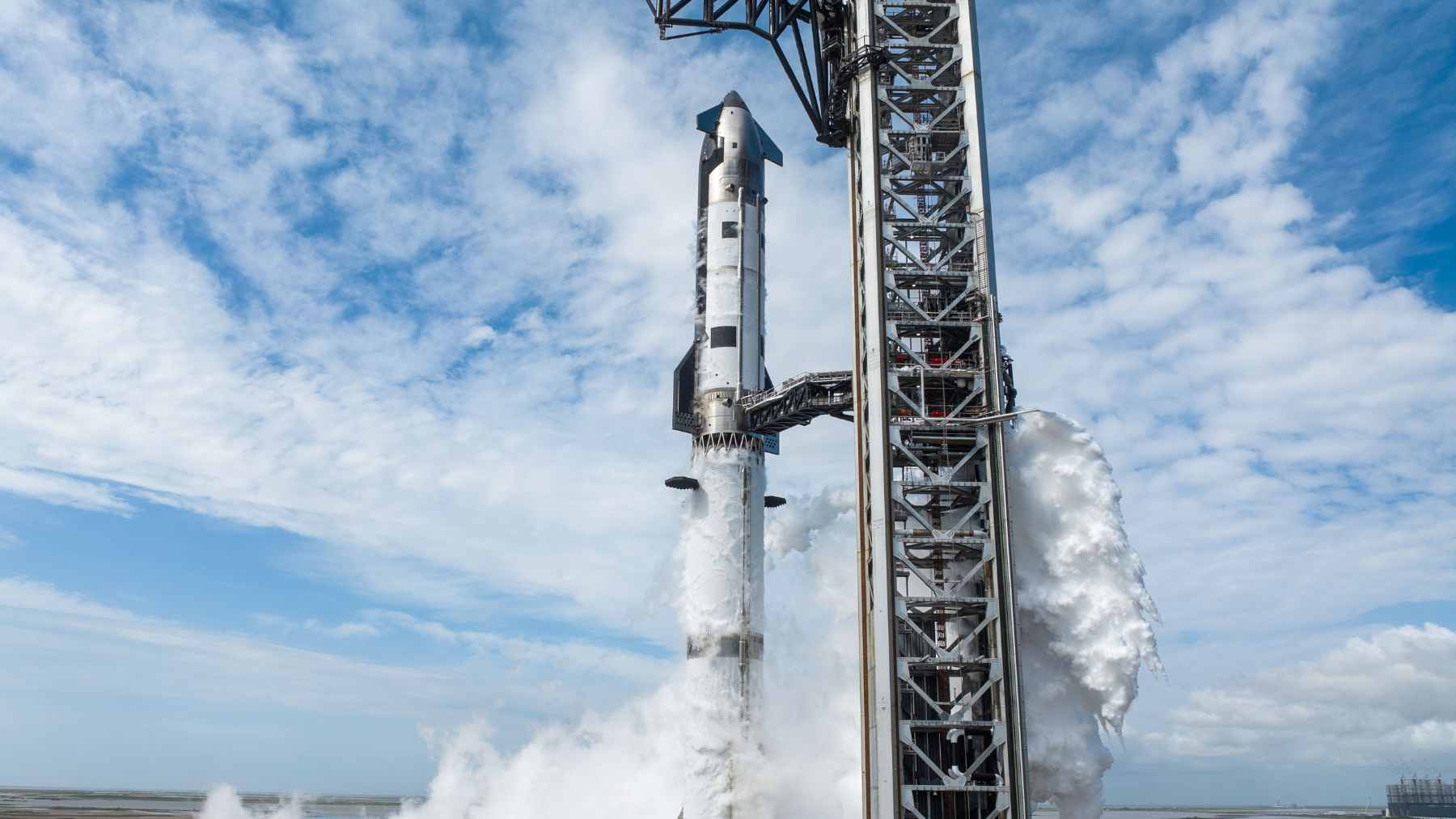
For the most part, the logic is easy to see. SpaceX is no longer only about rockets. It sits at the center of satellite internet, defense communications, launch services, and AI infrastructure, all areas where governments and companies are spending heavily.
Why critical minerals matter
The environmental angle starts with something ordinary, even if the technology sounds futuristic. Satellites, chips, batteries, launch systems, and data infrastructure all depend on raw materials that must be mined, refined, shipped, and processed.
That is why Hancock’s position is so interesting. Reuters reported that the company is a significant investor in critical minerals projects and that it sees possible supply links with SpaceX as demand grows for materials used in advanced technology.

In other words, the space race is also a materials race. A satellite constellation may orbit hundreds of miles above Earth, but its supply chain starts in mines, processing plants, and shipping corridors.
The launch boom has a climate question
Rocket launches are still tiny compared with aviation, trucking, or power plants in total carbon output. But scientists warn that where rocket pollution goes matters a great deal, because launches can inject gases and particles high into the atmosphere.
A 2025 study in npj Climate and Atmospheric Science found that rocket emissions can thin the stratospheric ozone layer. In one conservative scenario, the researchers projected a 0.17% annual, near-global ozone depletion by 2030, while a more ambitious growth scenario projected 0.29% depletion and a 3.9% drop in Antarctic springtime ozone.
Those numbers may sound small at first glance. The trouble is that the ozone layer is still recovering from past damage, and the study warned that frequent rocket launches could slow that recovery.
Satellites do not simply disappear
The second environmental issue comes at the end of a satellite’s life. Many low-Earth orbit satellites are designed to deorbit and burn up in the atmosphere, which sounds clean and tidy until you ask what they leave behind.
A 2024 Scientific Data paper found that satellite megaconstellation missions are driving rapid growth in rocket launches and human-made reentries.
The study said those launches and reentries inject pollutants and carbon dioxide through multiple layers of the atmosphere, with megaconstellation missions accounting for 37% to 41% of black carbon, carbon monoxide, and carbon dioxide emissions from space activity by 2022.
That does not mean satellite internet is all bad. It can connect rural homes, ships, aircraft, disaster zones, and military units when ground networks are damaged or unavailable. Still, every new constellation adds another layer of responsibility.
Defense and AI raise the stakes
SpaceX’s appeal to investors is partly commercial and partly strategic. Starlink has already become important in communications, while satellite systems are increasingly tied to national security, emergency response, and battlefield connectivity.
Hancock’s own statement highlighted SpaceX’s role in connectivity and AI, saying the company operates across space, connectivity, and artificial intelligence. Hancock CEO Garry Korte also pointed to possible future cooperation around critical minerals and infrastructure needs.
That is where the story becomes bigger than one investment. If AI computation, defense communications, and satellite broadband all expand at once, launch demand could rise sharply. The clock is moving faster than regulation.
A cleaner space economy is still possible
None of this means the space industry should stop growing. It means growth has to come with better measurement, cleaner fuels where possible, smarter satellite design, and clearer rules for reentry and orbital debris.
The science is still developing, and researchers are careful about uncertainty, but the direction is clear enough. More launches and more reentries mean more pressure to understand what rocket exhaust and vaporized spacecraft materials do to the upper atmosphere.
At the end of the day, the space economy is no longer a distant science story. It is becoming part of mining, finance, defense, AI, and everyday communications. That makes Rinehart’s SpaceX bet a business headline, but also an environmental one.
The official statement was published on Hancock Prospecting.