Have you ever watched fog slide across a hillside and thought of it as a water source? In the Anti-Atlas Mountains of southwest Morocco, that passing mist is doing something remarkable. It is being caught, stored, cleaned, and sent through pipes to homes that once depended on long walks to distant wells.
For generations, many women in the Aït Baamrane region spent hours each day hauling water in five-gallon containers that could weigh nearly 50 lbs. when full.
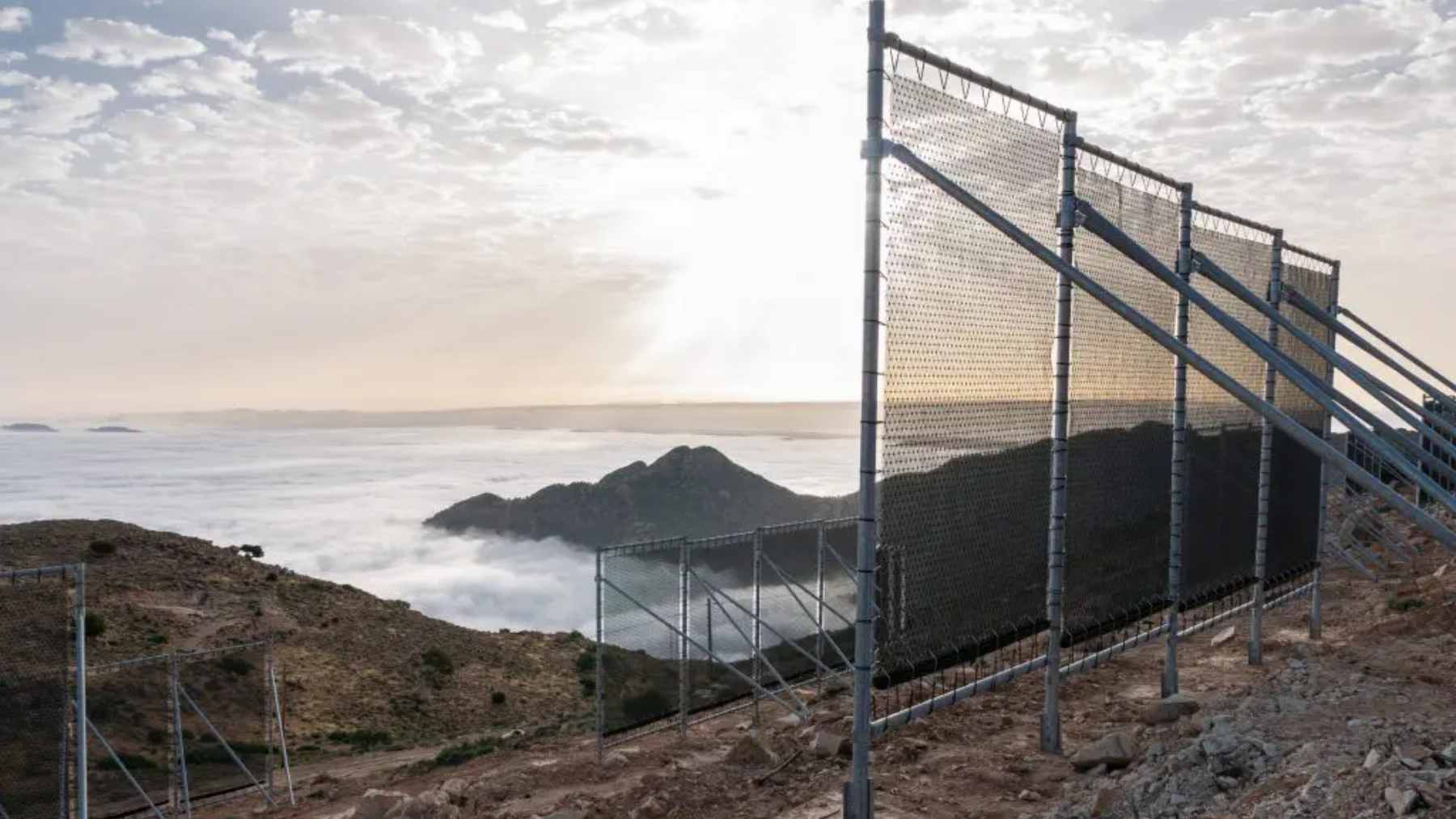
Now, polymer fog nets mounted above roughly 4,000 ft. on Mount Boutmezguida are turning Atlantic moisture into drinking water for rural villages near the edge of the Sahara. It is climate adaptation you can see in a kitchen sink.
Water from thin air
Dar Si Hmad, a women-led Moroccan nonprofit, designed and installed the fog-harvesting system as a response to a hard reality.
The United Nations Framework Convention on Climate Change (UNFCCC) says groundwater in Aït Baamrane is no longer being reliably replenished because of intense droughts, making daily life increasingly difficult in communities that have long depended on rain and wells.
The idea sounds almost magical, but the logic is simple. If fog already rolls across the mountain, why let it disappear? Effectively, the project turns a local weather pattern into a decentralized water supply.
How the fog nets work
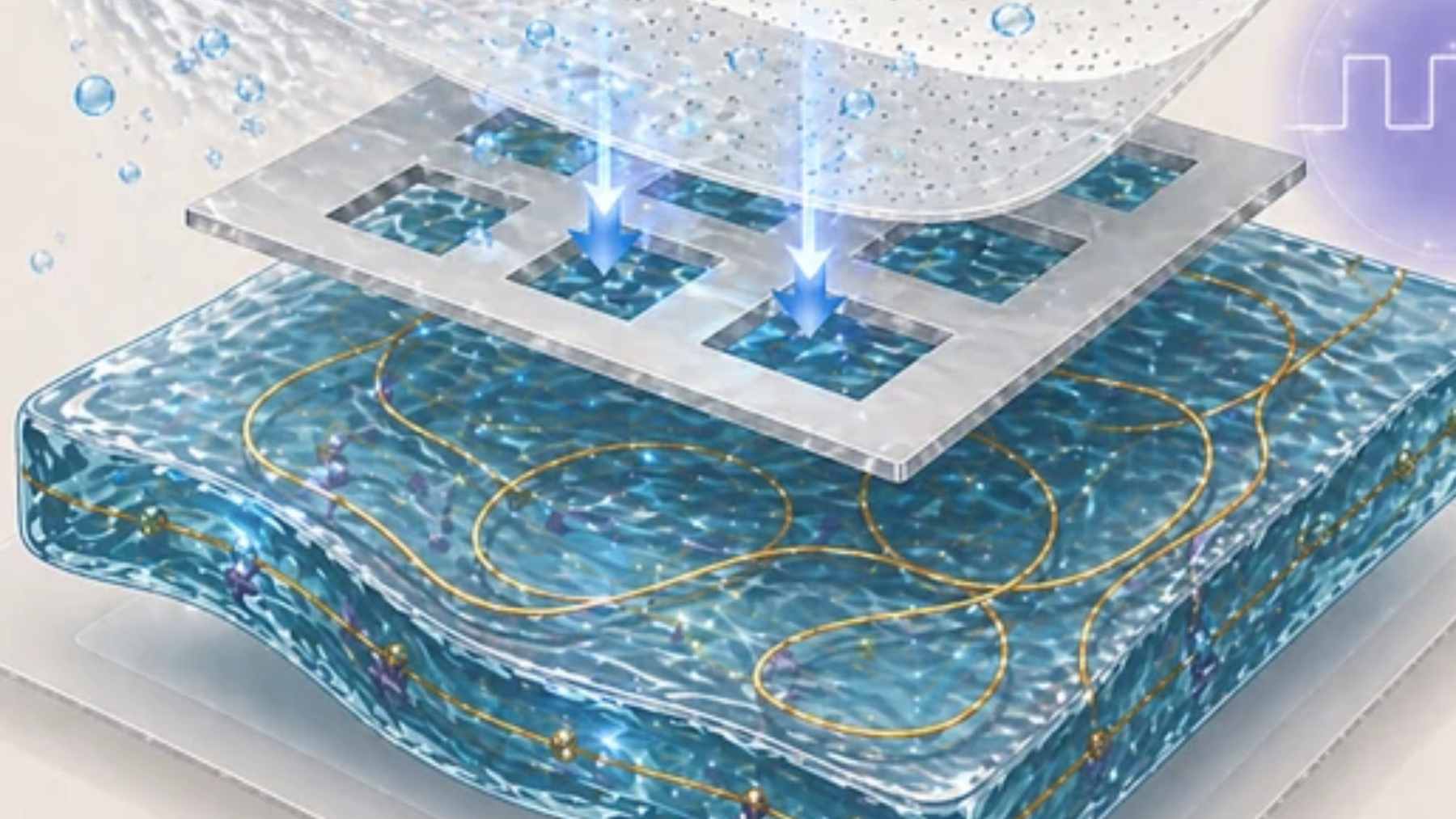
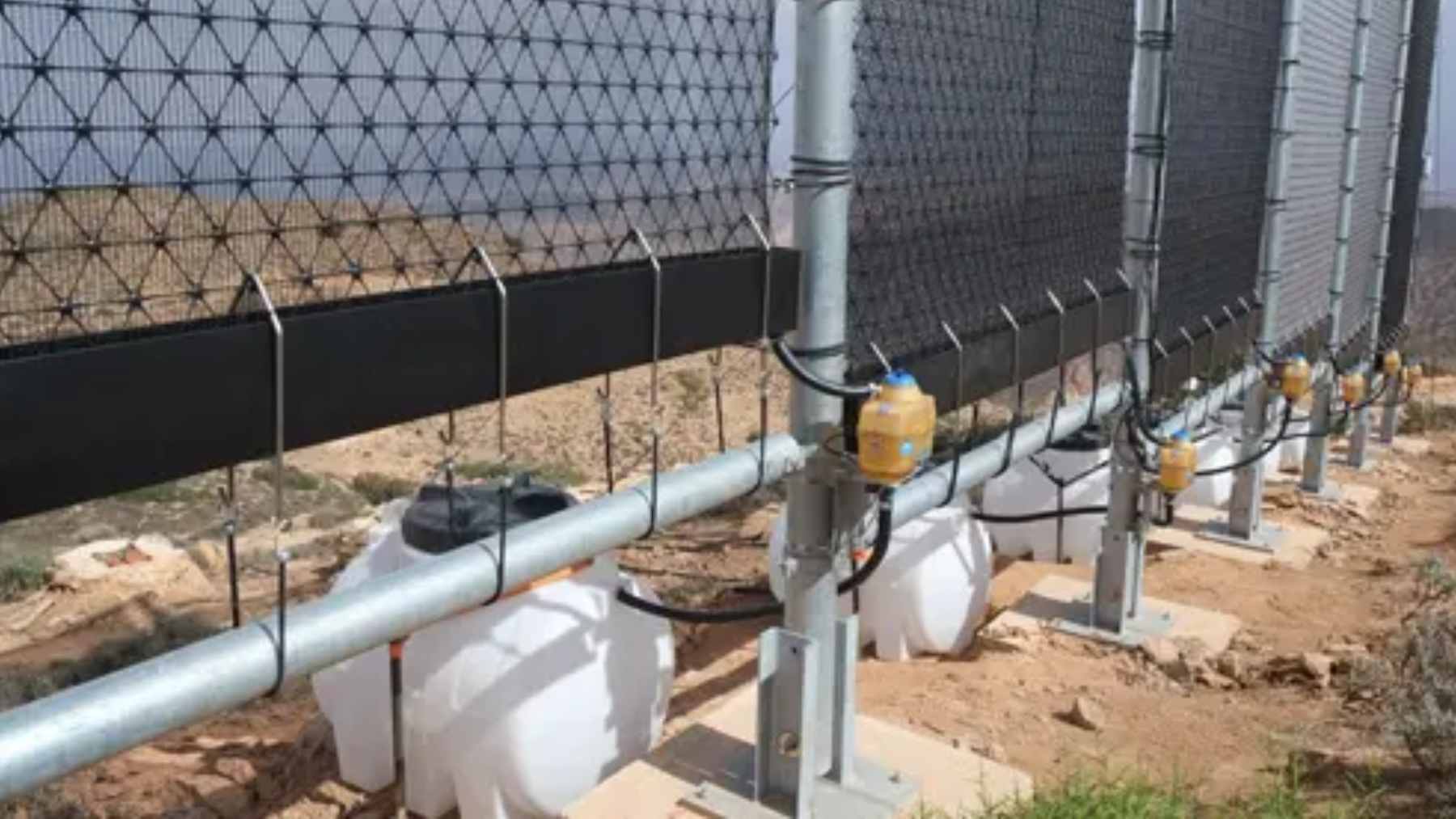
The system uses specialized mesh panels hung between poles. Wind pushes fog through the mesh, tiny droplets cling to the fibers, and the collected water falls into troughs before moving into storage tanks and pipes. Drop by drop, it adds up.
Location matters a lot. Mount Boutmezguida sits in the Aït Baamrane area near the coastal town of Sidi Ifni, where there is still a steady supply of atmospheric water vapor from clouds and fog even as drought worsens on the ground. No fog, no water–that is the catch.
MIT researchers have also shown why the material itself matters. Changes in mesh spacing, fiber size, and surface chemistry can sharply affect how much water is captured, with one MIT team reporting a 500% increase in fog-collection efficiency compared with existing designs.
From mountain mist to village taps
An earlier UNFCCC profile listed about 6,460 ft.² of fog nets, seven reservoirs with roughly 142,000 gallons of storage capacity, six solar panels, and more than 6.2 miles of piping. That setup connected prepaid water meters to 52 homes in five villages and served more than 400 residents, most of them women.
The project later grew. Aqualonis, whose CloudFisher collectors were used in the expansion, describes the Mount Boutmezguida installation as 31 collectors with about 18,000 ft.² of total net area. It says 16 villages and a school are supplied with drinking water.
Munich Re Foundation, a project partner, reported that the installation can harvest roughly 9,200 gallons of drinking water on foggy days, with much higher amounts on exceptional days. That is not a giant city water system, of course. For these villages, though, it can be the difference between planning a day and losing one.
A daily burden lifted
Before the project, the time cost was heavy. The UNFCCC says many women spent more than three hours a day retrieving water from distant, depleted wells, while another project summary says women in the 16 villages spent up to three-and-a-half hours a day walking to wells as rain became scarcer.
That changes more than the household chore list. A tap at home can mean girls get to school more regularly, families have cleaner water for cooking and washing, and women get hours back for paid work, farming, childcare, or rest. Small things, until they are not small anymore.
One local mother, Salka Ischar, put it plainly after her family received a water connection, “our life has changed completely,” she said. She also said she had more time for her family, a sentence that explains the project better than any technical diagram.
Trust had to be earned
Still, a fog-water system does not work just because the engineering checks out. People have to trust it. In many communities, fog had long been seen as a nuisance, the kind of damp weather that soaks clothes, confuses animals, and makes mountain life harder.
Dar Si Hmad’s approach was not just to install equipment and leave. The UNFCCC says female villagers were given mobile phones and trained to report problems in the water system, preserving their traditional role as water managers while giving them new tools to manage the network.
That part is critical. Climate technology often fails when it treats people as users instead of partners. Here, the mesh is important, but so is the training, maintenance, pricing, and local ownership behind it.
Why this matters beyond Morocco
The Moroccan project lands in a much bigger story about water and time. UNICEF has estimated that people in Africa spend 40 billion hours each year walking to collect water, while the World Bank says women and girls bear primary responsibility for water collection in nearly 80% of households in Sub-Saharan Africa that lack direct water access.
That is why a fog net is not just a piece of environmental hardware, it is also a social tool. When water arrives at home, the benefit is measured in gallons, but also in school attendance, safety, and fewer exhausting trips under the sun.
At the same time, fog harvesting is not a universal fix. It needs altitude, reliable fog, wind, pipes, storage, maintenance, and community trust. A mesh net cannot capture mist that never arrives.
A climate tool with limits
For the most part, Morocco’s fog-harvesting project shows what adaptation can look like when it begins with local geography instead of a one-size-fits-all blueprint. The system uses moisture already moving through the air, then relies on mesh, gravity, storage tanks, solar power, and local management to make it useful.
It will not replace groundwater protection, desalination, water conservation, or broader climate planning. In the right place, however, a simple net on a mountain ridge can do something wells and water trucks cannot always do: it can give time back.
The official project profile was published on the UNFCCC.