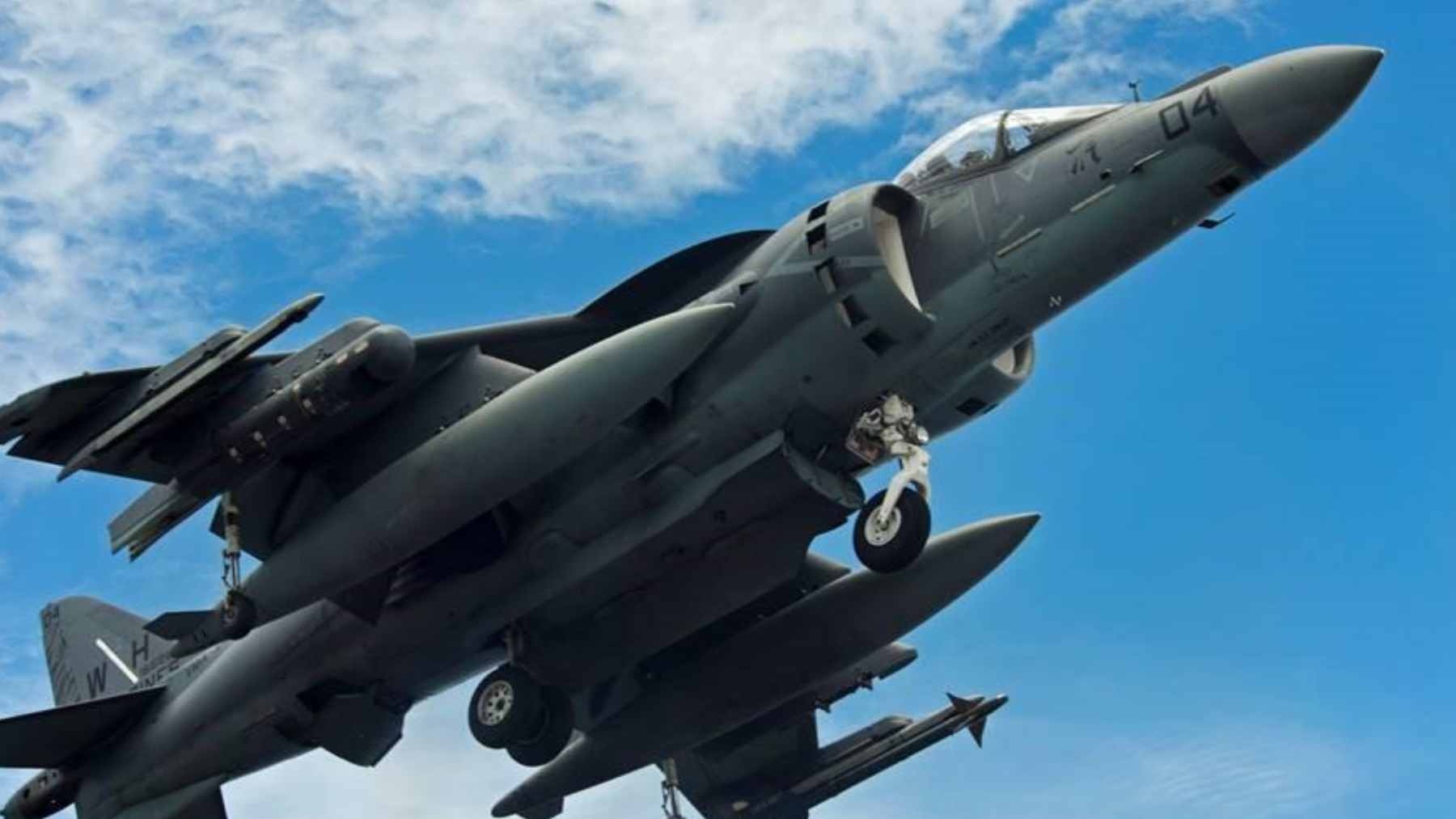
The U.S. Marine Corps has officially said goodbye to the AV-8B Harrier II, the famous “jump jet” that could land vertically and operate without a full runway. The farewell at Marine Corps Air Station Cherry Point in North Carolina closed a 55-year Marine Harrier story and moved the service deeper into the F-35 era.
Why should anyone outside an air base care? Because the Harrier was not just a loud crowd favorite at air shows. It was a flying answer to a military problem that still matters today: how to put combat power closer to the fight while dealing with fuel, cost, maintenance, and the environmental footprint of modern aviation.
A final hover at Cherry Point
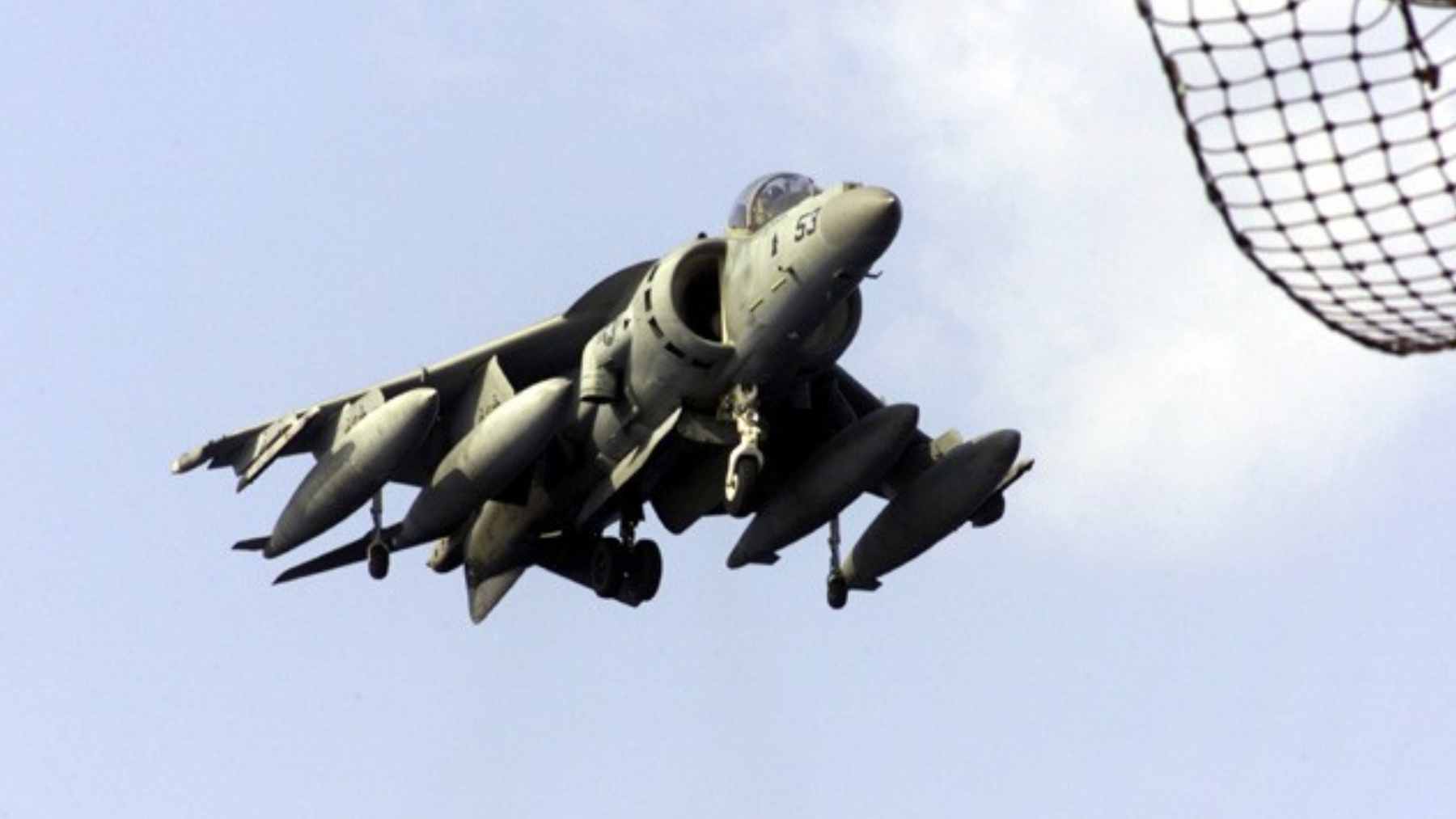
The last operational Harrier squadron, Marine Attack Squadron 223, known as “the Bulldogs,” marked the end of the aircraft’s service with a public ceremony on June 3. More than 5,000 people attended, and the event included a five-aircraft formation flight and vertical landing, the maneuver that made the Harrier famous.
Lt. Col. John B. Cumbie, the squadron commander, summed up the moment in plain terms, saying, “the Bulldogs are extremely proud to conduct the final Harrier operations for the U.S. Marine Corps,” he said.
Why the Harrier mattered
The Harrier’s magic trick was also its battlefield value. It could take off and land in short spaces, from amphibious ships, expeditionary airfields, and remote tactical landing sites, giving Marines an aircraft that did not depend on the kind of long runway a conventional fighter needs.
In practical terms, the Harrier could live closer to Marines on the ground. NAVAIR says the AV-8B’s jobs included close air support, armed reconnaissance, air interdiction, escort missions, and operations from sea platforms or advanced bases.
A British idea with Marine roots
The story began with a British design, but the Marines made it part of their identity. The Corps accepted the first AV-8A into its inventory in 1971, fielded its first operational AV-8B squadron in 1985, and VMA-223 began flying the AV-8B in early 1987.
Its combat record stretched across decades. The Marine Corps lists the Harrier in operations including Desert Shield, Desert Storm, Allied Force, Enduring Freedom, Iraqi Freedom, Odyssey Dawn, Inherent Resolve, and operations linked to the Red Sea crisis.
A small jet with a big record
During Operation Desert Storm, the Harrier showed why commanders liked it. NAVAIR says AV-8Bs flew 3,380 sorties and logged 4,083 flight hours, kept a mission-capable rate above 90%, and averaged a 23-minute turnaround during ground-war surge operations.
That is the kind of detail that sounds dry until you picture it. A pilot lands, crews refuel and reload, and the jet is back in the air before many people finish lunch.
The environmental question
Here is the uncomfortable part: retiring one aircraft does not automatically shrink the military’s environmental footprint. The larger issue is aviation fuel, and the Department of Defense has acknowledged that fuel use is central to its emissions challenge.
In its greenhouse gas reduction plan, the Pentagon reported about 56.2 million tons of CO2-equivalent in Scope 1 and Scope 2 emissions for fiscal 2021. Jet fuel combustion accounted for 80% of operational emissions and half of total DoD emissions, by the department’s own estimate.
That does not make the Harrier uniquely dirty among combat aircraft. It does mean that every shift in military aviation, from older jets to newer ones, has an energy story attached to it. The Pentagon says reducing operational energy demand can improve combat capability and resilience, not just emissions numbers.
The F-35B takes over
The Harrier’s role now passes to the F-35B Lightning II, along with the wider move toward fifth-generation tactical aircraft. The Marine Corps says VMA-223 is scheduled to return in fiscal year 2028 as Marine Fighter Attack Squadron 223 and begin flying the F-35B.
The F-35B keeps the key idea that made the Harrier useful: short takeoff and vertical landing. It also adds stealth, advanced sensors, and network-enabled capabilities for operations from amphibious ships, expeditionary airfields, and other places with limited runway space.
Cost was always part of the story
The Harrier was never just a pilot’s airplane. It was also a procurement, maintenance, and supply-chain puzzle. In 1996, the Government Accountability Office calculated that the Marines could buy new radar-model AV-8Bs for about $23.6 million each, while rebuilding older aircraft could cost between $23 million and $29.5 million per jet.
That old report still feels familiar. Modern defense programs are not just about what an aircraft can do in the sky, they are also about how long parts last, who can repair them, and how much it costs to keep the fleet ready.
The Pepsi legend
Of course, the Harrier also has one of the strangest pop-culture footnotes in aviation history. In the 1990s, a Pepsi commercial jokingly showed a Harrier as a prize for 7 million Pepsi Points, and a business student tried to claim it by sending points and a check.
A federal court was not persuaded. It ruled that “no objective person could reasonably have concluded” that Pepsi was truly offering customers a combat jet.
What remains after the jump jet
For the Marines, the Harrier’s retirement is a clean break with an aircraft that helped define expeditionary aviation. For everyone else, it is a reminder that military technology leaves traces beyond the battlefield, in budgets, local communities, fuel demand, and the way future forces are designed.
The Harrier is gone from U.S. Marine operations, but the question it answered has not disappeared. How do you bring air power close without carrying the full burden of a traditional air base?
That question now belongs to the F-35B. Different jet, same pressure.
The official statement was published on U.S. Marine Corps website.