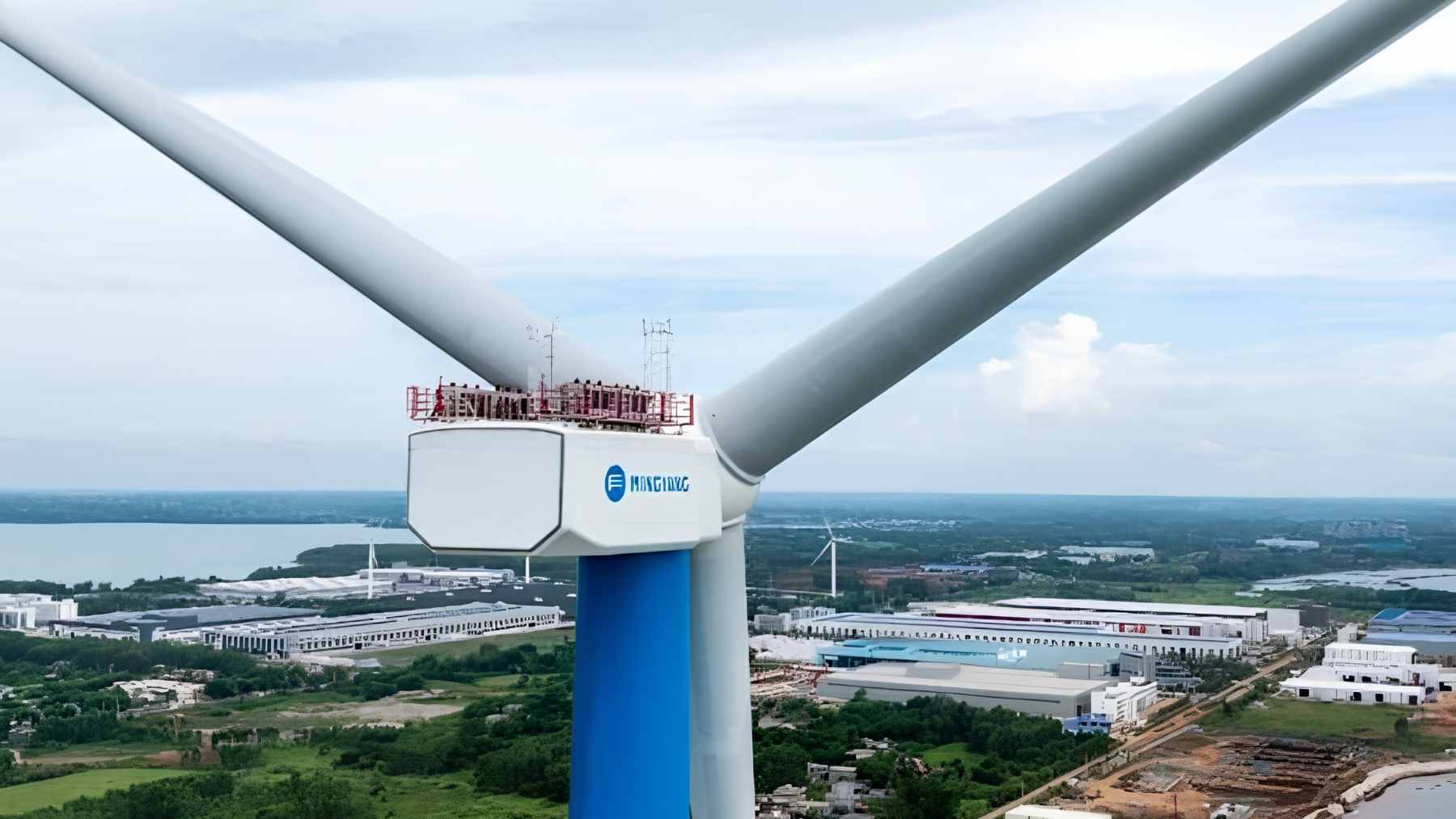
China has switched on a 20-megawatt offshore wind turbine that’s being described as the largest of its kind, a headline-grabbing leap for renewable power and a clear signal that “bigger” is still the industry’s favorite direction of travel. But the more interesting twist is what came next.
Early reporting says researchers noticed unexpected shifts in the local microclimate around the installation, including changes in air currents and how temperatures are distributed nearby.
Can one machine really “touch” the weather around it? In a limited, local sense, yes, and that matters because offshore wind is moving from niche to mega-infrastructure.
As turbines scale up, the clean-energy benefits people see on an electric bill can arrive alongside new questions coastal planners and environmental scientists have to measure instead of guess.
A record breaker built for rough seas
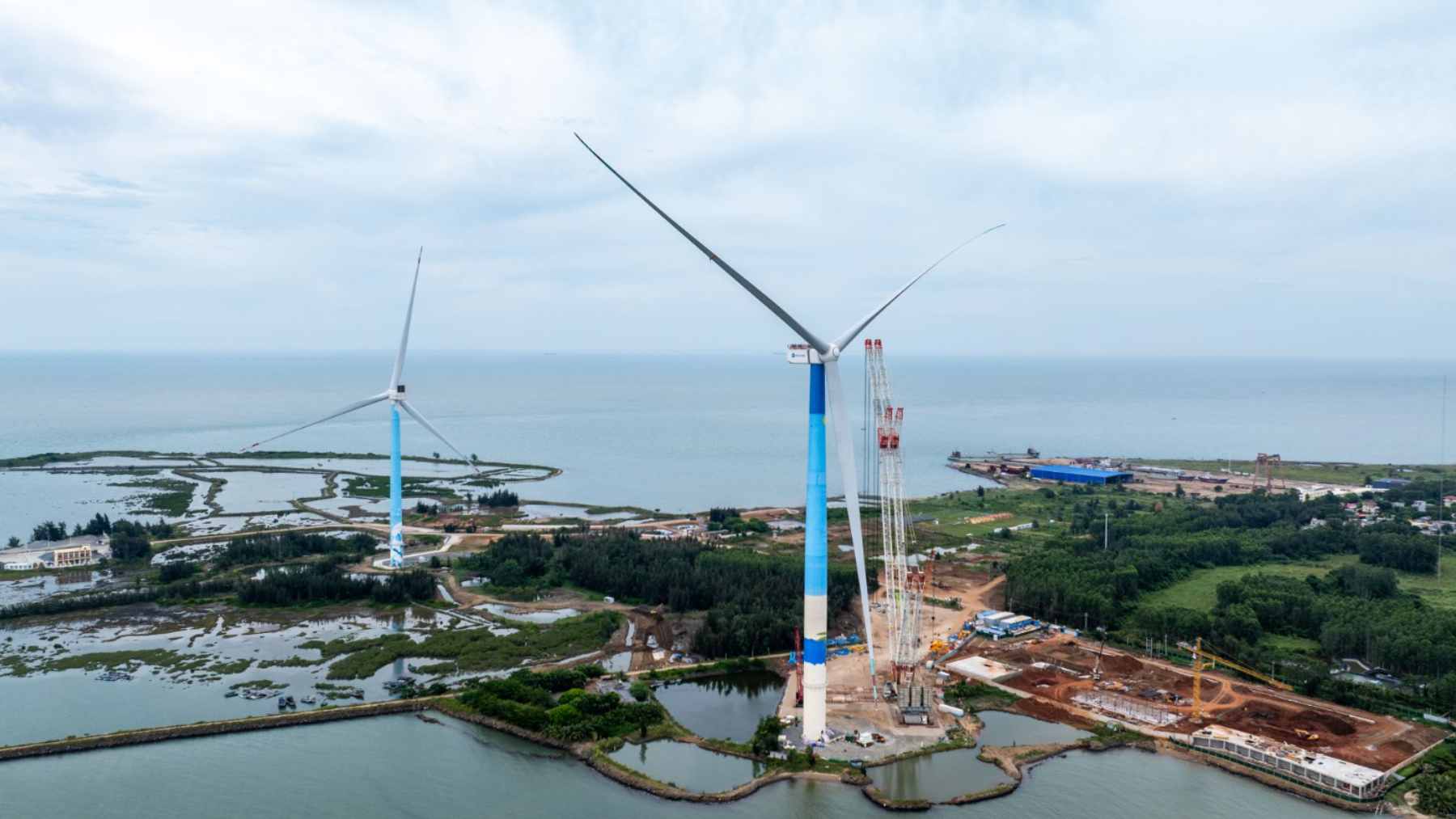
The turbine highlighted in the briefing is located in waters near China’s Hainan province in the South China Sea, with reports describing a structure about 242 meters tall and blades around 128 meters long.
It’s also built to tolerate extreme conditions, including gusts up to 80 meters per second (roughly 178 miles per hour), which is the kind of number you associate with typhoon resilience, not everyday operations.
Industry reporting identifies the unit as Mingyang Smart Energy’s MySE18.X-20 MW, with flexible ratings up to 20 MW and rotor diameters reported in the 260 to 292-meter range.
That same reporting says that at an average wind speed of 8.5 m/s, annual generation could reach around 80 million kWh, with an emissions-offset estimate of 72,500 tons of CO2 and an electricity-equivalence claim of about 96,000 households.
Why a wind turbine can nudge local weather
A wind turbine works by pulling energy out of moving air, and that energy extraction creates turbulence and a downwind “wake.”
Offshore, that wake can persist longer than on land because the ocean surface is smoother, and a U.S. Bureau of Ocean Energy Management (BOEM) white paper summarizes research showing offshore wakes measured from zero to 43 miles, with modeling up to 62 miles when multiple turbines interact.
That does not mean offshore wind farms “heat the planet,” and BOEM stresses that wind-farm microclimate effects are better described as localized redistribution of temperature and humidity, not a net increase in heat or water vapor.
Still, “localized” is not the same as trivial, especially when projects scale up. A 2026 open-access study in Communications Earth & Environment reports that large-scale offshore wind development can reduce current velocities by up to 20%, while wake-driven changes in mixing and heat fluxes can contribute to long-term surface warming of up to 0.2°C in wind farm areas.
Ecology questions that go beyond carbon
The original briefing notes that researchers are looking at how altered airflows and temperature patterns could influence bird migrations, marine wildlife behavior, and the stability of certain coastal habitats.
That’s a smart place to focus, because the most sensitive impacts are often indirect, like small changes in turbulence that affect flight conditions, or subtle shifts in ocean mixing that can ripple into food availability over time.
Peer-reviewed work also points to mechanisms worth monitoring. For example, research in Frontiers in Marine Science discusses how offshore wind wakes can drive upwelling and downwelling patterns that affect stratification, with potential knock-on effects for ecosystems.
Business and defense concerns meet offshore wind
From a business perspective, the argument for giant turbines is straightforward. More megawatts per turbine can mean fewer foundations, fewer cables, and less overall seabed “real estate” used for the same energy output, which the briefing itself highlights as a reason developers like these designs.
The market is also moving fast, and China is not only pushing Mingyang’s 20 MW-class machines, but also commissioning other 20 MW units at sea, including a China Three Gorges turbine (built with Goldwind) that reportedly started operation after grid connection in February 2026.
Defense and security agencies, meanwhile, have their own reasons to pay attention. The UK Ministry of Defence has stated that offshore wind farms can have a detrimental effect on primary surveillance radar capability, which is why “mitigation” is treated as a serious planning requirement rather than a footnote.
The U.S. Department of Energy has also outlined work focused on mitigating wind turbine radar interference, signaling that the problem is real but technically addressable.
What the next phase should look like
The practical takeaway is not that offshore wind is a climate threat, but that offshore wind is now big enough to create measurable local physical footprints, so “monitor and adapt” has to become standard practice.
That means environmental impact assessments that treat wakes and mixing as measurable variables, plus transparent post-construction monitoring that can confirm whether early microclimate signals fade, stabilize, or widen over time.
It also means designing projects so they can be adjusted without drama, whether that is operational tweaks, spacing decisions, or adding sensors and open data streams that help scientists separate normal weather variability from turbine-driven effects.
The study was published on Communications Earth & Environment.