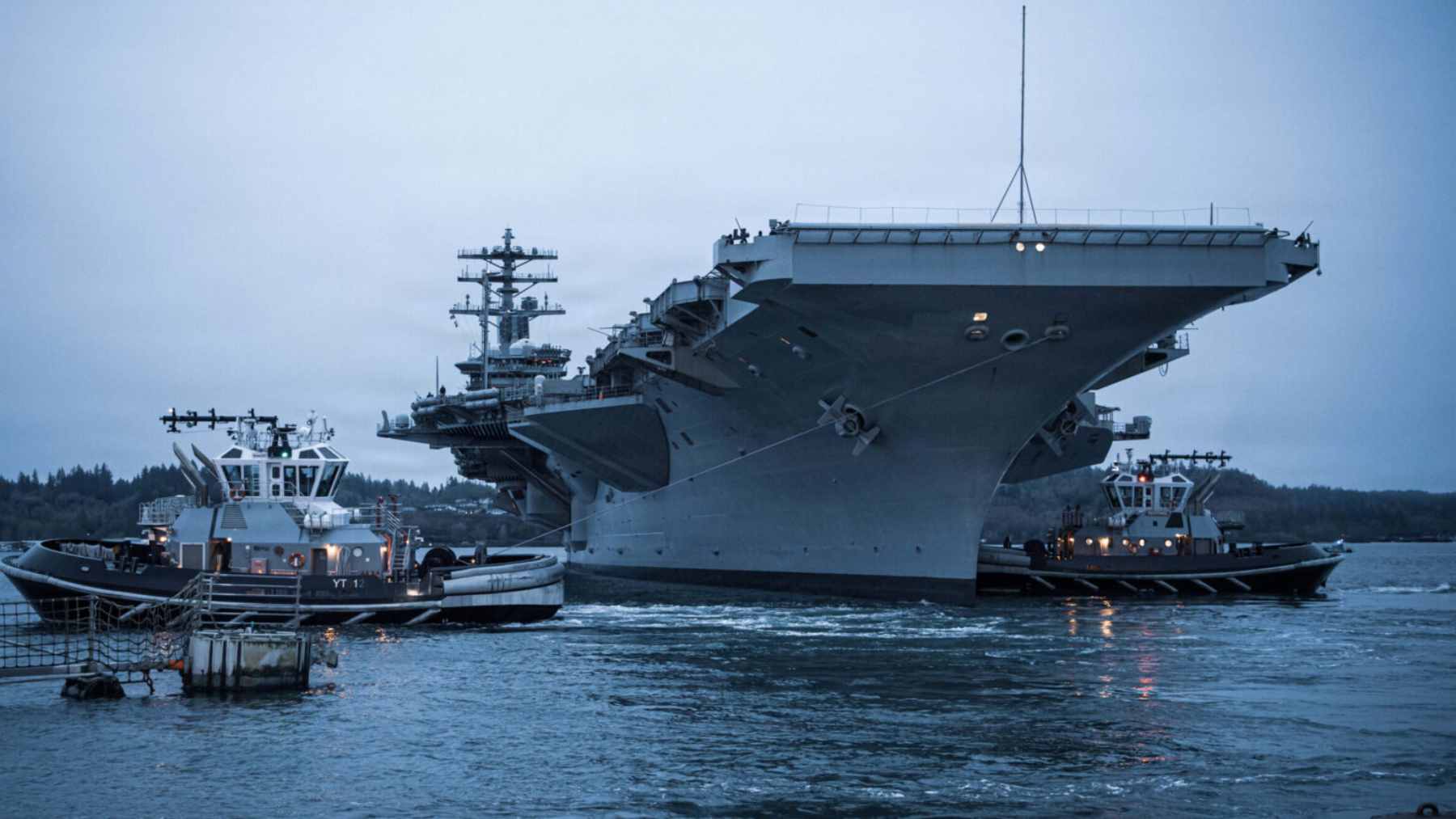
The USS Nimitz was supposed to be moving quietly toward retirement. Instead, the oldest active U.S. aircraft carrier is being kept in service until March 2027, giving the Navy more time to manage a tight carrier schedule and one more year to prepare for the hard part: taking apart a nuclear-powered giant.
The decision is bigger than one ship. It links national security, shipyard business, and an environmental cleanup challenge that will not fit neatly into a farewell ceremony. For sailors, it means another chapter at sea. For Navy planners, it is a reminder that retiring old military technology can be just as complicated as building the next generation.
A carrier gets one more year
USS Nimitz (CVN 68) was commissioned on May 3, 1975, and the Navy has described it as the oldest American aircraft carrier still in active service. That means the ship has already passed the 50-year mark, a lifetime in which most cars, phones, and household appliances would have been replaced many times over.
So why keep it going? To a large extent, the answer is fleet math. Federal law says the Navy’s combat forces must include at least 11 operational aircraft carriers, and the service is trying to bridge the gap as the future USS John F. Kennedy moves toward the fleet.
That extra time matters. When one carrier leaves before another is fully ready, commanders have fewer options for training, deterrence, and crisis response. The trouble is, the ocean does not pause while shipyards catch up.
This is not ordinary shipbreaking
Retiring a nuclear-powered aircraft carrier is not like sending an old cargo ship to a scrapyard. The Navy’s own disposal process involves defueling the reactor, inactivating the ship, demilitarizing components, removing the reactor compartment for land disposal, recycling the rest “to the maximum extent practical,” and safely disposing of what cannot be reused.
That is where the environmental stakes come in. Once the nuclear fuel has been removed, the Navy says the biggest technical issues involve controlling parts of the ship that contain radioactivity and hazardous materials, including asbestos, lead, and PCBs. It is careful, regulated work, not a dramatic movie scene.
As such, the Nimitz story will not end when the flag comes down. It will continue in shipyards, disposal planning, regulatory reviews, and recycling decisions that most people will never see.
Southern Seas keeps it moving
Before that retirement work begins in full, Nimitz still has a job. The Navy announced that the carrier will deploy to the U.S. Southern Command area of responsibility as part of U.S. Naval Forces Southern Command and U.S. 4th Fleet’s Southern Seas 2026 deployment.
Nimitz and the destroyer USS Gridley are scheduled to conduct exercises and operations with partner maritime forces while circumnavigating South America.
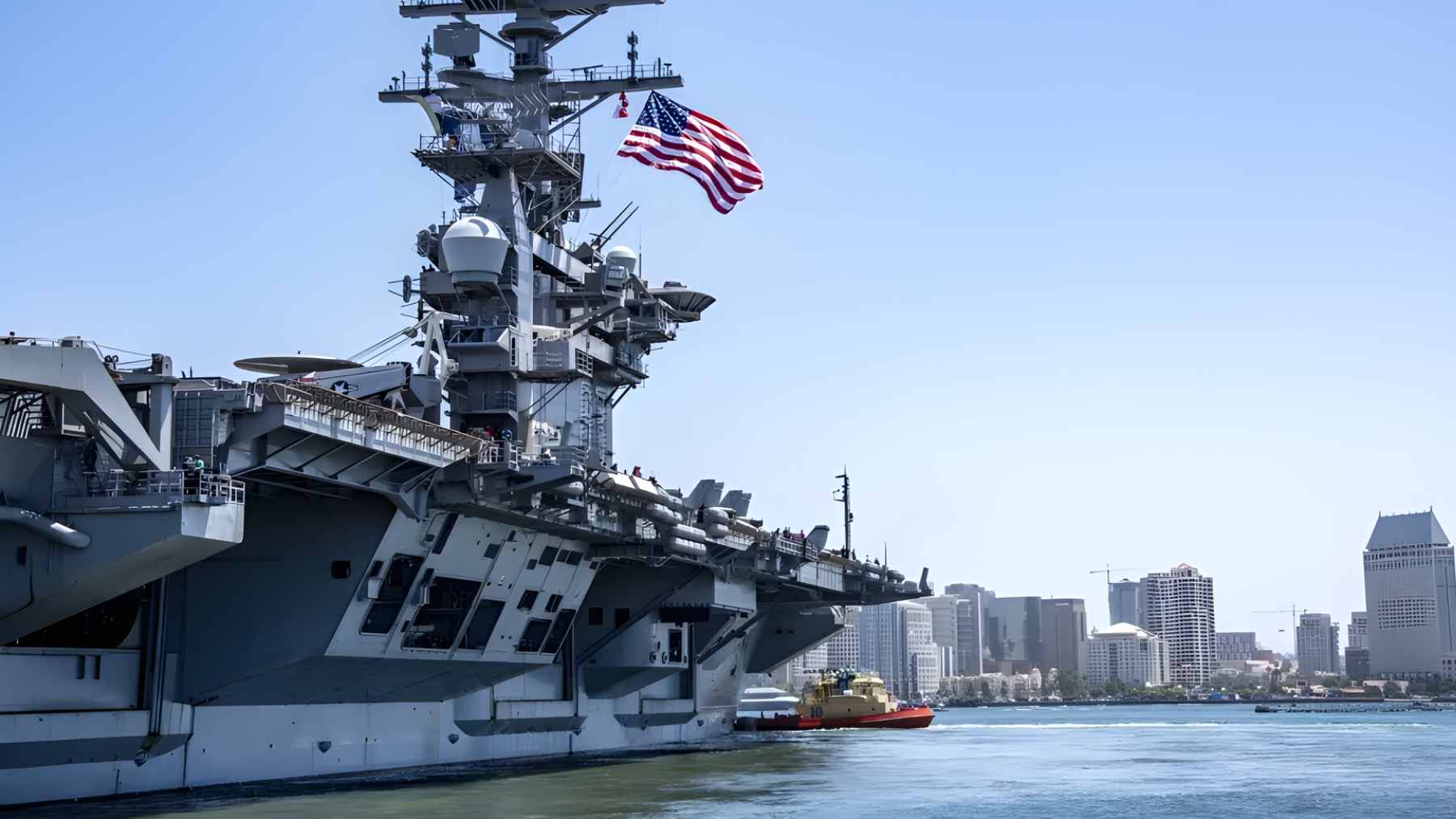
The Navy said engagements are planned with countries including Argentina, Brazil, Chile, Colombia, Ecuador, Peru, Mexico, El Salvador, Guatemala, and Uruguay, with port visits planned for Brazil, Chile, Panama, and Jamaica.
For the region, this is about partnership and visibility. For the ship, it is also one last public turn on the world stage. A floating city of steel, aircraft, fuel, electronics, and people is still being asked to show up.
The business behind the farewell
The Navy has already started paying for the endgame. On March 13, Huntington Ingalls Inc. in Newport News, Virginia, received a $95.7 million cost-plus-fixed-fee contract modification for advance planning and long-lead-time material procurement tied to the inactivation and defueling of USS Nimitz. Work is expected to be completed by March 2027.
The contract also shows how defense business and environmental planning overlap. This is procurement, labor, materials, safety rules, and nuclear expertise all wrapped into one enormous retirement plan. It is not glamorous, but it is essential.
The Navy has even created a dedicated Nuclear-Powered Aircraft Carrier Inactivation and Disposal Program Office. Officials said the office will help shape how the service disposes of Enterprise and future Nimitz-class carriers as they retire over time.
What readers should keep in mind
Nimitz is not being saved forever. The extension looks more like a bridge, keeping the carrier available while the Navy balances law, readiness, and the arrival of newer ships.
Still, the environmental side should not be treated as a footnote. A warship can spend decades projecting power, but the final chapter is quieter and slower. It is about what gets removed, what gets recycled, what gets sealed away, and who makes sure it is done safely.
At the end of the day, the Navy is not just deciding when an old carrier stops sailing. It is deciding how a nuclear-powered symbol of American military power exits the fleet without leaving a mess behind.
The official contract notice was published on the U.S. Department of War.