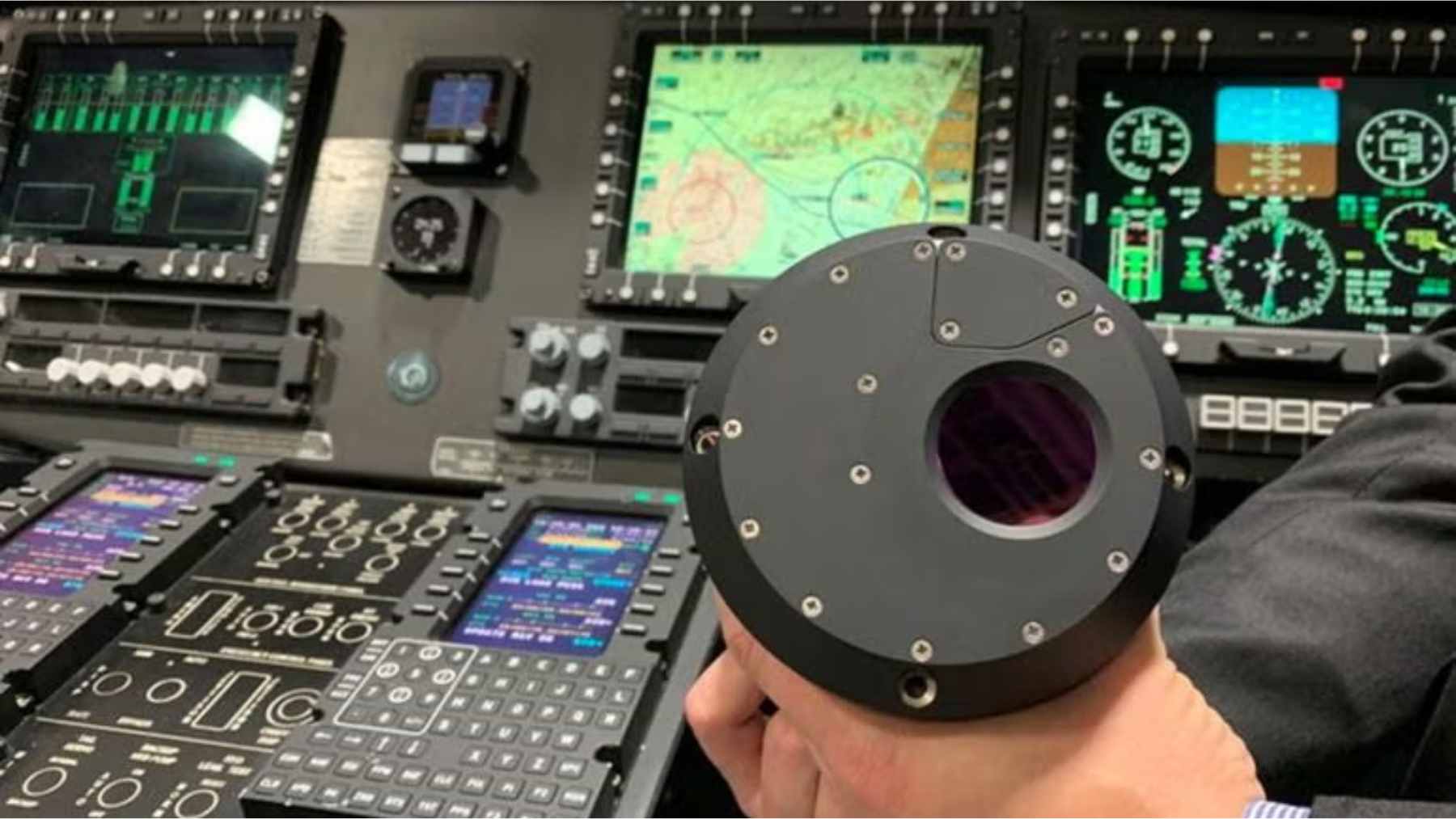
A key missile-warning sensor has arrived at Northrop Grumman at almost the same moment the Pentagon is moving to end the satellite program it was built for. Strange timing? Absolutely. But it also says a lot about where military space technology is heading.
The U.S. Space Force wants to shift away from a small number of large, custom-built satellites and lean harder on distributed constellations in low and medium Earth orbit.
That may make the system tougher to disable, at least by the Pentagon’s own logic, but it also raises a quieter environmental question. How many more machines can we keep putting above Earth before the traffic jam becomes part of the mission?
A sensor arrives late in the game
Northrop Grumman said it received the Mission Payload Sensor Subassembly for the Next-Generation Overhead Persistent Infrared Polar program, known as Next-Gen OPIR Polar. The company says the sensor is designed to detect faint heat signatures from ballistic and hypersonic threats over the Northern Hemisphere, one of the hardest regions to monitor from space.
The awkward part is that the Space Force’s fiscal 2027 budget request proposes ending the polar leg of the program. Budget documents cited by the Air & Space Forces Association say the service made a “risk informed” decision because it expects polar coverage from low Earth orbit and medium Earth orbit missile warning layers.
Northrop has not presented the sensor delivery as a dead-end milestone. A company spokesperson told Air & Space Forces Magazine that work on the program continues “on-schedule and on-budget.”
Why the Pentagon is changing course
For years, the U.S. military relied heavily on large, exquisite satellites that took a long time to design, fund, build, and launch. The Next-Gen OPIR Polar program fit that older model, with two satellites planned for highly elliptical orbits to watch northern approaches.
Now the money is moving elsewhere. The official fiscal 2027 RDT&E table shows $436.5 million for Next-Gen OPIR Polar in fiscal 2026, but no fiscal 2027 request for that specific line, while the low Earth orbit missile-warning line gets about $3.56 billion and the medium Earth orbit line gets about $1.41 billion.
In practical terms, the Pentagon is betting on a swarm-like architecture rather than a few big eyes in the sky. The broader budget overview still lists Next Generation OPIR funding, but it also shows a much larger jump for Resilient Missile Warning and Missile Tracking, which includes the low and medium orbit layers.
The space environment matters
Space can feel empty when you look up at night. It is not. The European Space Agency says Earth’s orbital environment is a “finite resource,” and its latest statistics list about 44,870 regularly tracked space objects, about 14,200 functioning satellites, and an estimated 1.2 million debris objects larger than 1 centimeter.
That is where the environmental side of this defense story comes in. Additional smaller satellites can make a military network harder to break, but they also add more objects to already busy orbital lanes, more collision-avoidance work, and more end-of-life disposal demands.
ESA has warned that not enough satellites leave congested orbits at the end of their lives. It also says debris can keep growing even without new launches because fragmentation events create more objects faster than some debris naturally reenters the atmosphere.
Launches leave a mark
The environmental bill is not only in orbit. Rockets burn through the atmosphere on their way up, and some propellants leave soot and other particles in places where normal pollution rarely reaches.
NOAA researchers have warned that kerosene-burning rocket engines emit black carbon directly into the stratosphere, where the ozone layer protects life on Earth from harmful ultraviolet radiation.

The agency said current spaceflight activity contributes about 1,000 tons of rocket soot to the stratosphere each year, while a major increase in launch activity could damage ozone and affect atmospheric circulation.
A 2025 study in npj Climate and Atmospheric Science also found that frequent rocket launches could slow ozone recovery, with losses driven by chlorine from solid rocket propellant and black carbon from most propellants. That does not mean every launch is automatically reckless, but it does mean defense planners have to count the atmosphere as part of the cost.
Congress may push back
Canceling a satellite program this large is rarely as simple as crossing out a budget line. Northrop Grumman has workers, suppliers, and political support behind the program, and Congress has already shown it is not ready to let the polar satellites disappear quietly.
The fiscal year 2026 defense appropriations explanatory statement says Congress supports the pivot to low and medium orbit systems for tactical use, but it also says those systems are not designed to meet certain strategic warning requirements.
Section 8149 prohibits funds from being used to pause, cancel, or terminate the Next-Generation OPIR geosynchronous and polar programs.
So the fight is not over. At the end of the day, this is a story about missile warning, money, industrial jobs, and a space environment that is getting busier by the year.
The press release was published on Northrop Grumman.