
Some days your schedule fills up, and squeezing in a full workout feels impossible. There’s one move that can give you noticeable strength gains even when time is tight, and you can do it almost anywhere.
Fitness trainer Anna Victoria recommends a daily pushup-to-downward-dog flow because it engages several major muscle groups in one smooth sequence. Let’s cover this combination, why it works so well, how to do it safely, and a few other moves that deliver solid strength without complicating your routine.
The exercise that strengthens your whole upper body
The pushup-to-downward-dog flow is effective because it blends two demanding positions. A standard pushup works your chest, triceps, shoulders, and core. Downward dog loads your shoulders, stretches your hamstrings, and forces your upper body to support more of your weight. Moving from one into the other builds strength, balance, and better control over your body.
Even though it uses only your bodyweight, the transition between these two shapes adds intensity. You’re working through a challenging push, shifting your weight, and stabilizing your core all in one motion. That creates tension and recruits muscles that often get ignored in quick workouts.
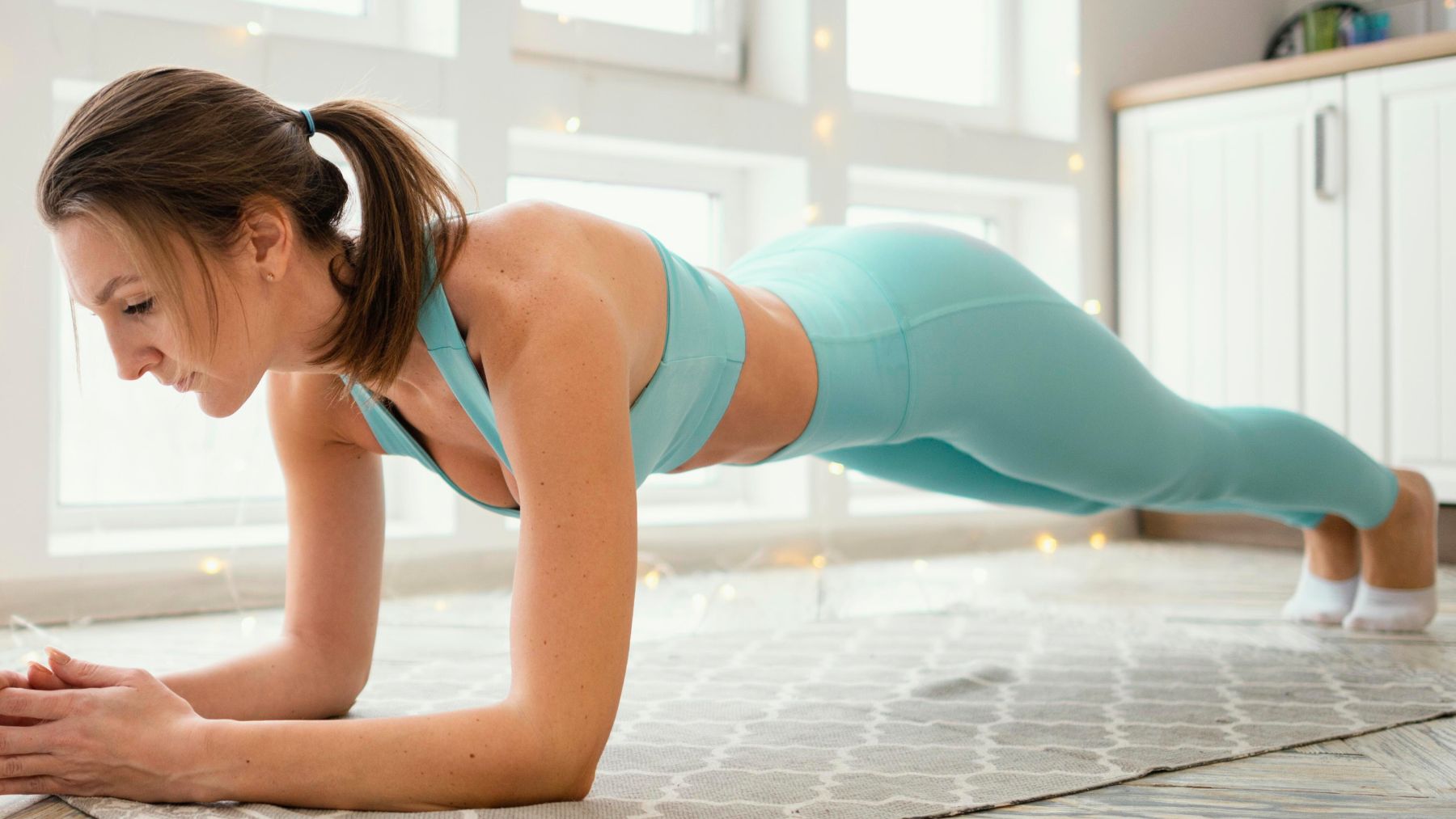
To do it, begin in a high plank with your body in a straight line. Lower into a pushup while keeping your core tight. Stop just before your chest touches the ground, then press upward and flow all the way into downward dog. Pause long enough to feel the stretch in your back and legs. Then shift your weight forward and return to plank. Once you get comfortable, you can increase reps or hold each phase a little longer.
You don’t need equipment, space, or a 45-minute circuit; only a few minutes and the willingness to move. This keeps you on track even on the busiest days, which is essential for long-term strength.
Other simple exercises that deliver similar results
If you want a few options to rotate into your routine, there’re several compound movements that work multiple areas at once. These can support the same kind of strength-building without adding bulk or complexity.
- Bodyweight squats. A reliable way to strengthen your legs, hips, and glutes while improving mobility.
- Glute bridges. Helpful for posture, lower-back support, and hip stability, especially if you sit often.
- Plank walkouts. Start standing, reach your hands to the floor, walk forward into a plank, then walk back. It reinforces core strength and shoulder stability.
- Reverse lunges. Great for balance, leg strength, and reducing pressure on your knees compared to forward lunges.
- Bear crawls. A full-body movement that trains coordination, shoulder strength, and core engagement.
Each of these exercises covers a lot of muscles in a short time. You can combine a few reps of each or rotate them throughout the week when you don’t have time for longer workouts.
The more you focus on simple moves that challenge your body from multiple angles, the easier it becomes to build strength without feeling overwhelmed. A single daily exercise can keep you steady, but a handful of reliable options makes sticking to your routine even smoother.