
Stiff joints and tight muscles can make daily life feel heavier than it should. A simple low-impact routine can bring back a sense of ease and help your body feel more responsive. This approach works well for older adults who want strength, mobility, and comfort without high impact.
Here, you’ll find a short flow built on controlled movement, steady breathing, and joint-friendly positions. We’ll walk through each move, then cover simple ways to keep your practice safe, effective, and consistent.
A gentle routine for seniors to gain flexibility at home
The goal of this routine is to loosen common problem spots like the hips, back, shoulders, and ankles. Let’s see it in detail:
- Seated hip openers: Sit tall on a mat or firm chair, extend one leg out, and gently guide it open and closed without swinging. Keep your spine long and your foot flexed. This improves your ability to lift and rotate the leg.
- Controlled roll up and forward fold: Think of this as a softer version of a Pilates roll up. Sit tall with legs extended. Slowly lower your back to the mat, then return to sitting and fold over your legs. Move with steady breathing. The lift works your core and posture muscles, and the fold releases tension through your back and hamstrings.
- Supported beast rock back: Start on all fours with your knees suspended and your weight in your toes. Shift your hips back toward your heels, then glide forward with control. This creates gentle mobility in the ankles, knees, and hips while lightly engaging your core and shoulders. Keep your movements smooth, like you’re rolling through a wave.
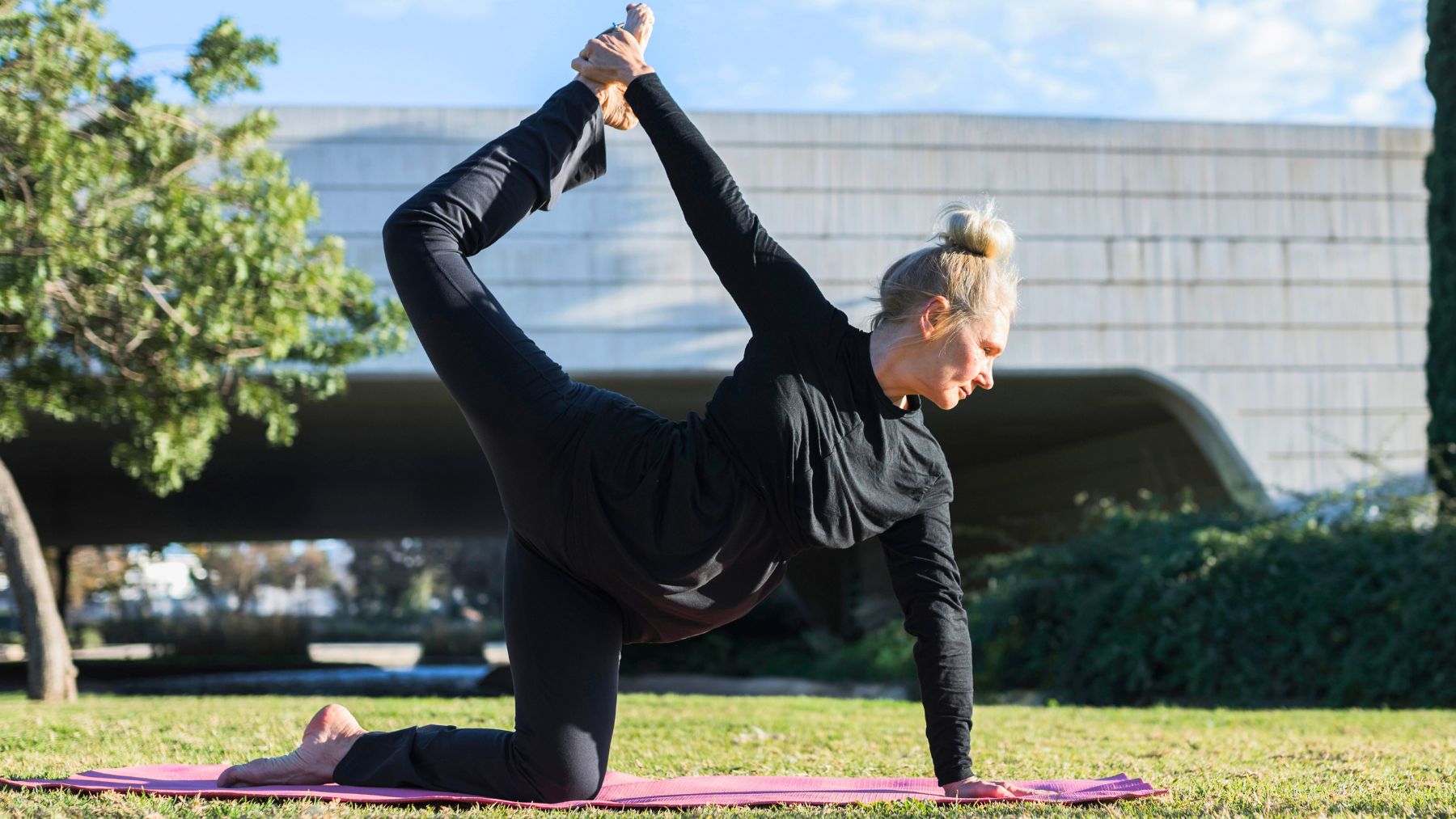
- Side reach and tuck: From a tabletop position, slide one leg out to the side and reach the opposite arm up, then return to the open position. This rotation strengthens the obliques and improves coordination without putting pressure on the wrists.
- Down dog to gentle cobra: Move from a soft downward dog into a light cobra, keeping your elbows bent and shoulders away from your ears. It’s a kinder version of the classic down dog to updog transition. This helps lengthen the back of your legs, wake up your upper back, and guide your spine through a smooth arc.
Tips for practicing safely and consistently after 60
A routine works best when it matches the pace of your life. These habits help older adults build mobility without soreness or fatigue.
- Move slowly on purpose. Rushed reps make joints feel tighter. Slow movement helps muscles warm up and reduces strain.
- Use props and cushioning. A yoga block, rolled towel, or sturdy chair makes each position more accessible and comfortable.
- Support your spine. Keep your rib cage lifted rather than collapsing forward. A stable torso protects your lower back during hip and core work.
- Respect your range of motion. Mobility improves with repetition, not force. Stop before pain and focus on smooth transitions.
- Breathe through each move. Inhale during lengthening, exhale during effort. It helps your body relax into the stretch.
A gentle flow like this helps you stay steady on your feet, bend with ease, and feel more at home in your body. With regular practice, flexibility becomes something you maintain naturally.