
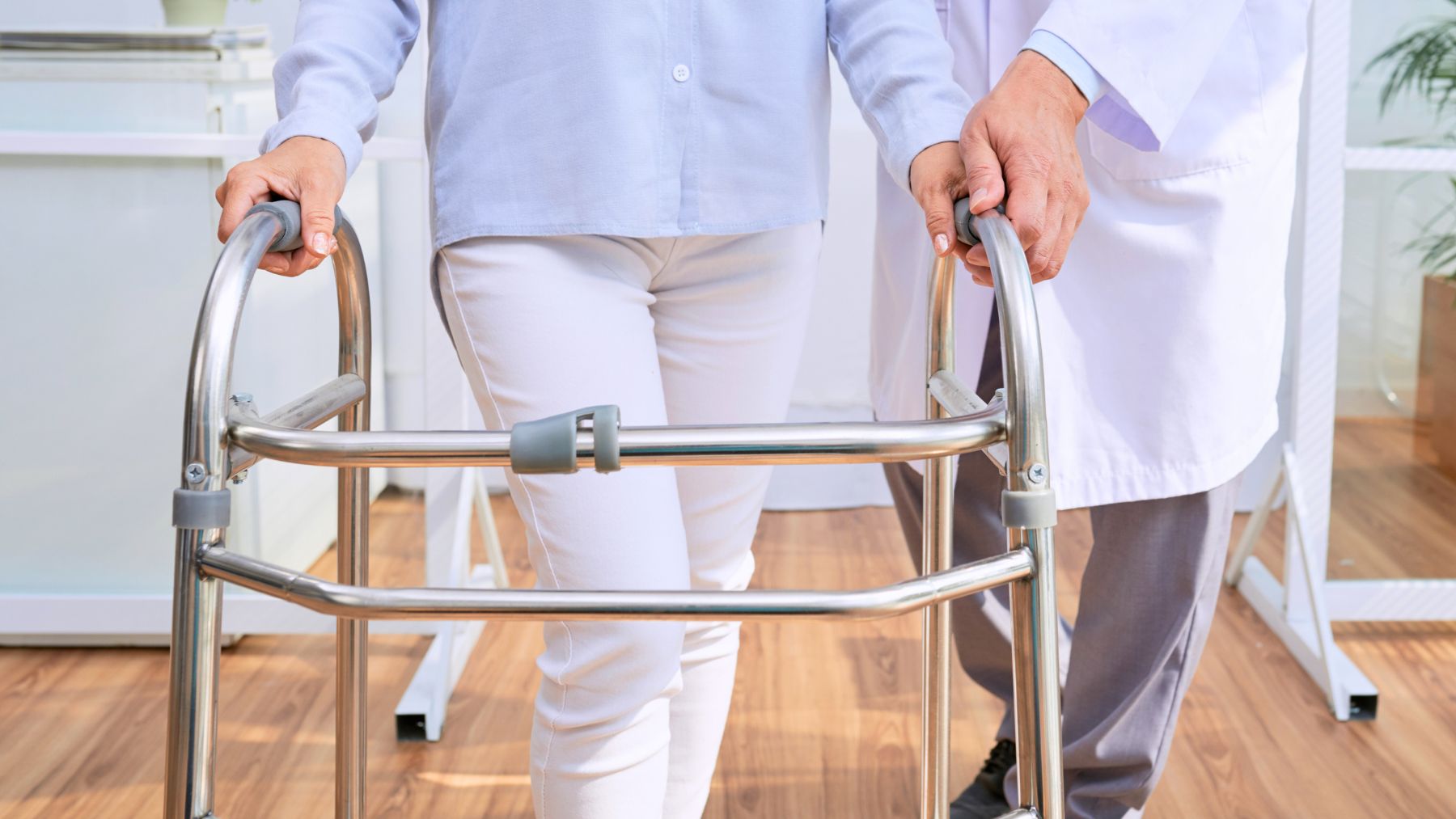
Staying active after 65 isn’t always simple, especially when mobility or balance changes start to appear. Using a walker doesn’t limit your ability to build strength. In many cases, it actually makes exercise safer. The key is choosing movements that support your joints, improve stability, and keep you strong enough for daily tasks.
Here, we’ll look at the types of exercises that work best for older adults who use walkers and how tools like resistance bands can make workouts more effective without adding strain. Then we’ll break down simple, targeted exercises you can do at home with any type of walker—standard, two-wheel, or rollator—to build muscle safely and consistently.
The best exercise approach for seniors using walkers
The safest and most effective exercise routine for older adults using walkers focuses on resistance and light strength training. These movements help counter the natural loss of muscle mass, increase bone density, and improve balance without high impact. A walker provides a stable anchor, letting you work your legs, core, arms, and back with more control.
Walking remains one of the most beneficial activities. Even short strolls around the home or hallway give your cardiovascular system a gentle push while keeping your joints active. But adding strength-focused work is what helps you stand from a chair more easily, climb steps, reduce fall risk, and feel steadier on your feet.
Bodyweight movements, slow controlled repetitions, and simple tools like resistance bands add enough tension to stimulate the muscles without overloading them. Because a walker limits unnecessary sway, you can focus on form and stability. This combination—steady support plus light resistance—is what helps older adults improve mobility safely.
Specific exercises you can do with a walker
Once you have medical clearance and feel comfortable standing or sitting with your walker, you can build a short routine around a few reliable exercises. Each one targets muscles you use throughout the day.
- Walking practice: Use your walker to take slow, purposeful steps. Keep your posture tall and your grip light. Short indoor walks improve circulation, hip mobility, endurance, and coordination. Rollators and wheeled walkers make this even easier because you don’t need to lift the frame with each step.
- Supported squats: Stand facing the walker with your feet hip-width apart. Hold the handles lightly and lower yourself into a small squat, keeping your back straight. This strengthens your quads, glutes, and core muscles that make standing up and getting out of bed or a car much easier.
- Marching in place: Hold the walker and lift one knee at a time, alternating legs. Marching trains hip flexors, core stability, and balance. It also mimics the lifting motion you use while walking, which helps with stride control.
- Side leg lifts: Hold the walker with both hands and gently lift one leg out to the side, then return to standing. Switch legs and repeat. This works your outer hips and improves lateral stability.
- Seated resistance band work: Sit safely with your walker nearby and loop a resistance band around your thighs or feet. Gentle band pulls strengthen your legs, hips, and core without standing.
These exercises help maintain mobility, increase confidence, and support the functional strength needed for daily life. By combining a walker’s stability with small but consistent movements, seniors over 65 can build strength safely and steadily.