
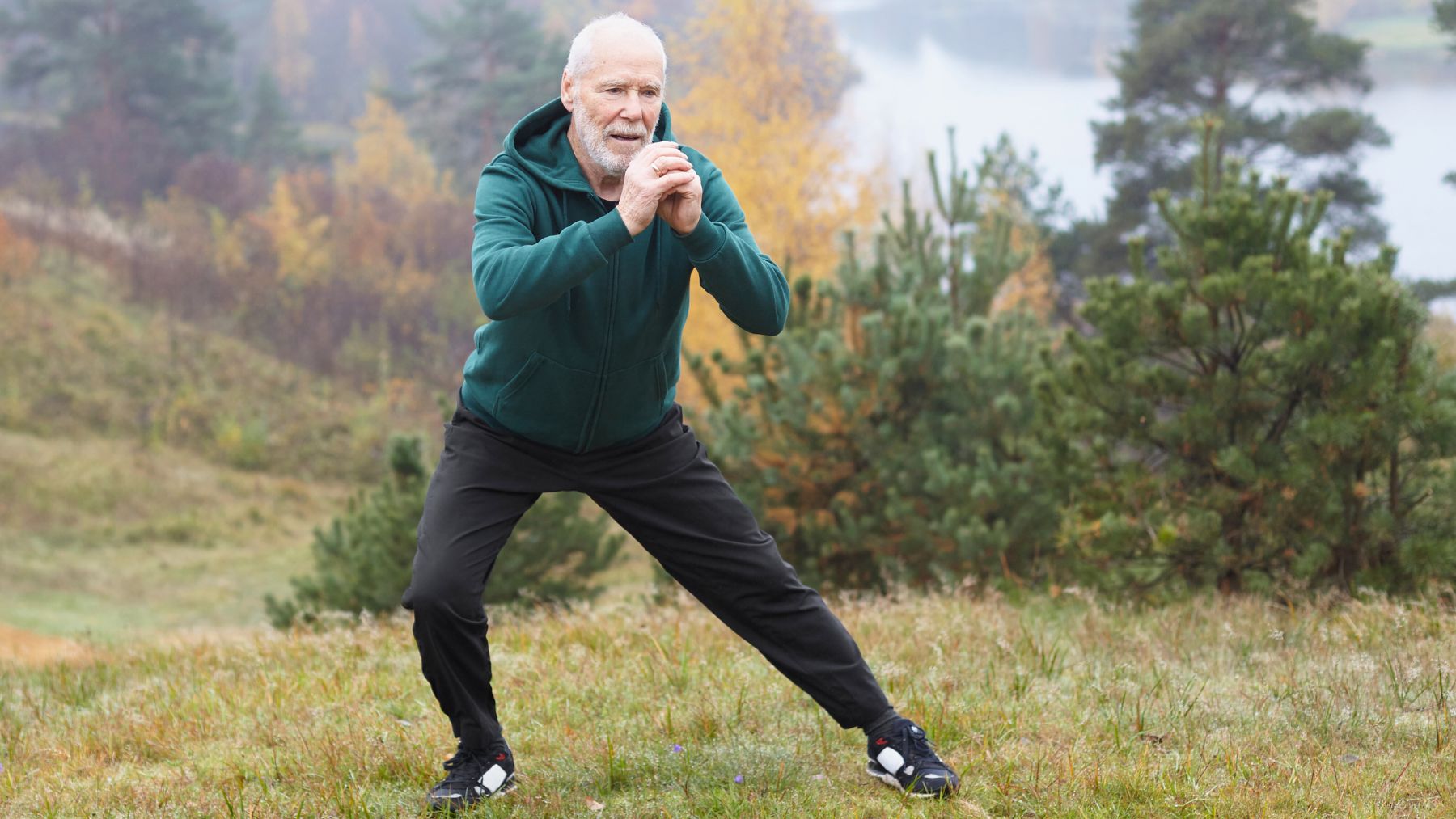
It’s common to focus on walking or strength training for health, but what about stretching? For adults over 65, maintaining flexible joints is key for everyday tasks like reaching overhead or tying shoes.
In this article, we’ll look at five specific stretches you can do at home, drawn from exercise studies. We’ll also cover how to integrate them safely into your routine to help maintain your mobility and independence.
5 stretching moves for daily mobility after 65
These exercises focus on major muscle groups to promote joint flexibility. Move slowly into each position until you feel a gentle pull, not pain. Hold each stretch for about 30 seconds.
- Seated hamstring stretch: Sit in a sturdy chair. Extend one leg straight out in front of you with your heel on the floor. Keep your other foot flat on the floor with the knee bent. Gently hinge forward at your hips until you feel a mild stretch in the back of your extended leg. This can help with movements like walking and climbing stairs.
- Standing calf stretch: Stand and place your hands on a wall or sturdy chair back for support. Step one foot back, keeping it straight, and press the heel firmly into the floor. Gently bend your front knee. You should feel a stretch in the calf of your back leg. This supports ankle mobility for a stable gait.
- Overhead back stretch: Sit or stand tall. Reach both arms overhead. Gently clasp your hands and push your palms toward the ceiling, elongating your spine and stretching your shoulders. This movement aids in reaching for items on high shelves.
- Cross chest stretch: Sit or stand. Reach one arm straight across your chest. Use your other hand to gently pull the arm closer to your body. This stretch targets the shoulder and upper back, which can help with posture and dressing.
- Seated trunk twist: Sit upright in a chair with your feet flat on the floor. Slowly twist your upper body to one side, using the chair back for gentle assistance. Hold, then repeat on the other side. This helps maintain spinal mobility for looking behind you.
Ways for seniors to stretch safely and effectively
To get the most from your flexibility routine and avoid injury, follow these practical guidelines.
- Warm up first. Don’t stretch cold muscles. A brief 5-minute warm-up, like light walking or marching in place, increases blood flow and makes the activity safer and more effective.
- Focus on major muscle groups. Concentrate on your calves, thighs, hips, shoulders, and lower back. Ensure you stretch both sides of your body equally.
- Hold, don’t bounce. Move smoothly into each stretch and hold it steady. Avoid bouncing, which can cause strain. Breathe normally as you hold the position for about 30 seconds.
- Expect tension, not pain. A stretch should feel like a gentle pull, not sharp pain. If it hurts, ease back. You are in control of the intensity.
- Make it a regular habit. Aim to stretch at least two to three times a week. Even 5 to 10 minutes can be beneficial.
By incorporating these gentle moves into your week, you are taking a proactive step to care for your joints. Listening to your body and staying consistent will help you move more comfortably.