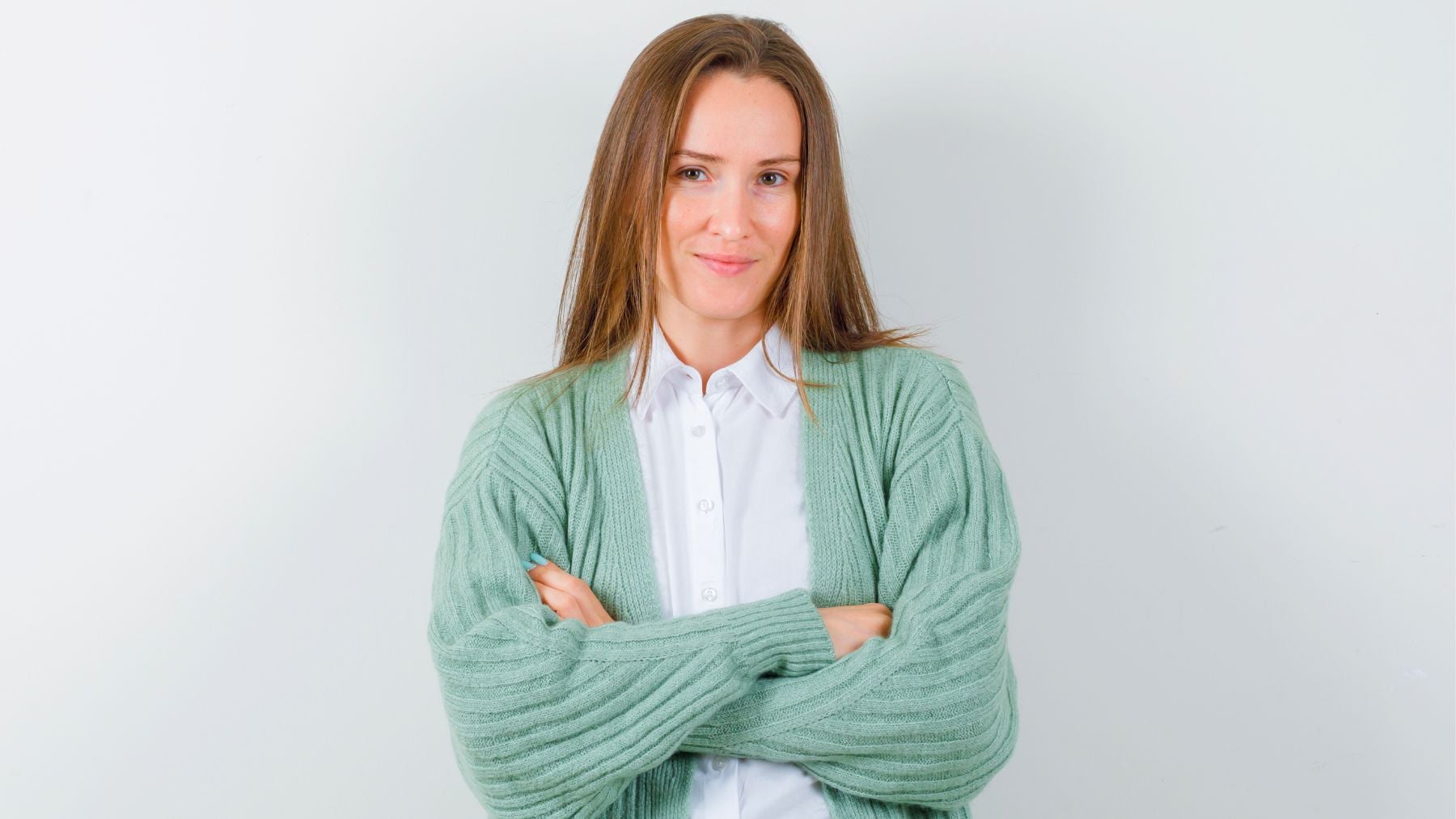
Crossed arms paired with hidden hands look simple, but it’s a gesture that can say a lot. It’s often read as a mix of self-protection and tension, especially when it shows up during conflict, stress, or uncertainty.
This posture appears across social settings, from workplace conversations to family discussions. Here, we’ll look at what it can signal in different contexts, how body language experts interpret it, and which related cues offer more clarity when you’re trying to understand someone’s emotional state.
What crossing your arms and hiding your hands can mean
Crossing your arms usually shifts the body into a closed stance. When the hands are tucked away, the signal gets stronger and often points to a defensive mindset. The person may feel judged, overwhelmed, or simply not ready to engage. The hidden hands create a barrier that makes them feel less exposed.
The gesture can also reflect discomfort that has nothing to do with the interaction itself. Someone might be cold, tired, or overstimulated. Their body tries to create warmth and containment, and the folded arms act as a physical anchor. In these cases, the cue is more about regulating the nervous system than pushing anyone away.
Some people cross their arms out of habit. It becomes their resting posture, especially in public spaces. For habitual users, the meaning is softer. Still, the hidden hands can hint at social caution, shyness, or the need to keep personal boundaries intact. Even a casual habit can reveal a preference for privacy.
In moments of conflict or strong emotion, it usually signals internal tension. When the shoulders tighten, the chest caves inward, and the hands disappear, the body is trying to shrink away from pressure. It can show up in therapy sessions, negotiations, and medical appointments, suggesting the person is holding something back, such as anger, fear, or vulnerability.
There is also a power dynamic angle. Someone who feels outmatched or uncertain may cross their arms to regain a sense of control. Hiding the hands removes a visible part of communication. It’s a subtle way of reducing exposure while still staying present. In group settings, this can hint at insecurity or the need for emotional distance.
Other gestures worth paying attention to
Crossed arms and hidden hands make more sense when you read them alongside other signals. Below are gestures that often appear in the same conversations and help clarify intent.
- Tight jaw or pursed lips: These show frustration or restraint. They often accompany crossed arms during tense discussions.
- Feet angled away: When the torso stays in place but the feet point outward, the person may want to end the interaction. It’s a quiet sign of withdrawal.
- Shrugged shoulders: Raised shoulders suggest insecurity. This can amplify the meaning of hidden hands.
- Avoiding eye contact: Looking down or sideways can reflect embarrassment, shyness, or emotional overload. It strengthens the impression of a guarded stance.
Each gesture adds context. When several appear together, you get a clearer picture of what someone may be feeling. When you notice these cues, you have a better chance of responding with empathy instead of assumptions.