
Jake Benoit started caregiving for a practical reason. He needed a way to support himself while studying for a master’s in nursing at Duke University, but the job soon became much more than a paycheck.
The 26-year-old student from Durham, North Carolina, found something many families quietly hope for when they look for eldercare.
He formed a close friendship with John, a 96-year-old retired ophthalmologist with mild dementia, and that relationship helped shape the kind of nurse practitioner Benoit now hopes to become.
A job that became personal
Benoit’s path into care started long before nursing school. As a child, he spent afternoons at the outpatient clinic where his mother worked as an occupational therapist, watching her help people regain everyday skills like brushing their teeth, getting dressed, and cooking.
Patients would tell him, “Your mom changed my life,” and the message stuck. Years later, he joined CareYaya, a platform that connects families with background-checked student caregivers and companions for older adults.
The company describes itself as a senior care registry that helps families find in-home support.
For Benoit, the work paid between $18 and $26 an hour, according to the interview material. The bigger reward came, however, from the time he spent with older adults whose lives did not fit neatly into a care plan.
The friendship with John
One of Benoit’s first clients was John, who had retired from ophthalmology at 94. They met in the spring of 2024, when John was 96, and the connection quickly grew beyond rides, snacks, and pill containers.
Benoit drove him to church on Sundays, even though he said he is not religious. Afterward, they would often get something to eat and talk through the sermon in conversations Benoit described as nuanced and inspiring.
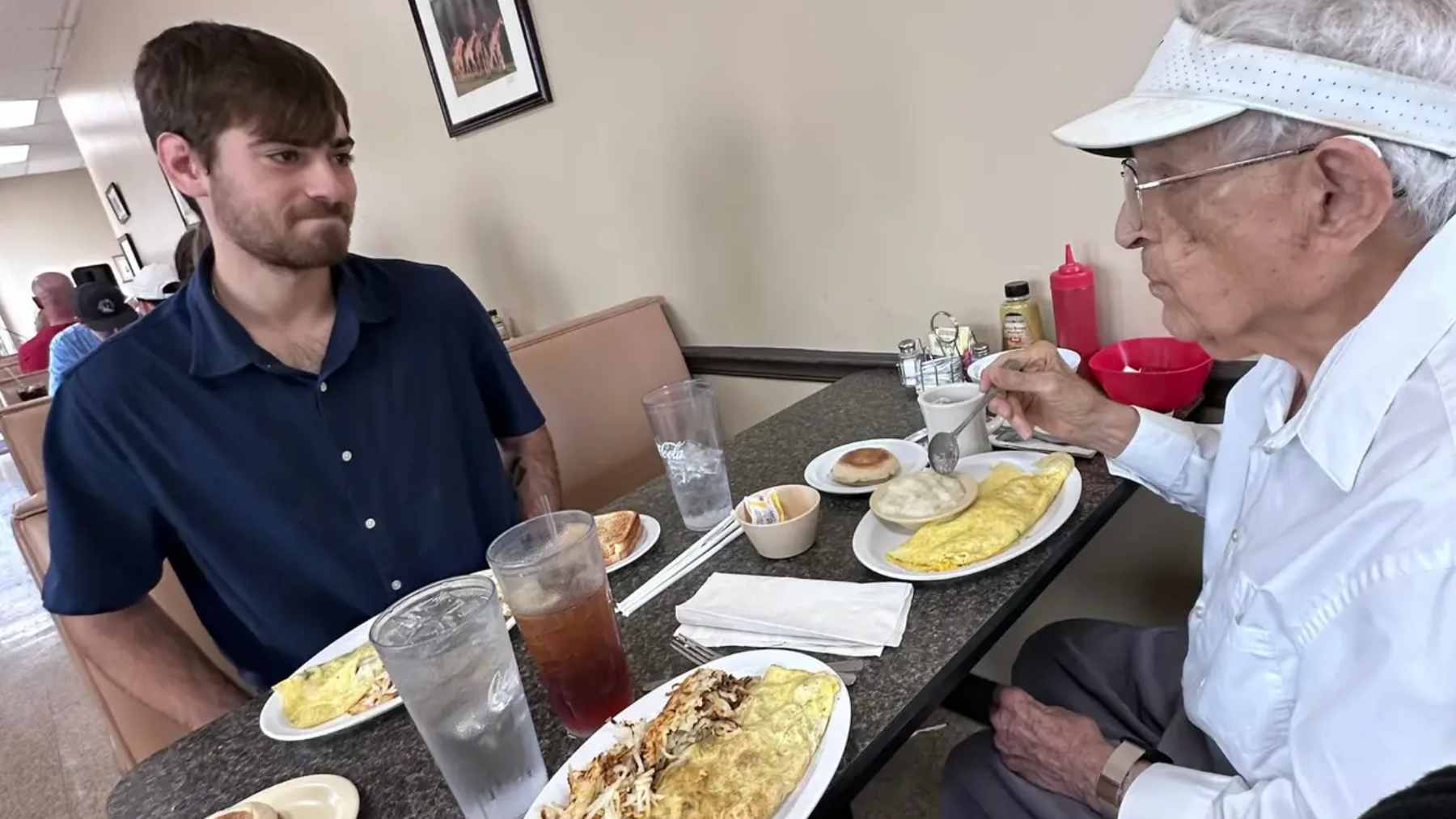
They also played Uno and talked for hours. “You could call it an intergenerational win-win,” Benoit said, adding that despite the decades between them, he considered John one of his best friends.
What caregiving really means
Caregiving can sound simple from the outside–a ride here, a snack there, a reminder to take medication. But anyone who has cared for an aging parent, grandparent, or neighbor knows the work is often more human than mechanical.
John sometimes experienced mild agitation because of dementia. Benoit said his training helped him redirect attention, often by asking about favorite music and playing songs on Spotify, a small move that could help restore calm.
That is caregiving at eye level. It is not only about finishing tasks, it is also about noticing when someone needs patience, conversation, or the comfort of a familiar tune.
A growing need across America
Benoit’s story lands at a time when the United States is getting older fast. The U.S. Census Bureau says the population aged 65 and older reached 55.8 million in 2020, after growing by 38.6% in just 10 years.
That shift is already changing family life. AARP and the National Alliance for Caregiving reported in 2025 that 63 million Americans were family caregivers, about one in four adults, and that the number had risen sharply over the previous decade.
Paid care is under pressure, too. The U.S. Bureau of Labor Statistics projects employment of home health and personal care aides will grow 17% from 2024 to 2034, with about 765,800 openings expected each year on average.
The lessons went both ways
After John died, his daughter sent Benoit a long email that moved him to tears. That moment stayed with him because it confirmed something he had already begun to feel: his clients were shaping him as much as he was helping them.
He later cared for an 85-year-old author who had traveled the world and had moderate mobility issues. Part of his job was to keep her legs elevated, make sure she used a compression device, and sit with her through old films like “Breakfast at Tiffany’s,” “Roman Holiday,” and “Lawrence of Arabia.”
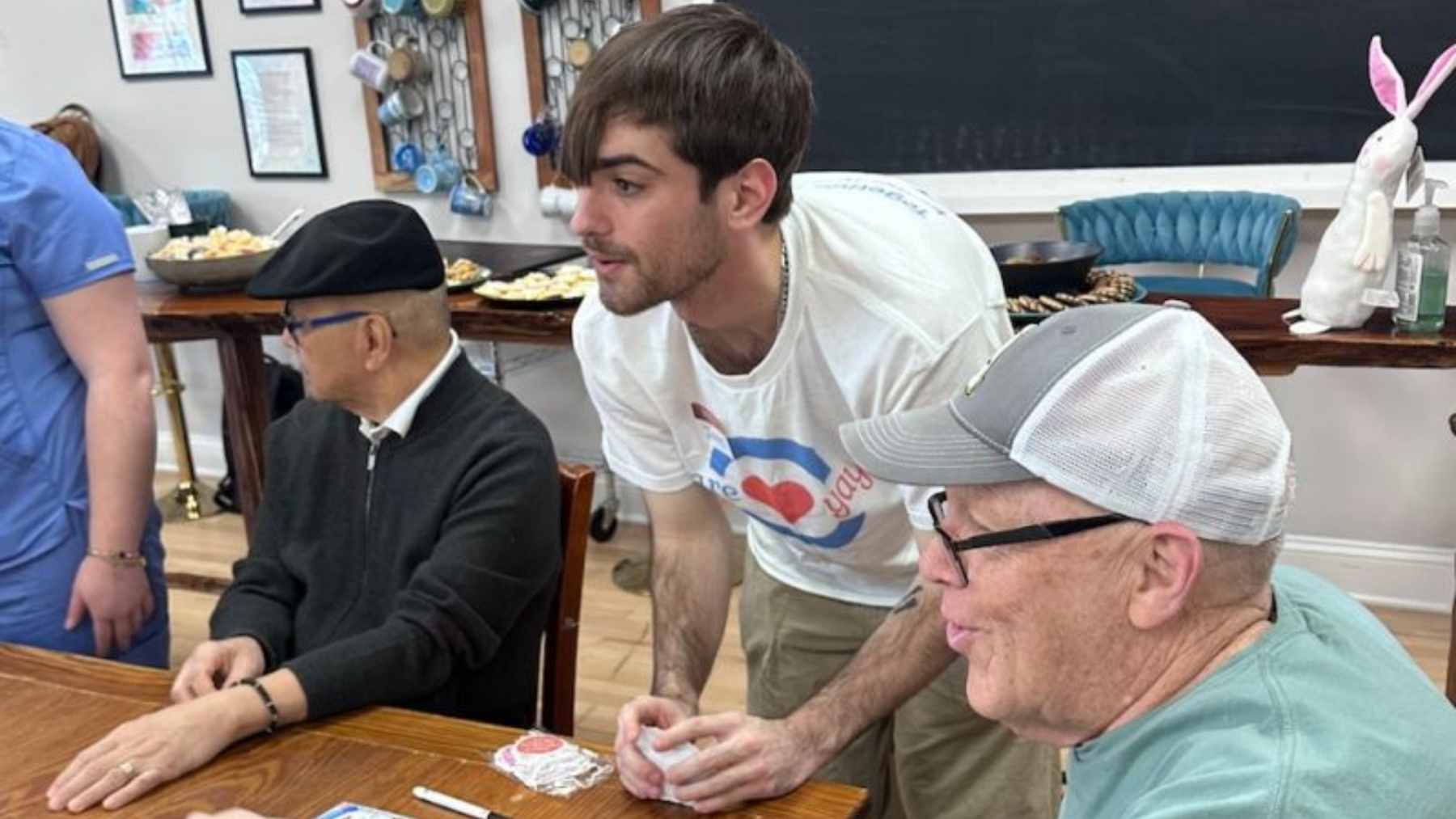
He also cared for an 86-year-old former U.S. ambassador to the Middle East who was writing memoirs. As they read through the pages together, Benoit asked questions and noticed that the conversation seemed to help the man sustain longer thoughts and sharpen his memory.
Why it shaped his future
Benoit now says working with older adults is a major reason he wants to become a nurse practitioner. That goal makes sense when you hear how he talks about the work. The job gave him not only clinical exposure, but also a front-row seat to aging, memory, dignity, and gratitude.
What does care look like when it is more than a checklist? In Benoit’s case, it looked like Sunday drives, card games, movie nights, memoir pages, and conversations that crossed a 70-year age gap.
At the end of the day, his story points to a larger truth about eldercare in America. Families need help, students need meaningful work, and older adults often need something that cannot be measured in a medical chart.
The main interview was published in Business Insider.