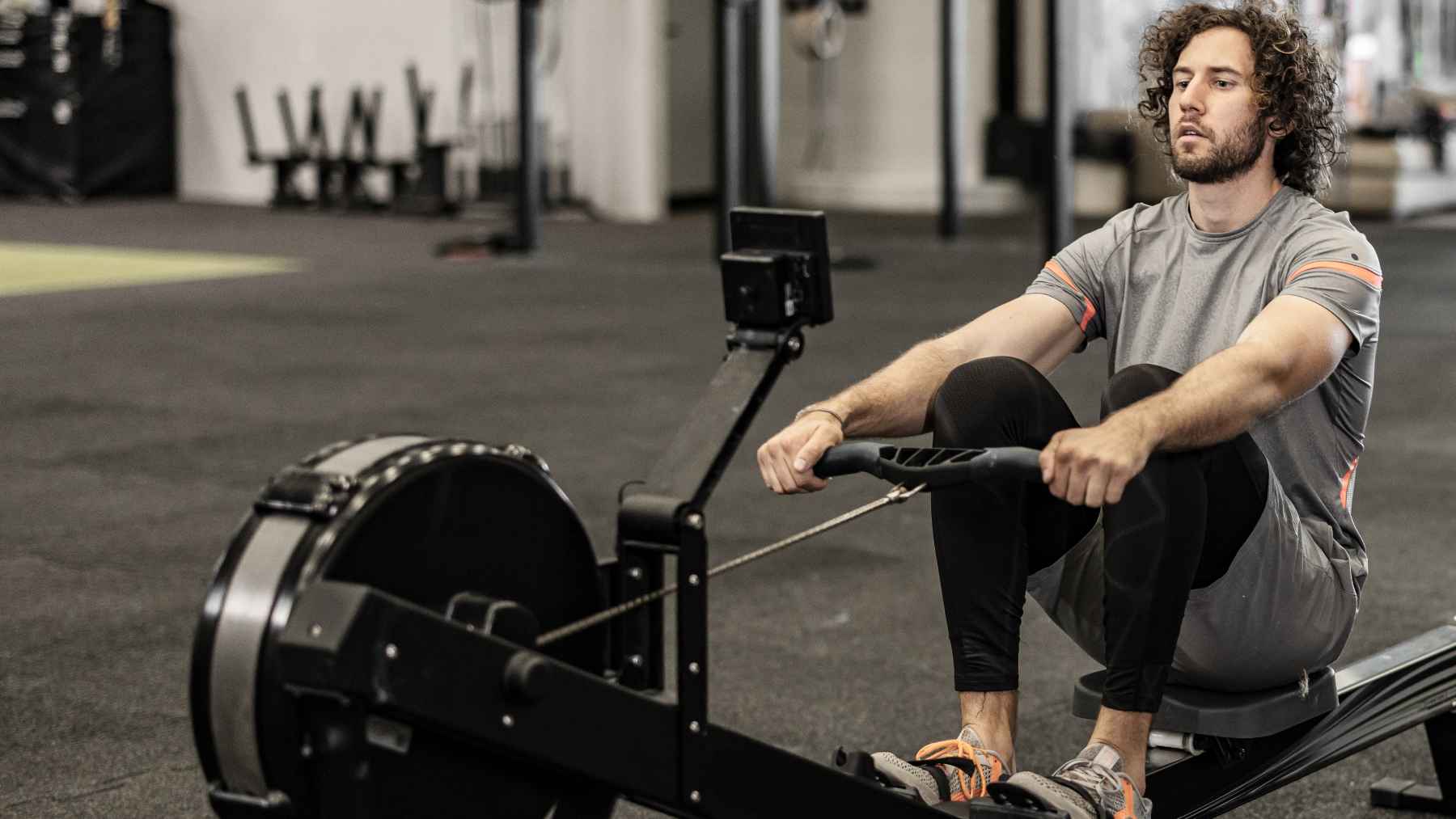
Walk into many gyms and the rowing machine is still the quiet one in the corner. The treadmill gets the traffic, the bikes fill up, and the rower often sits there waiting for someone willing to pull, push, and breathe hard.
That may be changing. Rowing has become more visible in fitness racing, including HYROX, where athletes complete a 0.62-mile row as one of the race stations.
For everyday exercisers, the bigger story is simpler: the rower can deliver hard cardio, full-body effort, and low-impact movement in one machine.
Why rowing feels so hard
The simple reason is oxygen. VO2 max means how much oxygen your body can use during intense exercise, and it is widely used as a marker of cardiovascular fitness. In plain English, it is one way to measure how big your aerobic engine really is.
Rowing asks that engine to feed several large muscle groups at once. “Rowing makes multiple big muscles (legs, hips, core, back, and arms) work all at once, so your heart and lungs need to pump a lot of oxygen-rich blood every stroke,” says fitness coach Farren Morgan.
A 2021 study led by Timo Kirchenberger, with colleagues from Charité-Universitätsmedizin Berlin, the University of Bern, and Medical Center Berlin, found that young well-trained rowers improved oxygen-use measures and their 1.24-mile time trial after eight weeks of training that included high-intensity intervals.
More muscles, same clock
Running mostly asks the legs to carry the show. Cycling leans heavily on the lower body, too. Rowing spreads the work around.
The stroke starts with the legs, then moves through the hips and torso, and finally into the arms and back. That is why a good rowing session can leave your quads, glutes, core, lats, shoulders, and grip all feeling like they had a say in the workout.
Muscle activity research backs up that full-body picture. A 2023 electromyography study, which used sensors to track muscle activity, found that rowing stroke phases activate large muscle groups and can help coaches refine technique. You are not just “doing cardio,” you are coordinating power.
Low impact does not mean easy
For many people, the biggest appeal is what rowing does not do. It does not make every step land through the knees, ankles, and hips the way running can. That can matter after a long workday, after an injury, or for someone carrying extra weight.
“The rower allows you to work at very high intensities, one of the main reasons being that you aren’t restricted by your physical body weight like with running,” says Cameron Harris, managing director at Truth Fitness.
A person who is 22 lbs. above their usual weight may stop a run because their knees complain before their lungs are truly challenged.
There is some clinical support for the joint-friendly idea. In a 2022 randomized trial, Pei-Ling Lin and colleagues reported that a 12-week computer-aided rowing program helped older adults with mild knee osteoarthritis improve knee health, muscle strength, and physical function compared with regular resistance exercise.
Osteoarthritis is the wear-and-tear joint condition many people simply call “bad knees.”
How it compares with other cardio
Here is the nuance: rowing is not automatically better than every other machine for every goal.
A 2021 Journal of Sports Science and Medicine study found that treadmill exercise produced higher fat oxidation than rowing or elliptical exercise in nine healthy men, while peak oxygen use was similar across the three machines.
A 2024 Frontiers in Sports and Active Living study also found that, among 30 recreationally active middle-aged men, the treadmill produced the highest oxygen use, heart rate, and energy expenditure at hard and maximum efforts.
The treadmill still has a strong case if the goal is pure calorie burn or running-specific fitness.
But the rower’s advantage is its package deal. “Each machine has its purpose,” says Aaron McCulloch, director at YOUR Personal Training, “but if you’re looking for full-body engagement and overall conditioning, the rower stands out.”
A simple way to start
New rowers should not chase exhaustion on day one. Technique comes first. A good cue is legs, body, arms on the drive, then arms, body, legs on the way back.
One simple test is a 1.24-mile row after a 10-minute warmup. Keep the pace even, record the average split, and repeat the same test every six weeks. It is not glamorous, but it gives you a clean measure of progress.
For a mixed session, try five rounds of a quarter-mile row, 10 kettlebell deadlifts, and eight strict pushups, resting 60 seconds between rounds. That blend keeps the heart rate high while spreading the load across the legs, hips, back, chest, and core.
Rowing machine takeaway
The rowing machine deserves more attention because it solves a common fitness problem. Many people want a workout that hits the heart hard without feeling like traffic for the joints.
At the end of the day, rowing is not a shortcut. It is a compact way to train oxygen use, coordination, and muscular endurance at the same time. And for a machine that often gets ignored, that is a pretty strong comeback.
The main study was published in Sports.