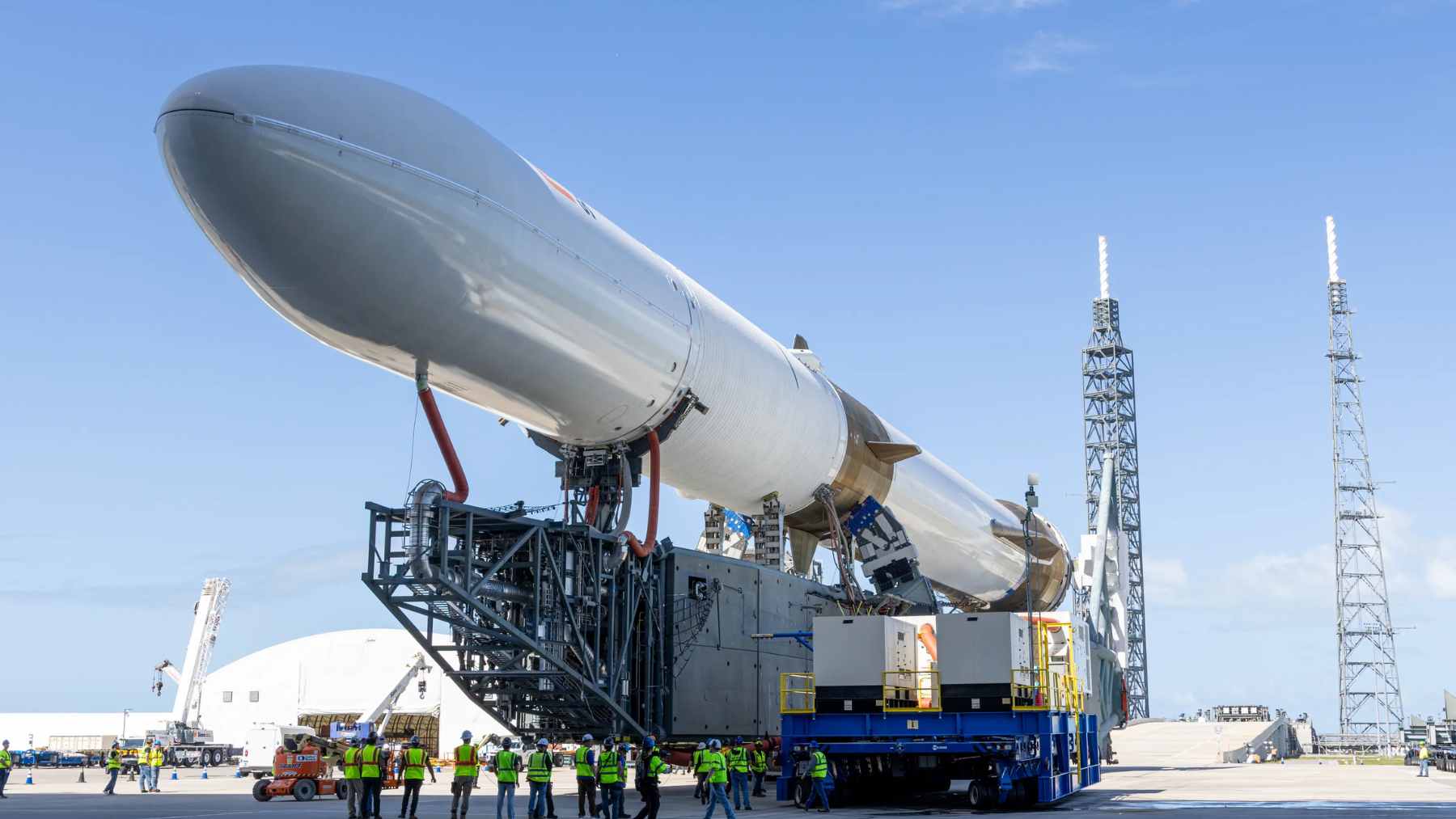
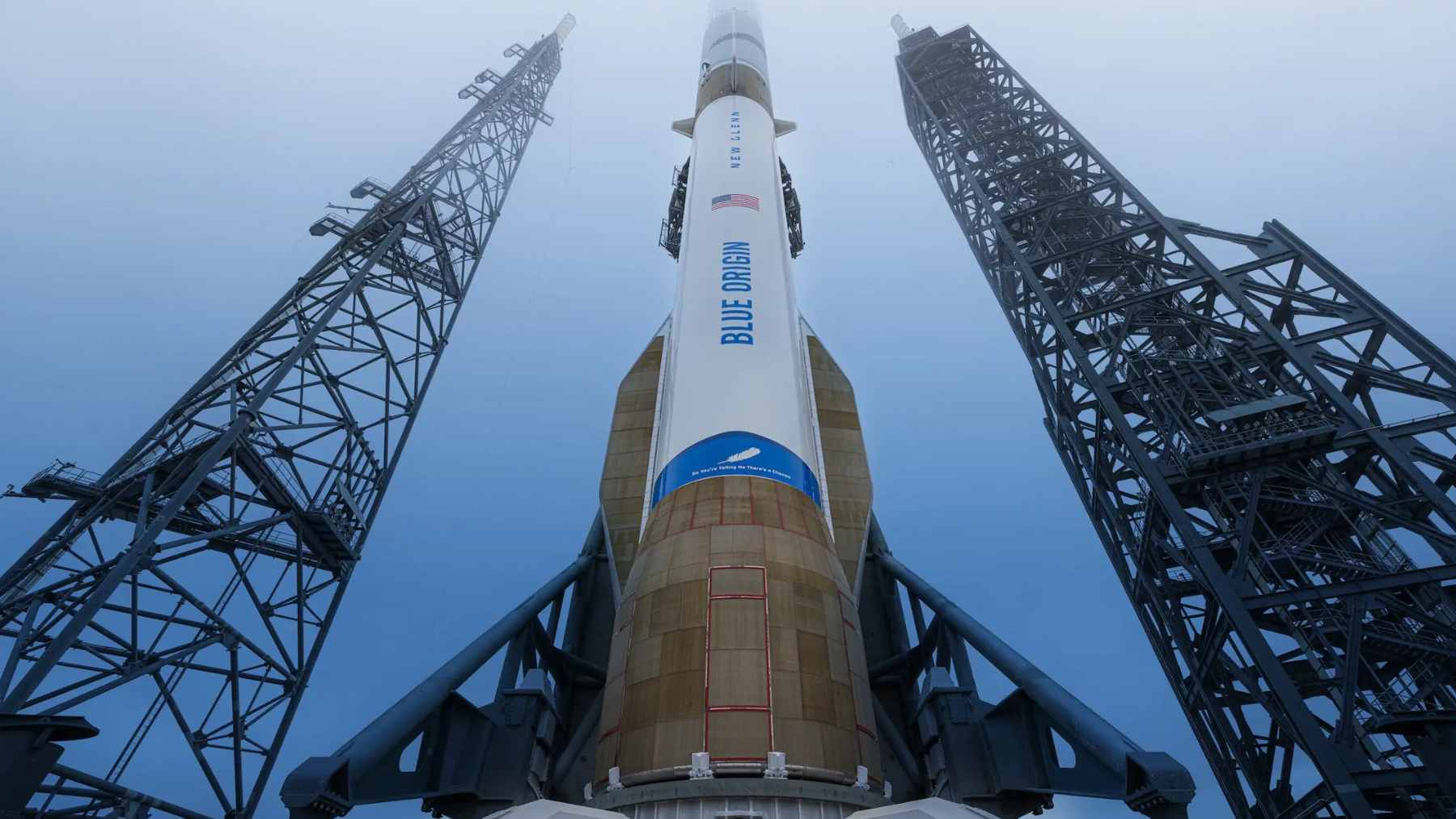
A rocket accident in Florida has suddenly turned a technical setback into a much bigger question for America’s return to the Moon. Blue Origin confirmed that its New Glenn vehicle suffered an “anomaly” during a May 28 hotfire test, with all personnel accounted for, but the company also warned that debris could wash ashore in the coming days or weeks.
That matters far beyond one damaged launchpad. NASA’s Artemis plan now depends on commercial lunar landers, and the agency says Artemis III will test Orion docking with one or both commercial landers in low Earth orbit in 2027, before the first new crewed lunar landing targeted for early 2028.
In practical terms, any delay at Blue Origin could push more pressure onto SpaceX, just as Elon Musk’s company moves toward what could be the biggest IPO in history.
A launchpad problem
Blue Origin’s own update was careful, but revealing. The company said the propellant farm, oxygen, liquid hydrogen, and LNG tanks were in good shape after teams regained access to Launch Complex 36, while the big support tower was damaged but repairable in place.
That sounds like good news, and to a large extent it is. Still, launchpads are not just concrete and steel. They are the plumbing, power, water, fuel, sensors, and safety systems that turn a rocket from a factory object into a working spacecraft.
Why Artemis is exposed
NASA picked SpaceX in 2021 to develop the first commercial human landing system for Artemis, under a $2.89 billion contract. NASA later selected Blue Origin in 2023 as its second Artemis lunar lander provider, with a $3.4 billion award for Blue Moon and future missions.
That two-provider model was supposed to add backup, competition, and flexibility. The trouble is, redundancy only works when both systems are moving fast enough. If New Glenn is delayed, Blue Moon loses the ride it needs, and NASA’s timetable starts to look thinner.
SpaceX’s opening
SpaceX already had the advantage in flight cadence. Reuters reported that the company conducted 170 launches in 2025 and deployed about 2,500 satellites, while FAA officials said SpaceX has even discussed an eventual target of 10,000 launches a year, a goal regulators would not approve without stronger reliability.
Then comes Wall Street. SpaceX filed its S-1 registration statement with the SEC on May 20, and Reuters reported that the company is planning a $135 share price, a potential $75 billion raise, and a possible $1.75 trillion valuation. Big numbers, but they are also a reminder that space is no longer just exploration–it is infrastructure, defense, and broadband rolled into one.
The environmental catch
There is another layer here that often gets pushed behind the spectacle. More launches mean more emissions, more reentries, more coastal infrastructure, and more debris management. After the New Glenn accident, Blue Origin told the public not to touch any debris that might wash ashore and to report its location immediately.
For people living near spaceports, that is the part that feels real, not a valuation chart or a mission patch. It’s a piece of hardware on a beach, a road closure, a loud test at night, or a plume on the horizon.
Rockets and the ozone layer
Scientists are still trying to understand the full environmental cost of a much busier space economy. NOAA researchers have warned that soot from rocket exhaust can reach the stratosphere, where it may disrupt atmospheric circulation and deplete ozone.
The agency said current spaceflight activity contributes roughly 1,100 U.S. tons of black carbon to the stratosphere each year.
A 2025 study in npj Climate and Atmospheric Science reached a similar warning. Its conservative scenario of 884 launches per year projected a 0.17% near-global annual mean ozone depletion by 2030, while a more ambitious 2,040-launch scenario projected 0.29% near-global depletion and a 3.9% drop in Antarctic springtime ozone.
That is not a doomsday number, but it is not nothing, either.
Defense is part of the story
SpaceX’s growing importance is not limited to NASA. Reuters reported that the U.S. Space Force awarded SpaceX a $4.16 billion contract to develop satellite technology for detecting and tracking airborne threats, and another $2.29 billion contract for a military space data network.
That gives the company a rare position in American strategy. It can launch payloads, operate communications networks, build defense satellites, and develop the lunar lander NASA needs. Convenient? Absolutely. Risky? Also yes, because too much dependence on one private company can leave public programs exposed when schedules slip or politics intrudes.
Blue Origin is not out
Blue Origin is trying to project control, not collapse. CEO Dave Limp said the company had regained some access to the pad, had a rebuild plan, and expected to fly again before the end of the year. That is a bold promise after a violent ground-test failure.
Still, rockets have a way of humbling everyone. SpaceX knows that from Starship testing, and Blue Origin knows it now from New Glenn. The question for NASA is not whether setbacks happen–they always do. The question is whether the Moon plan has enough margin when they arrive.
What comes next
At the end of the day, this accident is a stress test for America’s new space model. NASA no longer builds every piece alone. It buys services, sets requirements, and depends on billionaires’ companies to turn national goals into hardware.
That model can move fast, but it also concentrates risk in unfamiliar places. A launchpad fire in Florida can shake a lunar schedule, an IPO can influence space strategy, and a satellite network can become both a business and a defense asset. That is the new space race, and it is messier than the old one.
The official statement was published on Blue Origin.