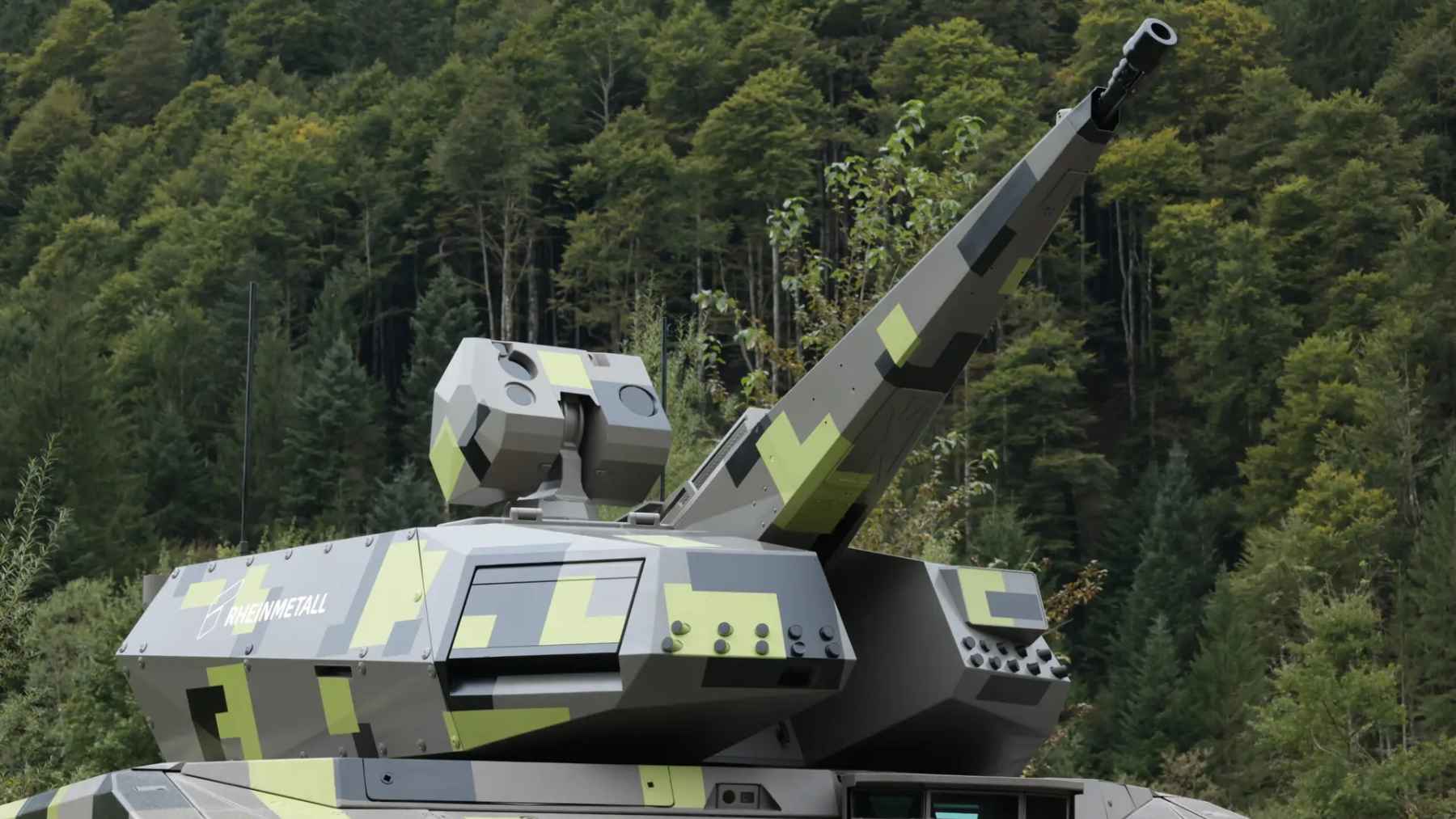
A small drone can be cheap, difficult to spot, and dangerous enough to shut down an airfield or threaten a power plant. Switzerland is now preparing a major answer, with its government seeking the equivalent of about $985 million (using the Swiss National Bank’s July 22 exchange rate) for a short-range air defense system made by Rheinmetall Air Defence in Zurich-Oerlikon.
There is one important detail behind the headlines. Recent reporting has described a planned purchase of 32 Skyranger systems, but Switzerland’s official 2026 armaments program presents a truck-mounted 35 mm Oerlikon Skynex configuration instead, a distinction that changes how the system would be used.
Why Switzerland is moving now
The Swiss Army still relies on shoulder-fired Stinger missiles and older 35 mm anti-aircraft guns for short-range defense. Both are due to reach the end of their service lives in the early 2030s, and the government says they are only partly suited to fighting drones or protecting specific locations.
Recent reported drone flights over military sites have made that gap harder to ignore. A quiet overflight may look harmless from the ground, but the Army says mini-drones can be used to scout infrastructure, disrupt operations, or, in extreme cases, attack critical facilities.
What good is an air picture if the final defensive layer cannot reliably stop a small target? The gun system is intended to protect power plants, airfields, and Army logistics centers, while a separate roughly $86 million project would develop modular defenses against mini-drones.
Skynex and Skyranger are different
The names sound similar, and both come from Rheinmetall’s Oerlikon air defense family. Skynex is a networked system that links guns, radars, sensors, and command nodes for site defense, while Skyranger places a compact turret on a wheeled or tracked armored vehicle so it can accompany troops.
Switzerland’s official plan favors a protected truck carrying a 35 mm gun, equivalent to about 1.38 inches in caliber. Rheinmetall says the Skynex Revolver Gun Mk3 can fire up to 1,000 rounds per minute, carry 252 ready rounds, and engage targets at up to roughly 2.5 miles.
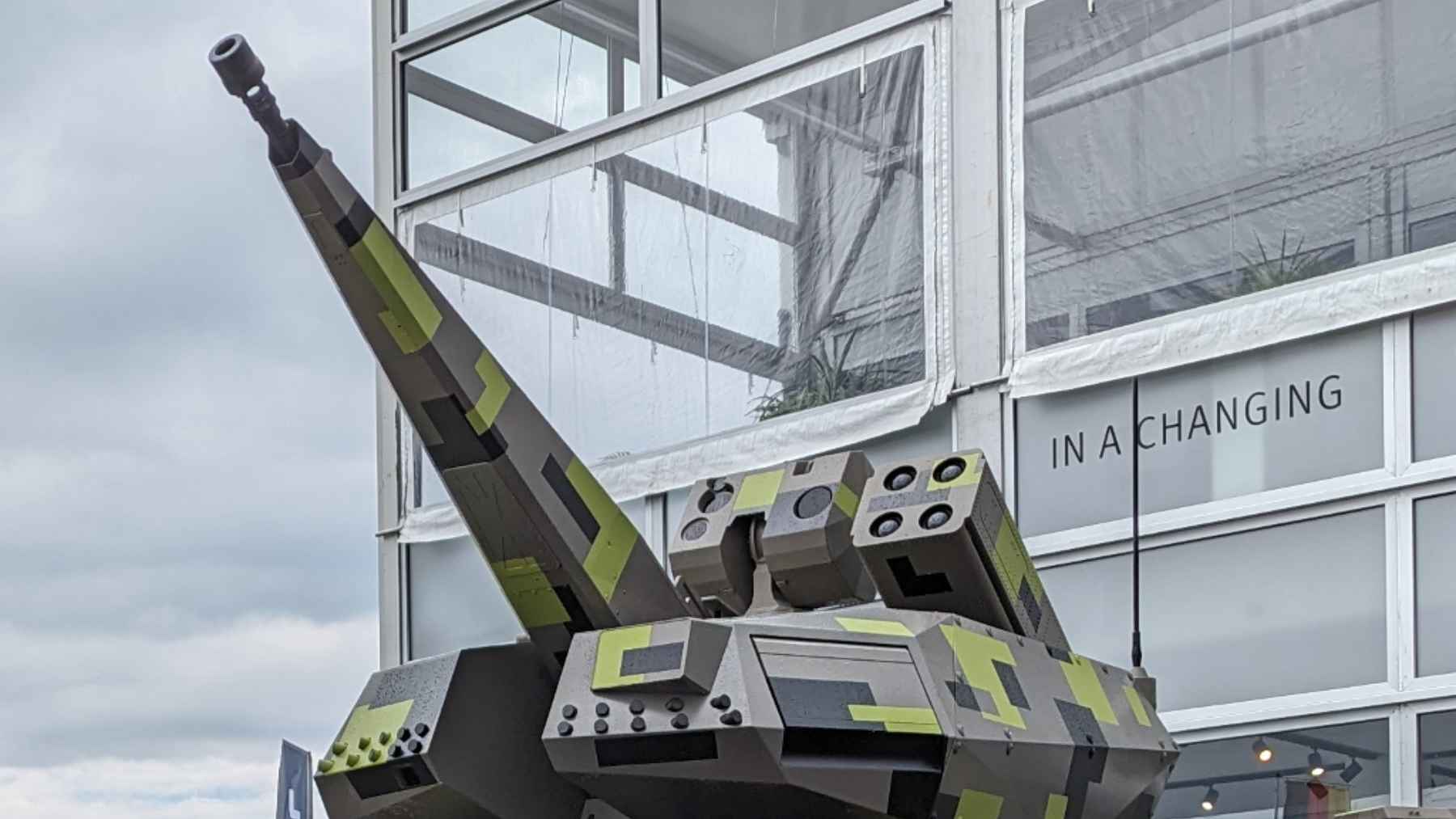
The ammunition is the clever part. Each programmable AHEAD round is programmed at the muzzle, then opens in front of the target and throws a dense cloud of tungsten subprojectiles into its flight path.
A nearly $1 billion industrial bet
The budget covers more than a row of gun trucks. Switzerland says the purchase would also include fire-control equipment and the systems needed to build a shared air picture, while the Army selected protected trucks over wheeled armored vehicles or a mixed fleet.
That also explains why dividing the full budget by a reported count of 32 vehicles would be misleading. The official program does not publicly list that number, and its budget covers fire-control and air-picture equipment as well as the gun platforms.
Business at the Oerlikon plant is accelerating. According to the reporting, production once amounted to only one or two systems a year, while the company is now hiring as many as 50 employees a month, and chief executive Oliver Dürr called Skyranger “a real commercial success.”
Local production does not mean priority
Made in Switzerland does not automatically mean delivered to Switzerland first. Rheinmetall reportedly expects about 18 months between an order and the first delivery, but says customers remain in the queue on a first-come, first-served basis.
The Army’s own schedule points to introduction beginning in 2028, which broadly fits that lead time if parliamentary approval and contracting move ahead. It is a reminder that local engineering may reduce some supply risks, but it cannot erase a crowded international order book.
Costs are moving in opposite directions. Higher production can lower manufacturing expenses, while the reporting says tungsten used in the programmable ammunition has become more expensive, adding pressure to ammunition costs.
Austria shows the mobile version
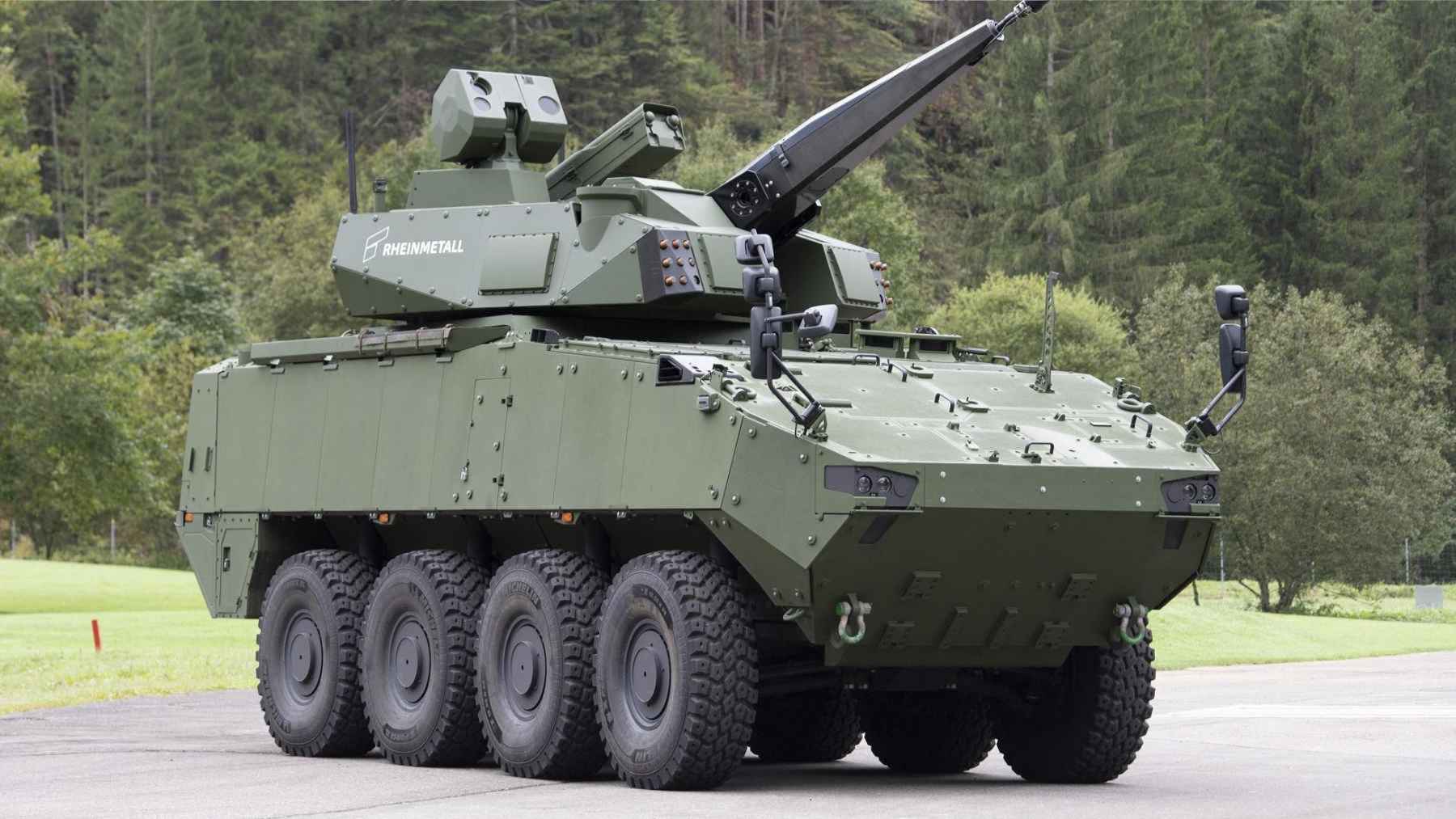
Austria provides a useful comparison because it is buying the system many headlines associate with Switzerland. Vienna ordered 36 Skyranger 30 turrets for Pandur EVO 6×6 armored vehicles, with Rheinmetall saying deliveries begin in 2026.
That version uses a 30 mm cannon, about 1.18 inches in caliber, and can also carry short-range missiles. It is designed to move with formations, whereas Switzerland’s truck-based Skynex choice is more focused on defending important places.
Swiss Defense Minister Martin Pfister and Austrian Defense Minister Klaudia Tanner visited the Zurich plant together on July 6, 2026. Their side-by-side look at related Oerlikon systems may help explain why the Skyranger name moved into the spotlight, even though the two countries are pursuing different configurations.
Parliament has the final say
The Council of States approved the wider roughly $4.2 billion Army package on June 16, 2026. The National Council is expected to consider it in September, so the roughly $985 million short-range air defense plan is not yet a completed purchase.
Approval would still leave testing, contracting, training, and integration ahead. But the direction is clear, with Switzerland placing cannon-based drone defense, critical-infrastructure protection, and domestic industrial capacity near the center of its next air defense layer.
The more important question is not whether the label says Skynex or Skyranger. It is whether Switzerland can connect sensors, command systems, and weapons quickly enough to turn a detected drone into a stopped threat.
The statement was published on the Swiss Federal Department of Defence, Civil Protection and Sport website.