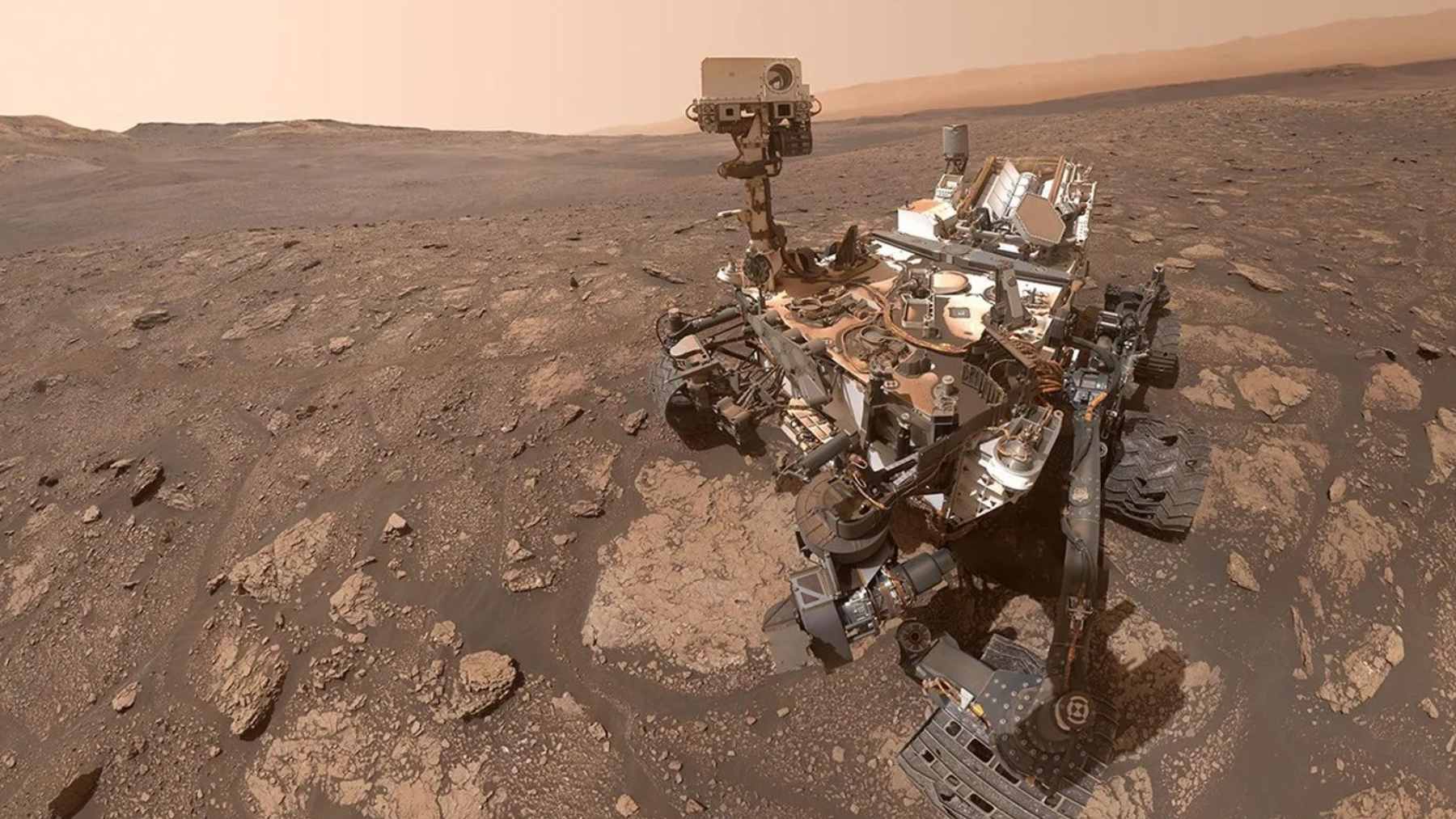
NASA sent Curiosity toward Mars in November 2011 with a mission planned around two Earth years. Nearly 14 years after landing in Gale Crater, the small SUV-sized rover is still climbing Mount Sharp, drilling rock, and reading the environmental memory of a planet that once looked very different from the freeze-dried desert we see today.
The big takeaway is not that Curiosity found life, it has not. What it has done is keep finding the kind of chemistry and geology that make scientists ask a sharper question: how long did ancient Mars remain friendly enough for microbes to survive, if they ever existed there?
A rover built to ask one question
Curiosity’s mission was simple to state but hard to answer. NASA designed it to find out whether Mars ever had conditions that could support microbial life, not to prove that Martian life existed.
That distinction matters. A habitable environment means water, useful chemistry, and energy sources, the basic pieces of a microbial home.
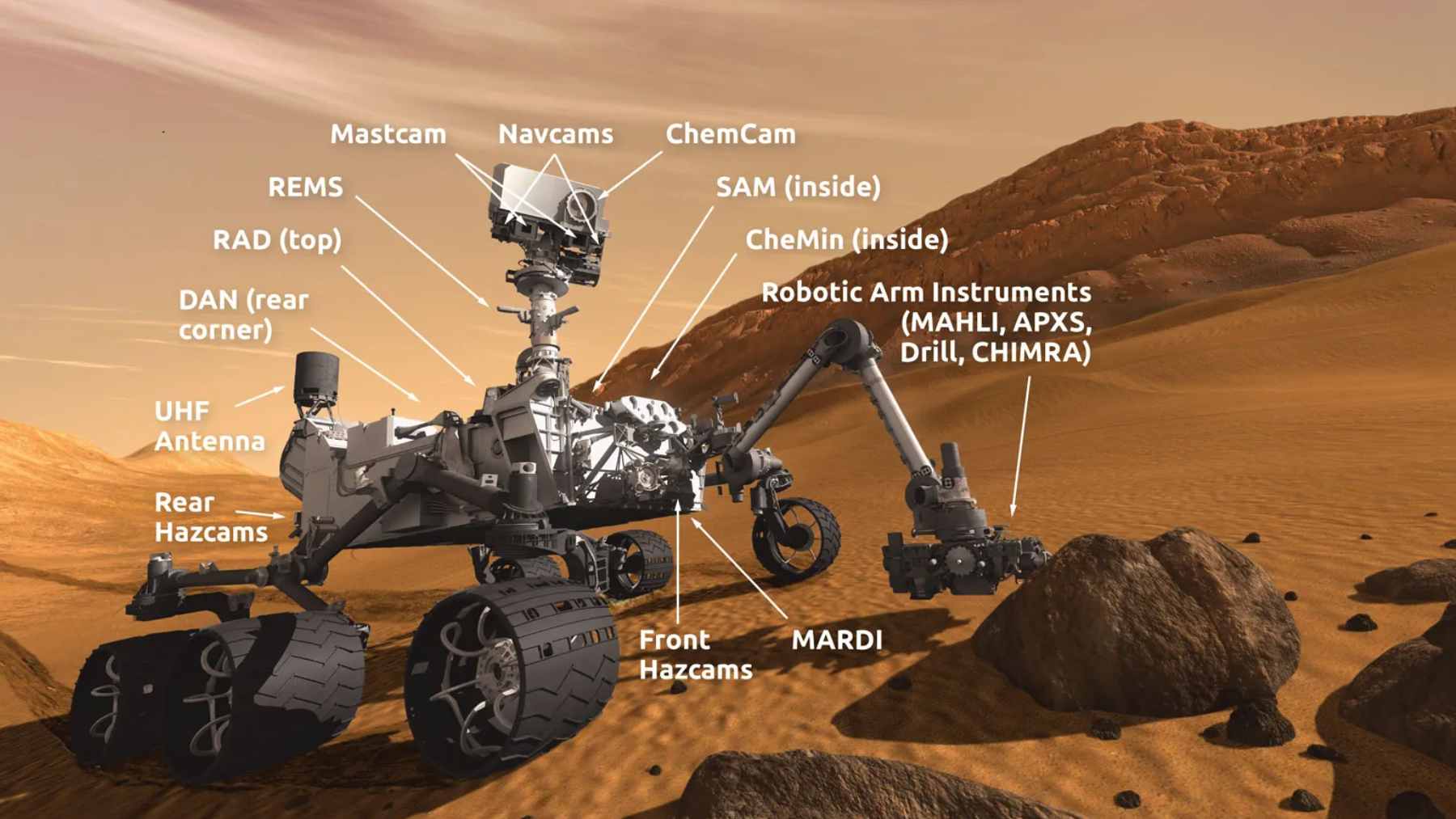
The vehicle itself was no small machine. NASA describes Curiosity as about 10 ft. long, 9 ft. wide, and 7 ft. tall, weighing 1,982 lbs. on Earth, with a geology lab, 17 cameras, and a rock-vaporizing laser.
The landing was its own breakthrough
Before Curiosity could do science, NASA had to land almost a ton of hardware on a planet with an atmosphere too thin for parachutes alone to finish the job. The answer was the sky crane, a jet-controlled descent stage that lowered the rover on cables and then flew away.
It sounded risky because it was new. JPL says the rover landed in Gale Crater on Aug. 5, 2012, PDT, or Aug. 6 EDT, using maneuvers never tried before, including the sky crane system.
Those last seven minutes turned into a signature moment for robotic exploration. A machine that had to land itself became one of NASA’s longest-running field geologists.
Gale Crater became a climate archive
Curiosity soon found that Gale Crater was not always dry and brutal. NASA says the rover found rounded pebbles from a past stream and more than 1,000 vertical ft. of rock that originally formed as mud at the bottom of shallow lakes.
In other words, Mars once had a watery chapter that lasted long enough to write itself into the rocks. That is the environmental story Curiosity has been chasing one drill hole at a time.
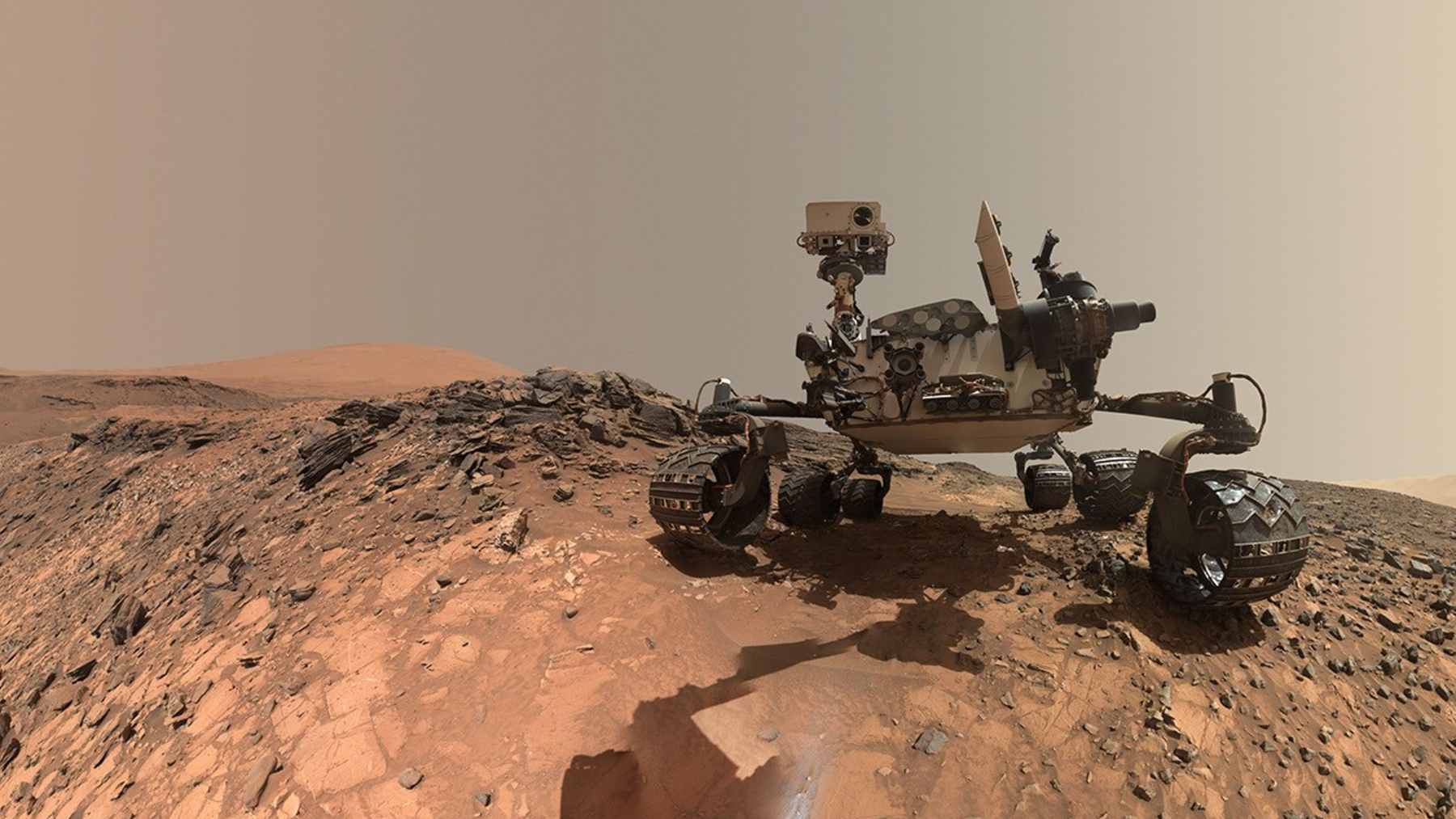
The rover’s early drilling at Yellowknife Bay also found sulfur, nitrogen, oxygen, phosphorus, and carbon, along with clay minerals and not too much salt. Put more simply, that ancient setting had fresh water and key ingredients that microbes would need.
Organic molecules raised the stakes
The newest headline came after years of analysis of a rock sample called Mary Anning 3, which Curiosity drilled in 2020. In April 2026, JPL said scientists had identified 21 carbon-containing molecules in the sample, including seven detected for the first time on Mars.
No one should jump from organics to aliens. NASA was careful to say scientists do not know whether those molecules were produced by biological or geological processes, but the finding strengthens the case that ancient Mars had chemistry relevant to habitability.
Among the most interesting finds was a nitrogen-containing ring structure, which NASA described as a predecessor to RNA and DNA. Amy Williams, the paper’s lead author, called the detection “pretty profound.”
Spiderweb rocks point to late water
Curiosity has also been exploring a landscape that looks like huge spiderwebs from orbit. Up close, JPL says the boxwork formations are low ridges roughly 3 to 6 ft. tall, made when ancient groundwater flowed through cracks and left minerals behind.
That matters because groundwater may have lingered after rivers and lakes disappeared. Essentially, that is what Curiosity is trying to pin down–not just whether Mars was wet, but how long useful water stuck around.
In May and June 2026, mission updates showed the rover drilling at Campo Marte, a target in the layered sulfate unit above the boxwork region. NASA’s Curiosity team later described Campo Marte as the mission’s 47th successful drill.
Why it keeps going
Curiosity’s staying power comes in large part from its power source. NASA says the rover launched with a Multi-Mission Radioisotope Thermoelectric Generator, a nuclear battery that turns heat from plutonium-238 decay into electricity and can supply about 110 watts at the start of a mission.
That may sound modest, at about the power draw of a bright household bulb. On Mars, though, steady power is gold because it lets the rover work through dust, cold, seasons, and long nights, where a solar rover has to be much more careful.
For technology planners, that is the quiet lesson. Long missions in harsh environments often depend less on flash than on power, redundancy, and patient engineering.
Curiosity is still asking
Curiosity has driven more than 22 miles and climbed about 2,430 ft. up Mount Sharp, according to the mission summary provided for this article. That is not fast, but Mars does not reward speed. It rewards machines that keep waking up.
The rover is now less like a single mission and more like a long-running environmental observatory. Each sample adds another clue about how a planet with water, chemistry, and perhaps habitable niches lost its way.
So, what should readers keep in mind? Curiosity has not found life, but it has made Mars harder to dismiss as a dead world from the start.
The official statement was published on NASA Jet Propulsion Laboratory.