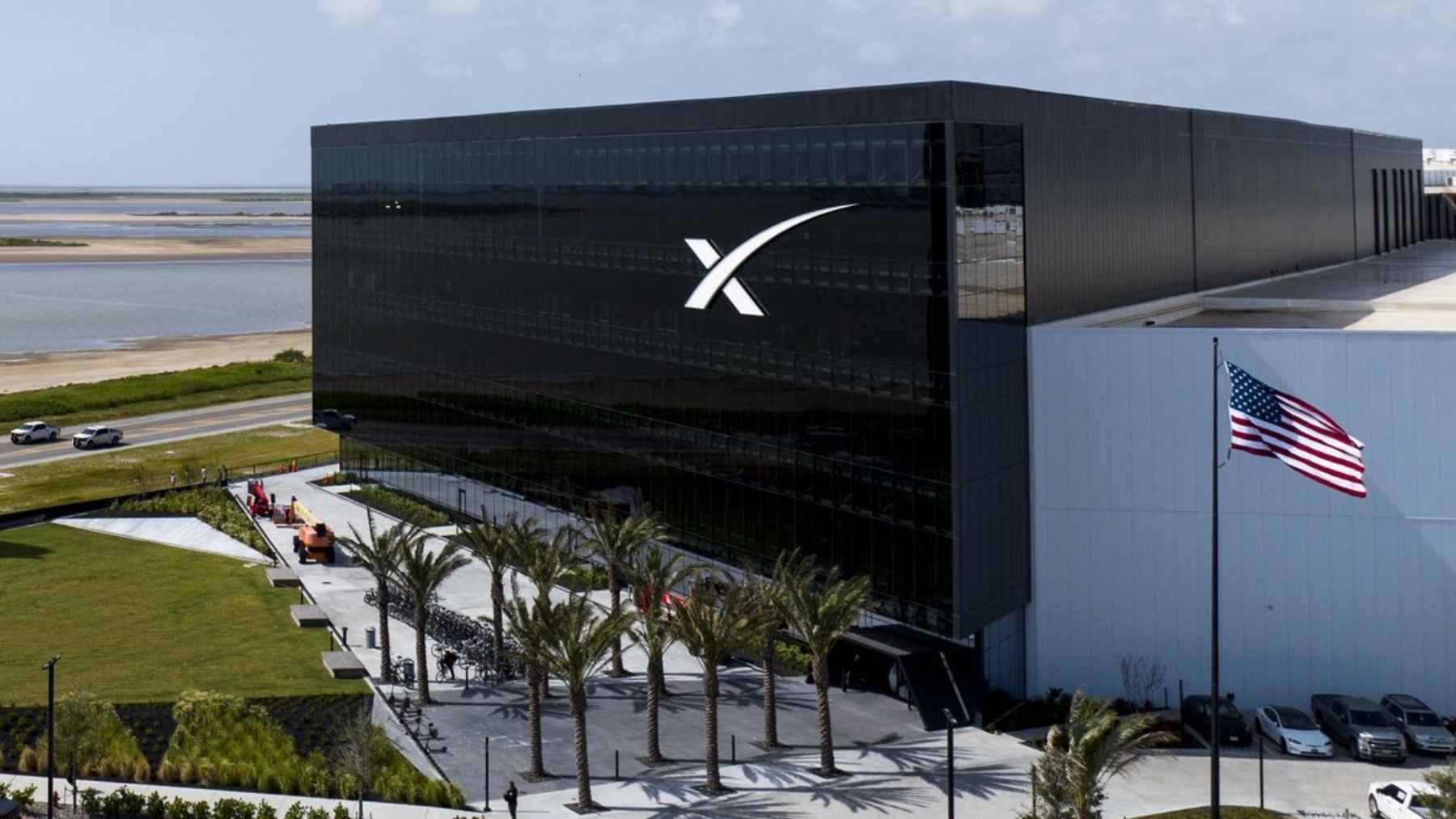
SpaceX’s next big Starship story is not just another launch. It is a factory rising out of the South Texas coast, and it could decide whether Elon Musk’s Mars rocket becomes a real industrial system or remains a dramatic test program.
New aerial views of the Gigabay site at Starbase show a multi-level steel frame climbing near the existing Megabay, with cranes working around it and wall panels already going up. The business promise is huge, but it raises a hard question: how much heavy space infrastructure can a fragile coastal region absorb?
A factory with rocket ambitions
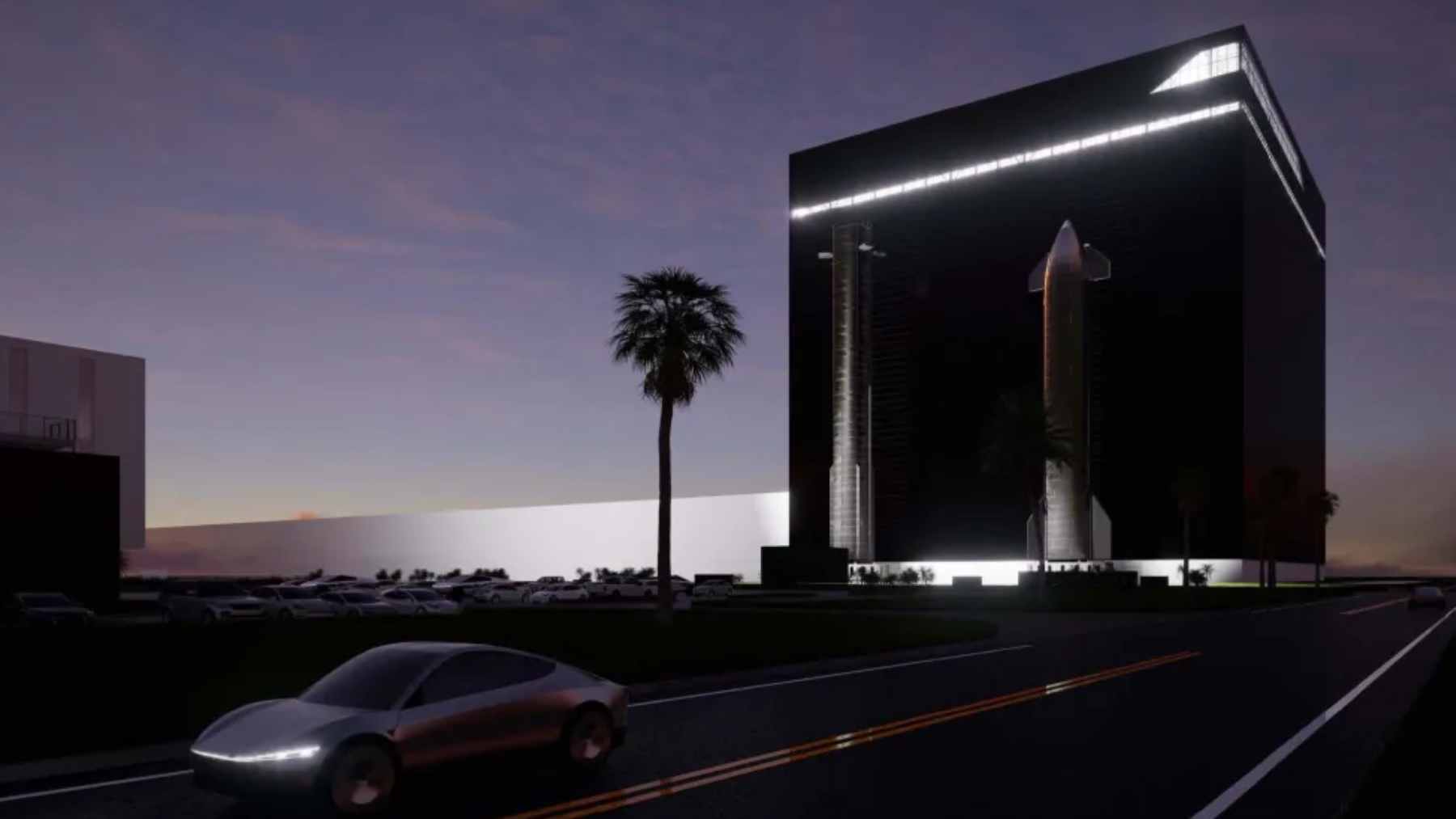
Reported dimensions put Gigabay at about 381 ft. tall, 361 ft. long, and 427 ft. wide. Inside, it could offer roughly 377 ft. of usable height, about 815,000 ft.² of work area, and nearly 46 million ft.³ of interior space.
Those numbers sound abstract until you picture the daily work inside. Starship vehicles and Super Heavy boosters have to be stacked, moved, inspected, repaired, and changed again, often after fiery test flights that teach engineers what failed and what survived.
Elon Musk previously said the building was designed to house “a thousand Starships a year,” calling it one of the largest structures in the world by some calculations. That is not a normal factory target, it is a bet that rockets can be treated more like aircraft, or even high-end machines rolling through an assembly line.
Why Gigabay matters
SpaceX describes Starship and Super Heavy as a fully reusable transportation system meant to carry crew and cargo to Earth orbit, the Moon, Mars, and beyond. The company’s official Mars page says Starship cargo flights to the Martian surface are planned to start no earlier than 2028.
In practical terms, Gigabay is schedule pressure poured into steel. If SpaceX wants repeated tests, future lunar operations, and eventually Mars cargo attempts, it needs more vehicles than a small workshop can supply.
There is also a defense angle, even if it is quieter than the Mars talk. The U.S. Air Force suspended a proposed SpaceX rocket cargo test on Johnston Atoll in 2025 after environmental concerns over a wildlife refuge, a reminder that military logistics ideas still run into real-world ecological limits.
The environmental clock
Starbase is not being built in an empty desert. The Boca Chica area sits beside wetlands, tidal flats, beach access routes, and wildlife habitat, which is why every step toward a higher launch cadence draws regulatory attention and local scrutiny.
The Federal Aviation Administration says its 2026 Starbase review covered additional launch trajectories, Starship return-to-launch-site profiles, and temporary airspace closures.
In its increased cadence review, the agency analyzed up to 25 annual Starship and Super Heavy orbital launches, including up to 25 annual landings of Starship and up to 25 annual landings of Super Heavy.
That does not mean every concern is gone. It means regulators have mapped a pathway under specific reviews, conditions, and future licensing decisions, while residents and environmental groups keep asking whether the pace is moving faster than the coast can handle.
Wetlands remain a flashpoint
Separate reporting this spring said state and federal officials approved development tied to 17 acres of wetlands and tidal flats around Starbase, along with mitigation plans meant to offset environmental losses. For the most part, that is where the ecology debate becomes less abstract and more local.
Why does 17 acres matter when the rocket dream is Mars? Because coastal systems are not just empty land waiting for concrete. Wind-tidal flats, algal mats, estuarine wetlands, mangrove fringe, lomas, and submerged aquatic vegetation can support birds, fisheries, storm buffering, and the quiet, everyday life of a beach community.
The tricky part is mitigation. Agencies and conservation voices have warned that some habitats are harder to replace than others, and that a simple land trade may not restore the same ecological function. That is the uncomfortable part of the Starbase story.
Florida shows the bigger plan
Texas is only one piece of the Starship map. In Florida, the FAA’s final environmental impact statement for Launch Complex 39A analyzed up to 44 Starship and Super Heavy launches per year, up to 44 Super Heavy landings, up to 44 Starship landings, and construction of related launch and landing infrastructure.
That matters because Gigabay only makes sense if SpaceX has enough places to fly the vehicles it hopes to build. A factory that can turn out Starships at high volume needs launchpads, recovery systems, airspace approvals, propellant logistics, and neighbors who can live with the noise.
For business, the logic is clear because more vehicles could mean faster testing, lower costs, and more launch options for commercial, government, and science customers. For communities near the pads, though, one question stays close to home: what changes outside the fence?
What to watch next
The first signal will be whether Gigabay reaches completion in 2026 as planned. The second will be whether Starship flights can move from dramatic one-off tests toward a regular cadence that regulators, engineers, and nearby communities can all tolerate.
The third signal is environmental trust. SpaceX has built its brand around reusability, which is supposed to change the economics of spaceflight, but the ground footprint still has to be judged in mud, water, roads, light, sound, and habitat.
At the end of the day, Gigabay is more than a giant shed for giant rockets. It is a compass for where the space business is heading, and a stress test for whether that future can be built without treating coastal ecosystems as an afterthought.
The official environmental statement was published on Federal Aviation Administration.