If you have ever stared at an electric bill after a brutal heat wave, you know energy waste is not an abstract problem. Some of that waste is in the form of heat, created when electricity fights resistance in wires and motors.
That is why China’s latest lab milestone matters outside physics. The Chinese Academy of Sciences says it has reached 35.6 tesla with an all-superconducting “user magnet” at the Synergetic Extreme Condition User Facility in Beijing, a shared tool that could speed up materials research linked to cleaner energy, and potentially, to military technology.
The record in plain English
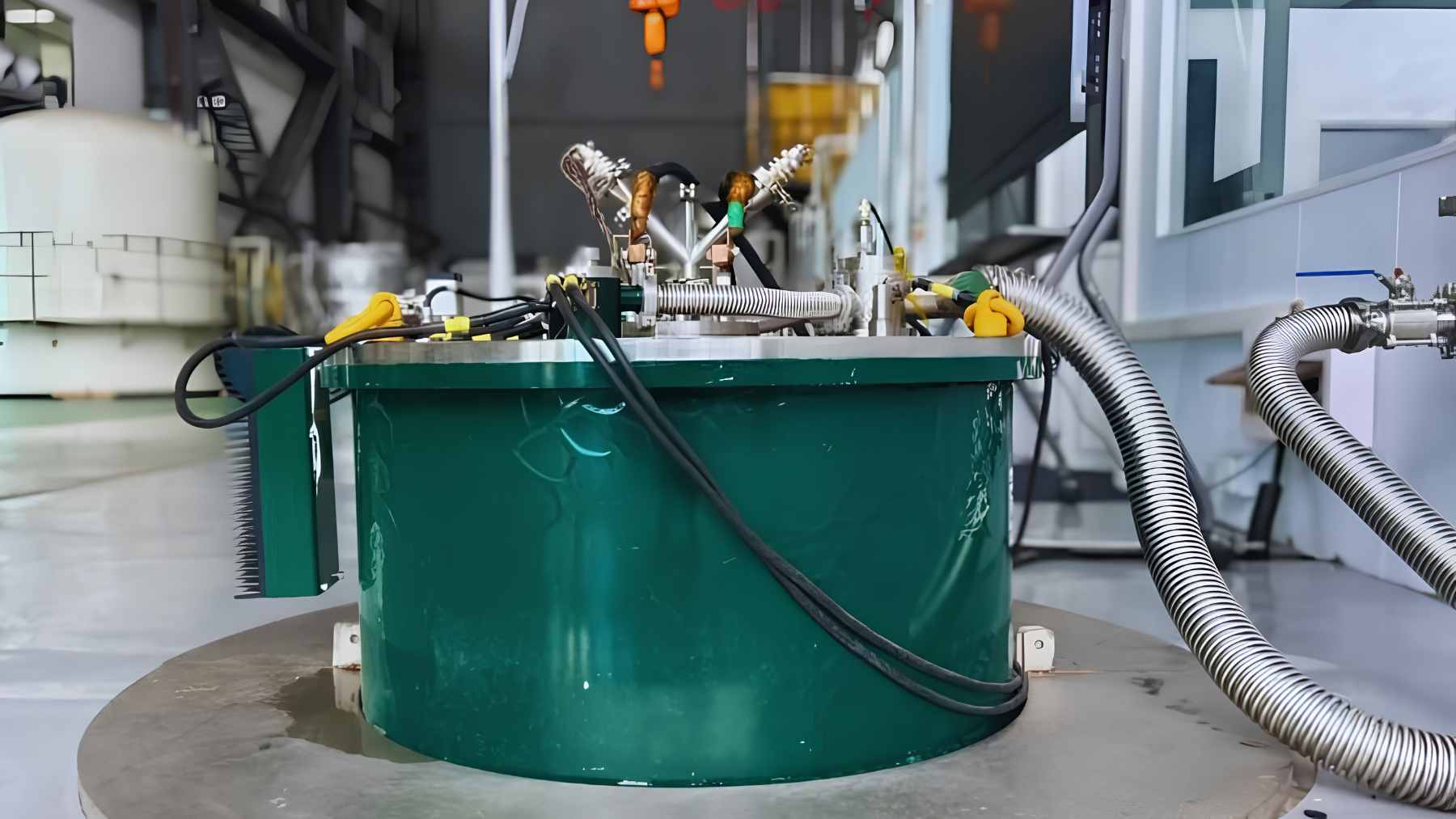
The magnet produced a central magnetic field of 35.6 tesla with a usable opening of 35 mm. Chinese Academy of Sciences reporting says that it is about 12 to 24 times stronger than the magnetic field in a medical MRI scanner, and over 700,000 times stronger than Earth’s magnetic field.
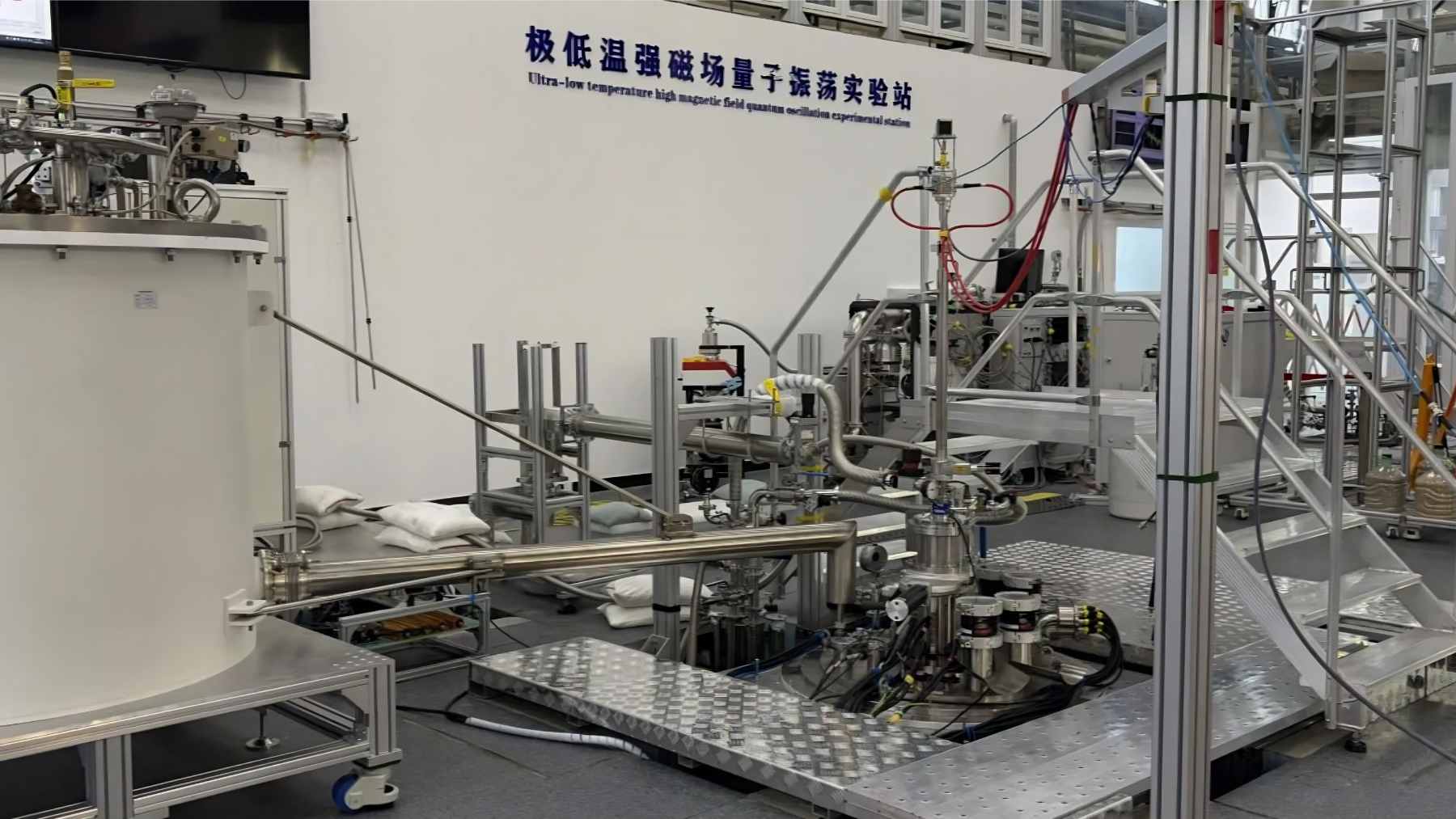
The experiments were carried out at the Synergetic Extreme Condition User Facility (SECUF), a national platform designed to combine tools such as ultra-low temperatures, high pressures, and intense magnetic fields. It is designed to support both domestic and international research teams.
A journal article made available online in February describes the 35.6 T result as a world record for an all-superconducting 35 mm user magnet. The same report says the high temperature superconducting insert itself reached 27.5 tesla in liquid helium, also a record for an all-high-temperature superconducting user magnet.
Why the design matters
Most of the strongest steady magnets rely on resistive coils for part of the field, and those coils burn electricity continuously. The Chinese system is described as fully superconducting, which means the coils carry current with zero electrical resistance in the superconducting state.
The journal paper says the 35.6-T user magnet combines a REBCO high temperature superconducting insert with a low-temperature superconducting magnet. The takeaway is simple: a higher field can be reached without leaning on the most power-hungry kind of magnet.
Stability is the other quiet achievement. Luo Jianlin, a researcher at the Institute of Physics under the Chinese Academy of Sciences, told the Global Times the magnet can maintain its maximum field for more than 200 hours, long enough for experiments that cannot be rushed.
A greener way to do extreme science
High field research can be energy intensive, and the numbers can be startling. The U.S. National High Magnetic Field Laboratory says its DC Field Facility runs resistive magnets from a 56-megawatt DC power supply and relies on about 15,000 square ft. of cooling equipment to remove heat.
The same lab has reported a 2017 annual electric bill of about $4 million, with 67% attributed to magnet use. That is the kind of overhead that makes scientists and funders think hard about efficiency. It is not just money.
China’s team is arguing for a different operating model. A Huairou Science City statement notes that all superconducting magnets have operating costs “significantly lower” than traditional resistive magnets because of their zero-resistance characteristics, even though they still require cryogenic systems and careful engineering.
What this could mean for climate tech
So why should environmental readers care about a 35 mm. hole inside a lab magnet? Because high magnetic fields are one of the tools scientists use to understand and improve materials that sit at the heart of the energy transition.
A 2025 open access review in La Rivista del Nuovo Cimento argues that modern high-temperature superconductors are becoming more mature for power applications across energy and transport, with sustainability benefits tied to better efficiency and reduced power consumption.
If that progress continues, the payoff is not just faster science, it is the possibility of lower losses in power equipment and more efficient electric machines.
Fusion also hangs over this story. Some researchers and companies are betting that stronger high-temperature superconducting magnets can make future reactors smaller, but the engineering reality is still tough and timelines remain debated.
Business and defense are part of the same story
China is not treating the magnet as a trophy that sits behind glass. Wang Qiuliang of the Institute of Electrical Engineering, quoted in a Huairou Science City statement, said the teams are aiming toward 40-tesla and “even higher” fields while trying to expand the bore and reduce operating costs.
That ambition has business implications. High-temperature superconducting systems depend on specialized conductors such as REBCO tapes, and scaling them means solving manufacturing yield and supply chain constraints that can run through rare earth materials.
It also has a defense dimension that is hard to ignore, and Chinese sources discussing the 35.6-T system explicitly list national defense among the sectors that benefit from high-field superconducting magnets.
Tokamak Energy said in a 2025 press release that it was contracted by General Atomics to provide high-temperature superconducting magnet technology for a DARPA program on undersea magnetohydrodynamic pumps, arguing that HTS magnets can enable a “more powerful, silent and efficient” drive.
The study was published on ScienceDirect.