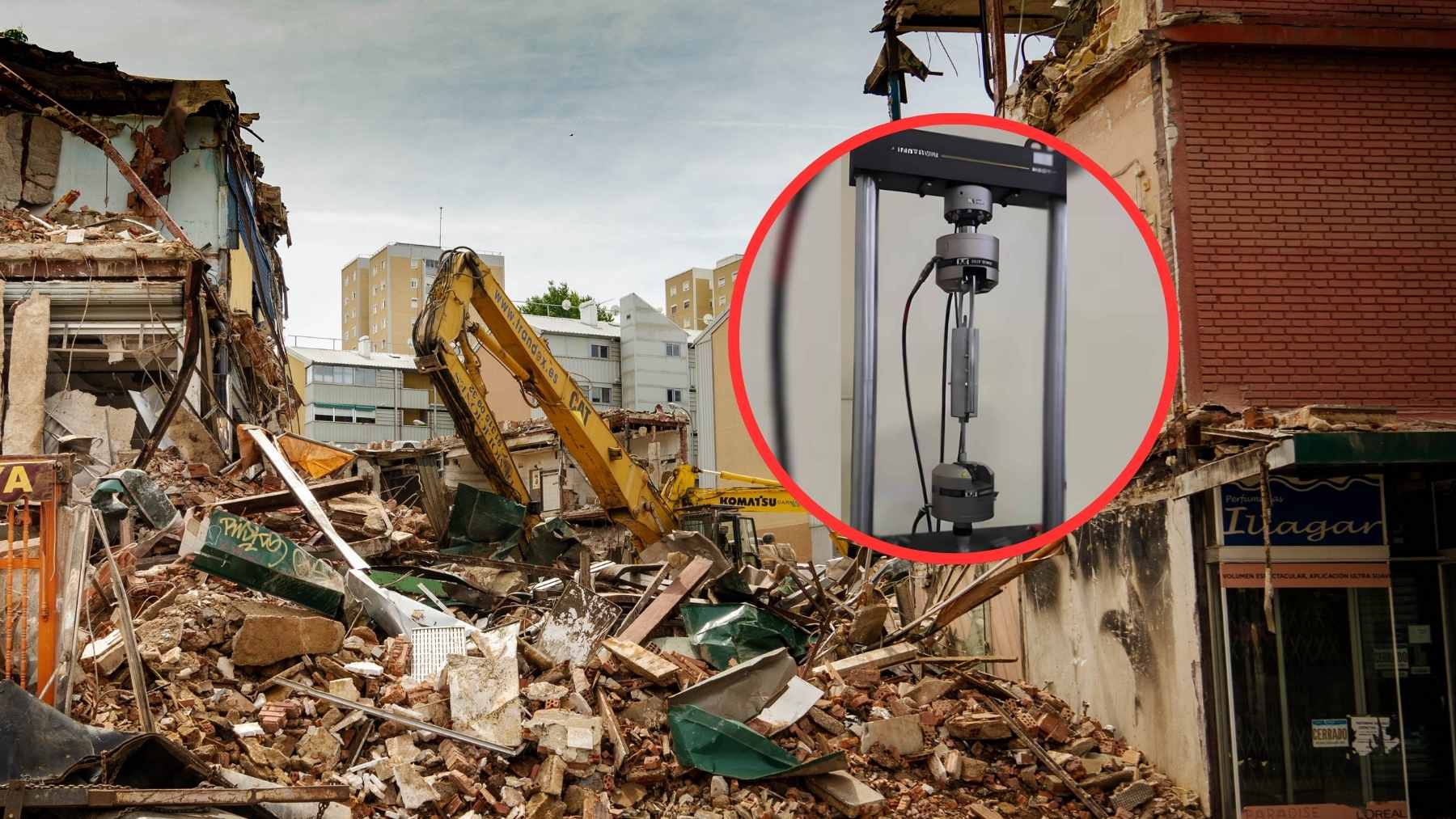
When an earthquake hits, the power often fails right when you need it most. A newly granted U.S. patent for a University of Sharjah device lays out a friction-based system that aims to blunt shaking in buildings, bridges, and sensitive equipment, without needing electricity.
The pitch is bigger than structural safety. Fewer cracked walls can also mean fewer emergency rebuilds, less debris hauling, and less demand for carbon-heavy materials like cement and steel. That is where earthquake engineering starts to look like climate policy.
A “mechanical tree” that stays on during blackouts
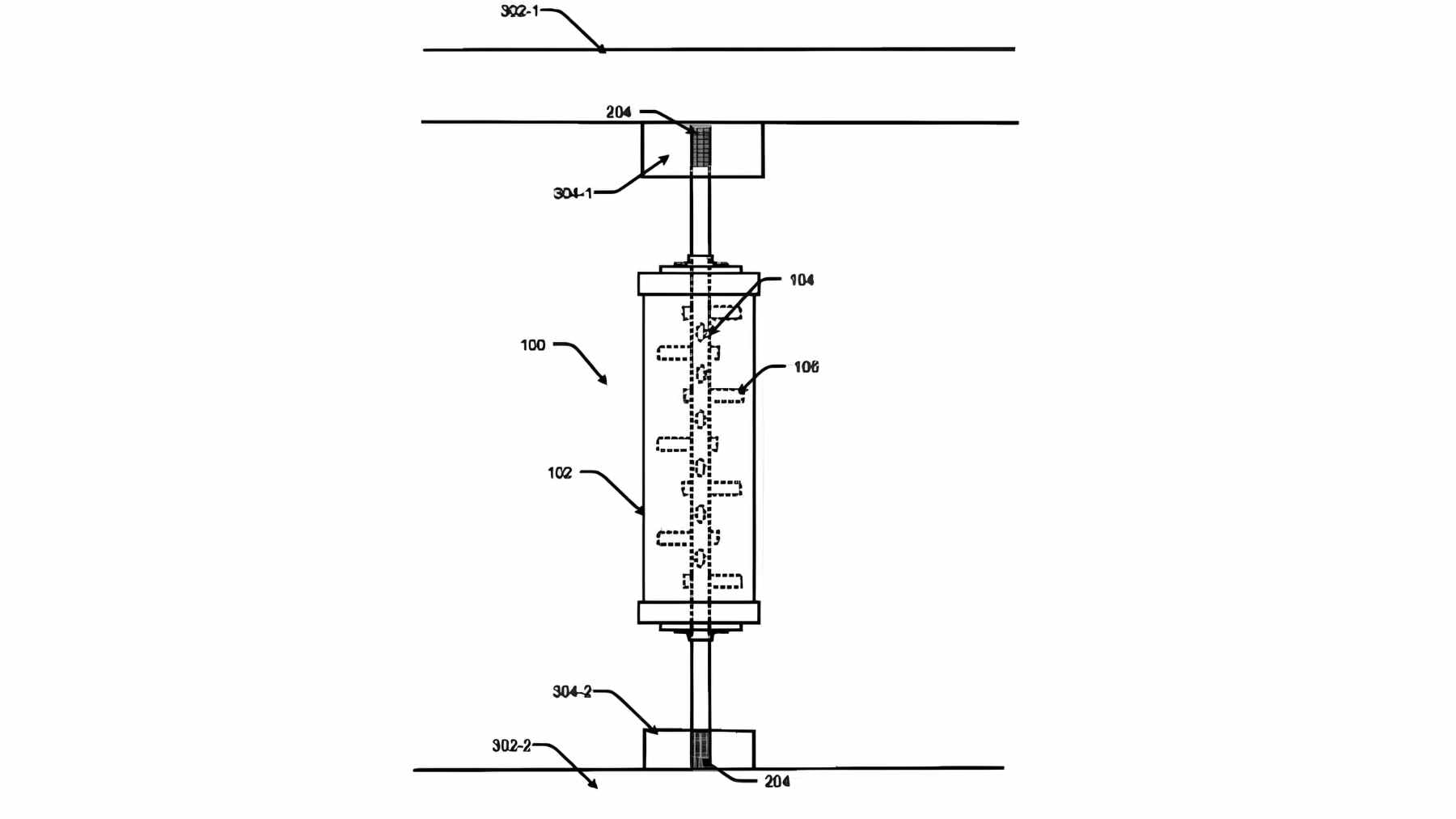
The patent, listed as US 12,498,014 B2, describes a hollow cylinder packed with solid balls and a central shaft that carries short rods protruding outward. The application was filed in August 2022 and published earlier in 2024 before the patent was granted in December 2025.
The setup looks almost like a metal tree trunk with branches, except the whole thing lives inside a tube. As the structure vibrates, the shaft slides and the rods force their way through the steel balls, generating friction that dissipates some of the energy.
What a 14% damping result can and cannot say
In the University of Sharjah announcement, inventor Moussa Leblouba says lab tests produced an effective damping ratio of about 14% for a purely passive system. He also says the early results were consistent across displacement amplitudes of about 1 to 5 mm.
Is that enough to “save” a building? Not by itself, and Leblouba is not claiming it is. The next step, according to the same announcement, is scaling up and moving into more realistic seismic loading and shake-table testing, while adjusting rod arrangements and ball size to fit different jobs.
The climate case hiding in the rubble
If you have ever watched a street get dug up, you know how quickly construction turns into noise, dust, and diesel exhaust. UNEP says the buildings and construction sector consumes about 32% of global energy and contributes about 34% of global CO2 emissions, and it is also a major source of construction waste.
Materials are a big reason why. Research often estimates cement production at about 7% to 8% of global CO2 emissions, and UNEP points out that cement and steel together are responsible for about 18% of global emissions overall.
Earthquakes layer on top of that, in ways most climate inventories do not track.
A peer-reviewed GEM Foundation analysis estimates Europe’s earthquake-exposed building stock embodies nearly 13.4 billion tons of CO2e and that seismic damage generates more than 6.4 million tons of CO2e each year through repair and replacement, which the authors compare to 32,000 one-way flights from Paris to New York.
Why retrofit is a business story
A key practical claim is that the system can be retrofitted into existing structures, instead of being designed in from day one.
That matters because so much of the built environment is already here, and UNEP notes that about 50% of the buildings to be standing in 2050 have not been built yet, which makes both retrofit and better new construction part of the same puzzle.
The other claim is maintenance. In the patent language and in the University of Sharjah release, the components are designed to be separable and replaceable, so one damaged part does not automatically mean scrapping the whole system.
For infrastructure owners, that can translate into less downtime and a lower replacement burden after a major event.
A defense angle on resilient infrastructure
Leblouba argues the same approach can protect more than just concrete and steel frames. The University of Sharjah release lists potential uses for electrical and communications installations, vehicles, aircraft, ships, aerospace systems, and sensitive scientific or military equipment that can be damaged by shock and vibration.
That overlap is easy to miss, but it is real. Civilian communities and defense operations often share the same ports, bridges, and power corridors, so resilience upgrades can have shared benefits when a region is hit hard.
What happens next
Now come the questions engineers and buyers will ask first: how the design scales, how it performs after repeated strong shaking, and how easily it can be certified under building codes and inspection rules.
If the concept holds up, the environmental payoff could be indirect but meaningful–fewer emergency rebuilds, fewer truckloads of debris, and less demand for carbon-intensive materials after disasters.
The press release was published on EurekAlert.